The Butala project – local content creation, production and distribution
The Butala project was a project, running from 2008 to 2012, aimed at the development of local content creation and production, based on local needs and insights, and the local distribution of the resulting productions. People from Serenje District, all of whom were farmers, were trained and assisted to create media productions for the local market.
Around 2006, the first portable DVD players with a built-in screen arrived in Chibale. The DVDs that were readily available primarily contained Congolese music and dance clips. Except for experiences with radio, media literacy in Chibale was almost non-existent at that moment. Considering the state of cinema and television in Zambia’s cities at that time, the question arose whether it would be possible to develop media products based on the local perspective before the region was flooded by external media. To this end, the Butala project1For a portfolio of productions click here. was started, a co-operation between the Serenje District Commission and the Utrecht University of the Arts.
We describe the project in this article based on the following topics:
National context
Local context
Aims and their realisation
The progress of the project
Portfolio of productions
National context
In that period, media in Zambia were mainly journalistic. Television also featured many journalistic programmes. Other types of media programmes frequently originated from outside Zambia, such as Mexican soaps, Nigerian films, British football, Congolese music, international fashion, (international) religion, and South-African quizzes. There is nothing inherently wrong with external media sources, but what if they were to become the primary source and model? What would become of Zambia’s abundant cultural diversity in the long run? In the 2000s, the Zambian government was shifting its focus away from the ‘One Zambia, One Nation’ cultural policy, which was directed towards national culture – interpreted as city culture with some attention for local cultural heritage. It was felt that Zambians should at least have the possibility to choose between foreign or national/local productions. The challenge then was the production of sufficient Zambian media material. Two potential options were: a) to develop media design and production in the cities and rural areas, and b) to expand secondary and tertiary education in the design, production and exploitation of media productions. With a specific interest in how the local perspective could become an integral part of media creation and production, we formulated projects for both options. The first, working in the rural areas of Serenje District, was in co-operation with the Serenje District Commission, and the second was in consultation with the Zambian government and Evelyn Hone College in Lusaka. A further aim was to link the two options at a later stage. Regarding the second project, we can be brief. The Zambian government allocated a significant amount of money to the project on the condition that the Dutch government also contributed funds. However, just in that time, a new Dutch government had been presented with a quid pro quo attitude. As it was unclear to them what quid (or rather, quids) was to be expected from the proposed quo, they did not proceed. Therefore, our story here pertains only to the first option.
A development in the 2000s was the increasing international attention for (intangible) cultural heritage. In most cases, attention was directed towards heritage preservation. Hardly any attempts were being made to reuse older Zambian cultural material for present-day purposes. In the instances where it was used, it was presented as ‘traditional culture’ material; apparently understanding ‘traditional culture’ as a type of culture incapable of relating to the present. The failure to reuse one’s own cultural material could therefore be seen as a form of subjugation, forced or otherwise, to ‘world culture’ dominated by the West. This could be improved by also giving the necessary attention to the reuse of heritage, in the sense of what people possess and know to have possessed locally. Preservation and reuse are core themes and processes in (oral) tradition. Through the use of media, the reuse of cultural heritage could be given new forms. The Butala project aimed at the resurgence of the reusing of existing cultural material, rather than the resurgence of old ‘traditional’ material.
Photo 259 ∵ Making media productions from a Chibale perspective
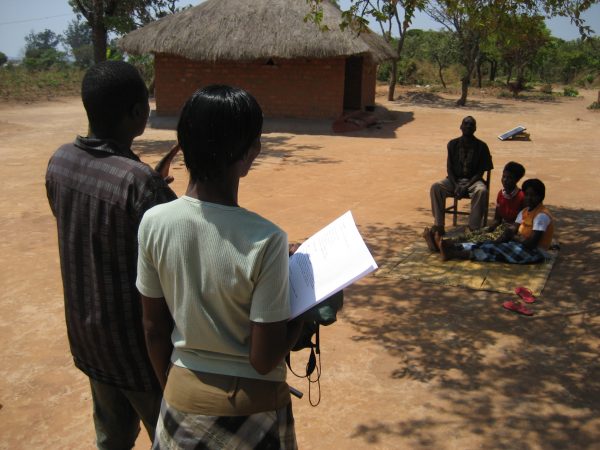
Beauty Male and Benadi Mika rehearsing a scene for a docudrama with the actors, 2010.
Local context
In former days, oral tradition was the normal way of transmitting culture across and between generations. This form of tradition still existed in the 2000s but was increasingly being replaced by more formal ways of education relying heavily on external knowledge. In the 2000s, the average 12-year-old in Serenje District could mention 34 cities in the United Kingdom but was unable to name, say, three historical figures from the region or four local medicinal plants. If electricity were to reach the region, the media would introduce more external knowledge (content and form). Although external knowledge can be relevant, should it supplant other forms of cultural tradition? The Butala project departed from the idea that local culture and knowledge are as relevant for local people as external knowledge and culture.
The Butala project aimed at helping to design new forms of tradition of local culture through the use of media.
People in Serenje District had had little experience with media until the arrival of the portable DVD-player. They were hardly influenced by (inter)national media. Of old, teaching had been combined with entertainment in Serenje District. Therefore, media and music would be very suited for the forms of communication and information dissemination that were needed. Would it be possible to embody a local perspective in media productions, in content and/or in form?
In most cases, aid in the rural areas of Zambia was provided from an external (western or urban), rather culture-deaf-and-blind perspective. The sending of the message seemed to be more important than its reception. When media were to be used for information dissemination or aid, a local perspective would be necessary. In terms of content, this meant ensuring the message was understood; in terms of form, it meant ensuring it aligned with, or was a transformation of, other, local forms of kufunda, in which wisdom and entertainment are usually combined.
The Butala project aimed at creating space for the development of the local perspective in media design.
Photo 261 ∵ Viewings of the Butala products throughout the chiefdom
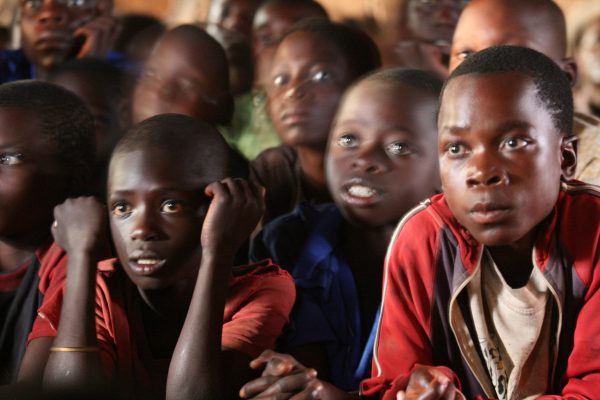
Children watching a docusoap during a viewing, 2011.
With a few exceptions, there was no electricity in Serenje District in the 2000s. Yet the transportability of content, so typical for media productions, was often needed. When a solution for a certain problem had been developed in one area of the district, it was not certain that it would spread to other areas, as communication between areas was minimal. If new ways were found to produce a certain crop, they might not be used outside of the area where they had been developed. If a choir or a singer/dancer/composer had a new or particularly effective way of performing, this would not spread outside of the area or circles around that choir or singer/dancer/composer. Methods developed in one area to reduce the risks for young women of HIV/Aids infection and of becoming a single mother were only taken over in other areas after media productions were made and distributed to inform women in other areas.
The Butala project aimed at spreading the productions in as large an area within the district as possible.
Surely there is a new demand for the creative arts and media in education throughout the world and many people are therefore learning some of the new techniques coming in through the computers. This knowledge is also prompting many countries to review their cultural policies, especially where promotion and preservation is concerned.
∵ Mwesa Mapoma, personal communication, 2007.
Aims and their realisation
We summarise the aims mentioned above.
To create room for the development of media and music productions based on the local perspective.
To develop new forms of tradition of local culture through the use of media.
To develop new forms of reusing existing cultural material.
To spread the productions in as large an area within Serenje District as possible.
To assist in the making of sufficient Zambian media material by developing media design and production in the rural areas.
In the period 2008-2012, these aims were reached to a decreasing extent.
It turned out that it was surely possible for farmers with little media literacy to produce appreciated media productions from the local perspective within two years, when they received support twice a year for 8 weeks and were provided with the minimally necessary equipment.
As much of the productions were made for kufunda, the new forms fitted well into the intention of tradition. In quite a few cases the kufunda was directed towards relatively new phenomena such as new crops, beekeeping, fishponds, HIV, the increased number of orphans, and women’s power and gender issues. In many cases, the intention was to show what happens to you and your environment when … your father is often drunk, you take care of the children of your deceased sister, a marriage is in the process of being established, and the like. Therefore, a form of docudrama was often chosen for the productions.
The distribution of the material was through screenings and through DVD sales. Both proved to be economically unviable options. Therefore, this goal was not achieved.
The Butala team created a tremendous amount of material. Thus, the project demonstrated that it is a viable, albeit possibly not economically independent, solution for a lack of material for national media, provided that rural productions would also be broadcast and be well received in the towns. The latter is not improbable, as most town dwellers maintain close contact with the region they come from. Because of this potential, it was a pity that the project with the Zambian government could not proceed and the Butala project did not last long enough to start working for towns.
Proverb 91
Mu butala emuli amano
There is wisdom in a granary
People who look beyond the present may experience fewer problems.
To have a granary shows wisdom. We all know the future is uncertain. One needs to prepare in advance, not to rush when it’s too late. See also proverb 91 in the book Mu Zambia Amano Mambulwa.
Photo 262 ∵ A butala, granary
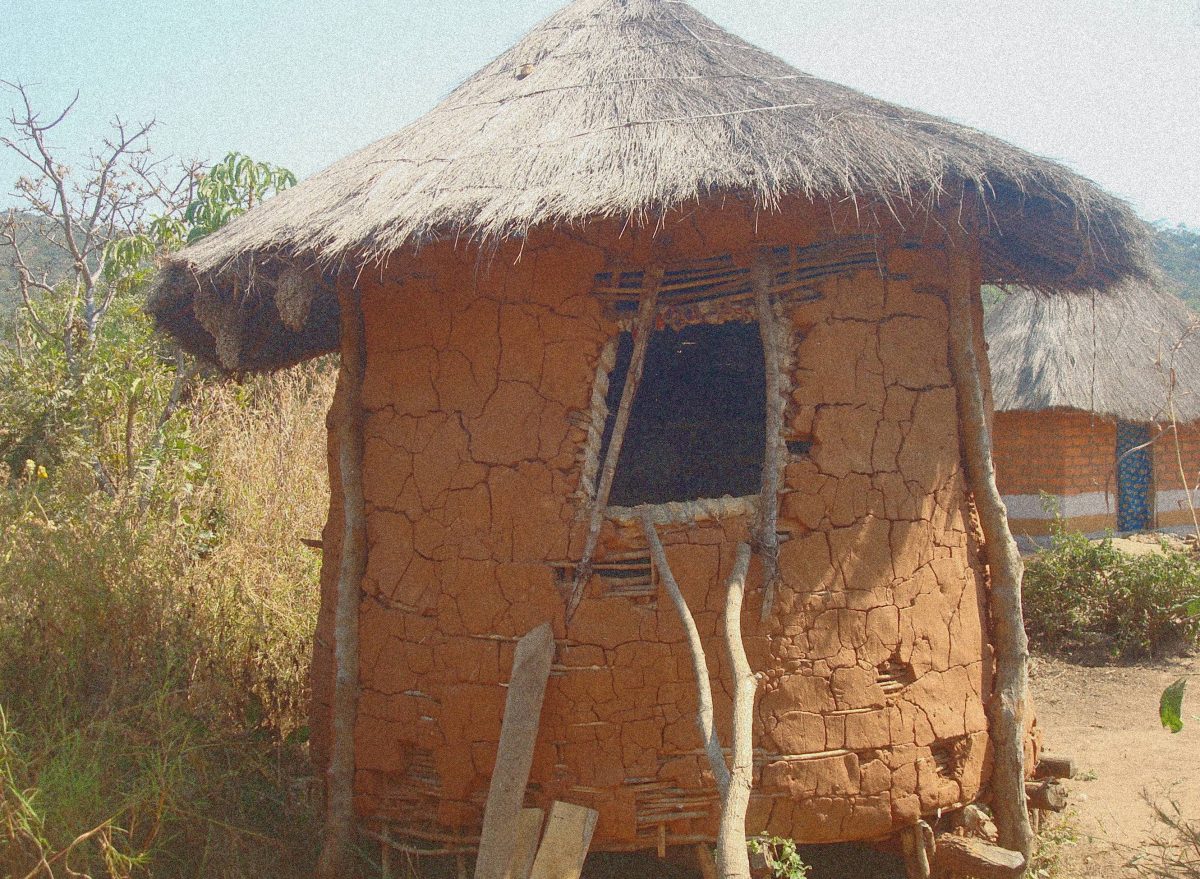
One must have the wisdom to gather things (kututila) to be able to bring them out at the right time (kubansa). The Butala project paid attention to both gathering and (re)using. The team had the funds to be able to gather and preserve (kututila) cultural material. Based on this material, they made media and music productions (kubansa) for educational and entertainment purposes.
The progress of the project
The Butala team
Six people, all of them farmers, worked on the Butala project: two media teams, each consisting of a woman and a man (to ensure a team could work on all topics), a composer/musician, and a factotum. They worked under the guidance of Basil Chisonta, who had been involved in the research underlying this site from its inception in 1981. In Chibale, Lafenda Mpyakula and Benadi Mika began as a research team in 2007, collecting local cultural material. In 2008, they became a media team and, in 2009, they opened their own small cultural projects office in Chibale Village. After Lafenda’s death, Byuti Male took over her role. The other team came from the Muchinka area (in the northeast of Serenje District) and was formed by Prishila Mumba and Dauti Kalunga. They bacame involved in the project in April 2008. The composer for all media products was Alube Mika from Chibale. He worked with local musicians, combining this with work on the computer. The tireless factotum of the project was Chisenga Blantoni from Chibale.
The District Commissioner, Musonda Chunga, and later, Stan Chibwana, ensured that the project was known and supported throughout the district and occasionally visited the team. Chief Chibale Joshua Chipolo supported the project in Chibale. The Netherlands side of the project was managed by Marjanne Paardekooper and the author, both from the Creative Design Research Group of HKU Utrecht University of the Arts.
Photo 263 ∵ The local Butala team in 2009
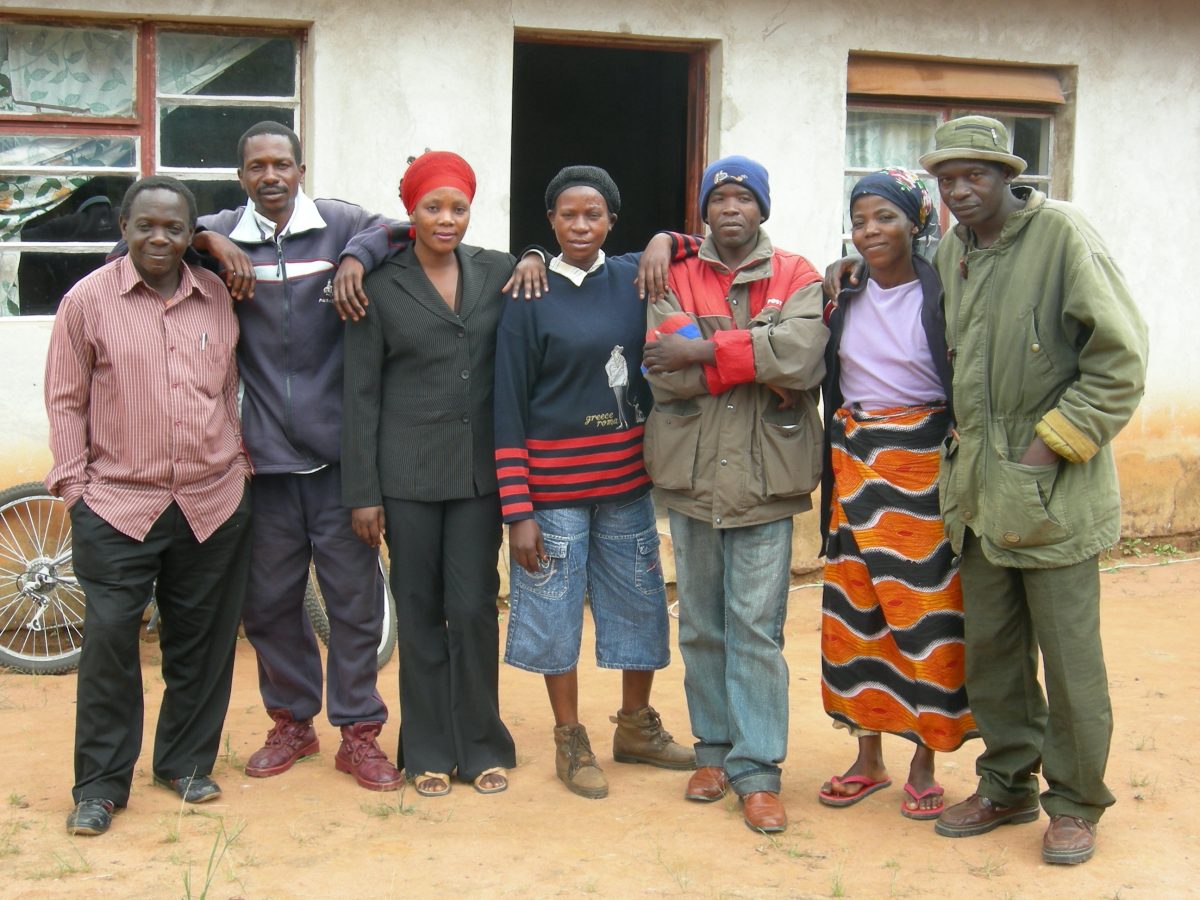
Left to right: Basil Chisonta, Alube Mika, Prishila Mumba, Lafenda Mpyakula, Dauti Kalunga, Chisenga Blantoni, and Benadi Mika.
The team used the digital collection of cultural repertoires in Chibale, the results of the research underlying this site, as a basic collection of cultural material, expanding it with some material they collected themselves, for instance, about medicinal herbs, treatments, rituals, and crafts. The collected material was organised in a database that was kept in Chibale and Muchinka, where it could be consulted by people from Serenje District. A backup of the database was kept at HKU in the Netherlands. The team used material from the database either as a vantage point or as a means to influence their choices in creation and production.
The two media teams and the composer/musician were supported by advanced HKU students and their teachers. In addition to the technical and productional training, they worked with the team on transforming local narrative and musical forms into medial forms. All met twice a year for a period of eight weeks in Chibale. On these occasions, the database was updated with the material that has been gathered and the productions that had been made in the interim for use in both chiefdoms. The new database was copied by each team and backed up in the Netherlands. The media teams were taught further audiovisual skills. They worked together to develop concepts. The composer was supported in composing, recording, editing, and producing music with the aid of a computer. Entrepreneurship skills and concepts were also trained.
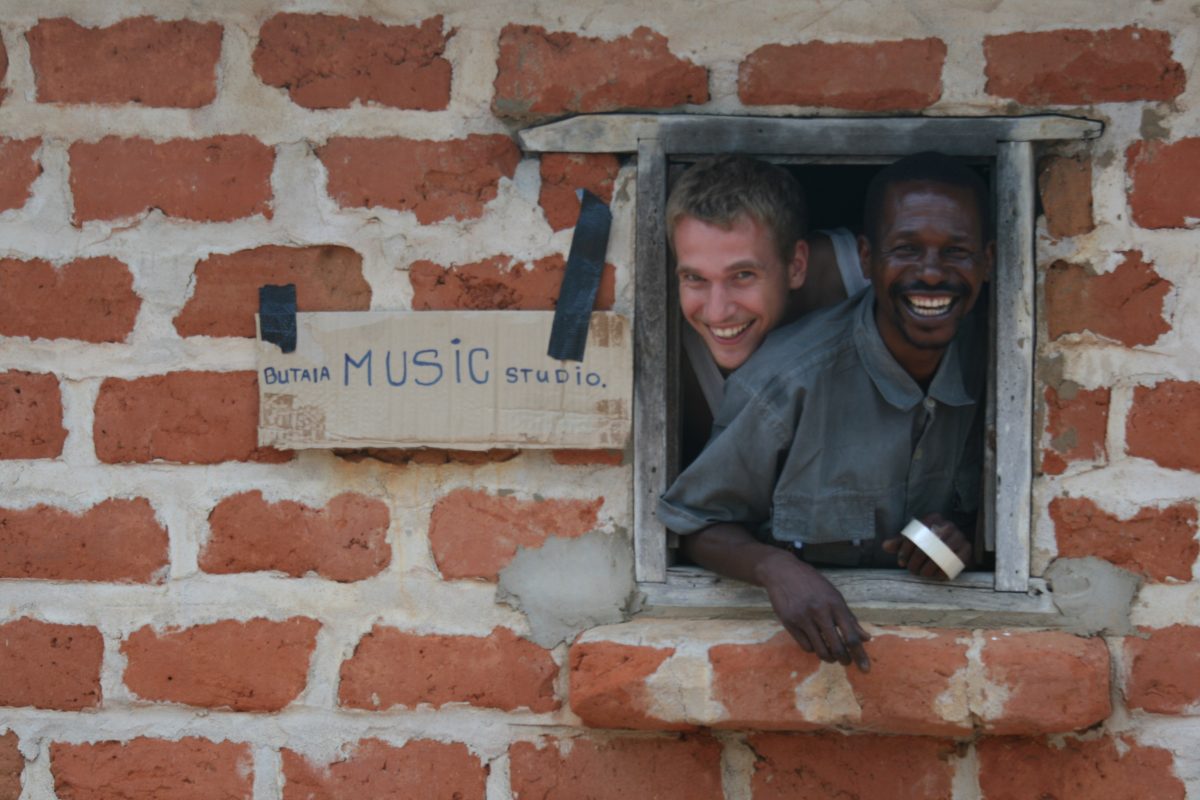
Photo 264 ∵ Alube and Gerben looking through the window of the music studio in Alube’s farm, 2009
HKU managed the national and international relations of the Butala project. As mentioned above, there were good contacts with the Zambian government. Television stations were approached to gauge their interest, but the project did not last long enough to begin national exposure. In the years 2011 and 2012, there were also external assignments (from the Netherlands) for the team to create productions from a local perspective, focusing on ways to interact with HIV patients and their families, and on DIY. These assignments were mediated by HKU.
The learning curve for the team members in the project was extremely steep. None of them had any experience with media or computers, except for those who had worked on the research underlying this site. After a preparatory period in April 2008 with the team, the first group of six students arrived in Chibale in September 2008. Another two students investigated the state of affairs of the creative industries in Zambia and were based in Lusaka. The students began with some technical instruction, without using any outside examples to illustrate things. As soon as possible, they started making very small trial productions together with the team. Of course, the education alone was already a form of external cultural influence, but the students were trained to leave the initiative to the team whenever possible and to encourage the team to come up with ideas, forms, and solutions without external examples. At one point, for instance, one of the team members realised that the films in the camera and on the computer did not consist of a ‘stream’ but were discrete photos, each moving a bit further in time. He jokingly suggested that it would be interesting to manipulate this. This led to a number of stop-motion trial productions. Later, these were discontinued because those attending the viewings found the way the animated objects moved by themselves very frightening. After the first eight weeks, the team had enough experience to continue experimenting until the next group of students arrived at the end of March the following year.
In the second ‘semester’, the team managed to create and produce the first simple productions more or less on their own, and ideas grew about what could be created. In the subsequent semesters, they concentrated mainly on kufunda productions: documentary, docudrama, and instruction and other information productions. At a later stage, kwangala in the form of music and dance clips and registrations was also added.
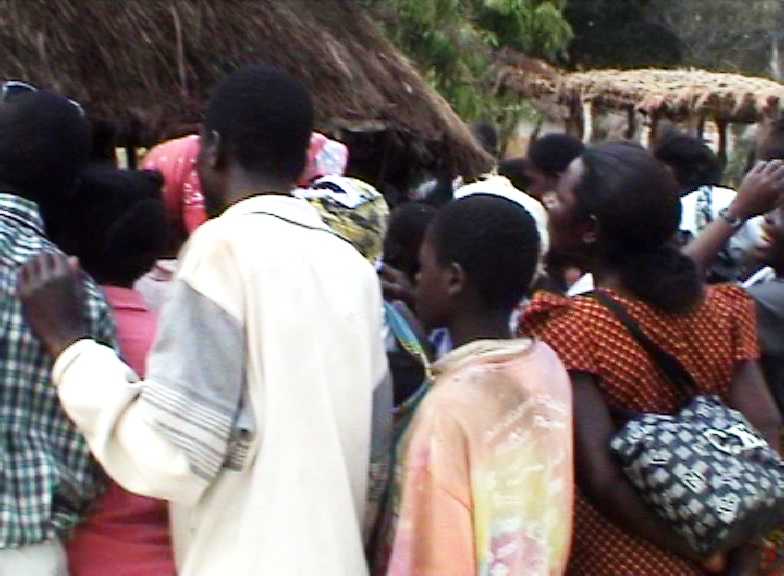
Photo 265 ∵ People crowding at the edge of an nsaka to watch a documentary, 2010
The team members earned money by making film reports of weddings and funerals, recording music, and selling DVDs of their productions. Earning money through the screening of media productions throughout the two chiefdoms did not work out in the end, although the screenings were successful initially when no entrance fee was charged. The entrance fee was equal to €0,15 for adults and half of that for children, but it was still a problem for many. The other reason why the screenings did not work was that they took up too much time for the team members. It proved impossible to create a system where someone who was not a member of the team would travel through the chiefdom to show the productions.
The project was stopped at the beginning of 2013 due to a new policy at the HKU University of the Arts. It was felt that these kinds of projects, of which there were quite a few, were too far removed from the opportunities that the HKU wanted to offer its students for development. This was unfortunate for the Dutch part of the project, but certainly also for the Zambian team members. During the project they had continued their agricultural activities, so it was not a complete disaster. We decided to give them all the equipment we had lent them for the project, including solar panels, and to support them remotely in their future work. However, fate befell the team members. Prishila and Byuti both died of a disease, and Alube and Dauti both became entangled in (different) witchcraft cases. Only Benadi could continue to work on media productions…
Portfolio of productions
In the Butala project, productions were made from a local perspective, in content and, where possible, in form. Topics covered included how to cultivate new types of crops, beekeeping, fish farming, guidance for HIV/Aids patients, witchcraft, proverbs in spoken language and in songs, local (clan) history, orphans, christian choirs, spirit possession rituals, marriages, funerals, dance, and new music.
Some media products were targeted towards specific groups, such as primary school children, woman groups, farmers, or HIV/Aids infected and their families, while others were aimed at a more general public.
For examples of this portfolio, see the article Portfolio of the Butala media project.
Photo 266 ∵ Still of a documentary about fish farming
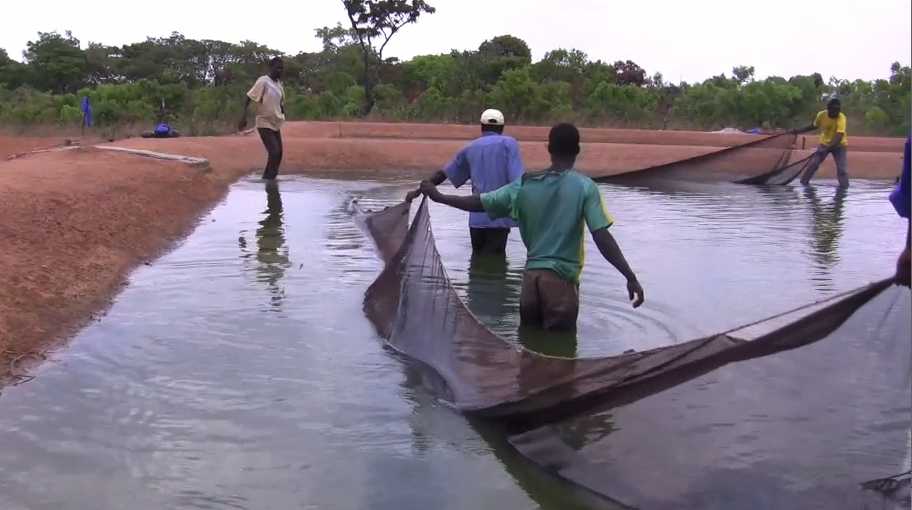 Lafenda Mpyakula and Benadi Mika made a documentary about fish farming in 2009.
Footnotes
- 1