Proverbs in Zambia ∴ deep proverbs 2

Proverbs in Zambia: deep proverbs in Chibale 2
Of the two articles on proverbs that the people in Chibale consider deep, this is the one that presents proverbs about what to expect and how things inevitably work. They can also be found in the third part of the digital book Mu Zambia Amano Mambulwa, see here. The whole book can be downloaded here.
Other articles in this series
The proverbs about how to behave and what to do when problems arise, considered simple in Chibale.
The proverbs about what to expect and how things work, considered simple in Chibale.
The proverbs about how to behave and what to do when problems arise, considered more demanding in Chibale.
The proverbs about what to expect and how things work, considered more demanding in Chibale.
The proverbs about how to behave and what to do when problems arise, considered deep in Chibale.
Proverb 247
Bangoshe tabalala culu cimo / lupako lumo
Taufwayapo kwakana nabambi. Napo niwe ngoshe nomba?
Insoka ishikali tashilala mu culu cimo nangu ulupako lumo pantu shonse shila yumfwa ukuwata amaka no bukali.
Naku bantu bene, ba fundi tabafwaya ukwendela pamo pantu kwalibako fimo fimo ifyo batangafwaya umunabo ukwishiba. Fyonse ifi ni bukaitemwe, tabafwaya ukupelako amano abo kunabo, kano beka ebaishibikwa.
Two black mambas will never share one anthill / one hole in a tree
You do not want to share with others. Are you a black mamba, then?
Two big poisonous snakes will not share a single anthill or a hole in a tree. They need their own territory in which to display their strength.
This also applies to human beings. Hunters do not wish to go out hunting in large numbers, as they do not want others to discover their methods. They are unwilling to share their ideas.
Proverb 248
Ni lambwe mu nongo, mu mpanga mulume munobe
Ulo utushita twapusana, nafimbi mo filakwata ukwalulwa muku wamya.
Inama mpanga lintu tailafwa, kulaba ukuitina sana pantu ciswango lelo ilyo yaipaiwa nokwipikwa mu nongo, tapaba icaku itina pantu nomba munani.
Umuntu uwatemwa ukucusha abanankwe mu misango iyalekana lekana pantu alikwatisha amaka, inshita ikesa ilyo ayo maka akapwa icakuti nomwaice akakume.
A stew in the pot, a fierce animal in the wild
When circumstances change, things can change for the better.
In the wild, many animals are edible, but they are fierce. One needs courage to hunt them. However, once killed, the fierce creature becomes a delicacy.
A person who habitually troubles others without apparent reason, a bully, will eventually change when they lose their power, for instance, due to injury or old age.

The same proverb was recorded for the Lamba region at the beginning of the last century, see Doke (1927, proverb 616), with a different explanation:
‘Lambwe’ mu nongo, mu kabanda mulume mubyo ∵ ‘Buffalo’ when in the pot, but on the veld he is your rival.
Words of respect for the fierceness of the buffalo. One may call buffalo meat ‘lambwe’, but to meet a live buffalo on the veld is like meeting the real husband of the woman you have taken to wife, your rival and deadly enemy.
Proverb 249
Abenda ebaleta makasa a nkalamo
Abenda na makasa ebo bakapela mulandu kumulandu wakuba ne fitala uku tomfwapo.
Ngatawenda nangu ukutandala, ilingi line teti twishibe ifikocitika muncende shimbi. Pantu mukwendauka emo twisa mukubela mu malyashi ashilingile we muntu ngatawaba bwino mu misango.
We muntu abantu ngabalikwishiba ku misango iibi, ifikacitika kumbi nimwe bakatunganya, tabakalole kumbi iyo. Kanshi twiluke ukuti twalinga ukuba abantu abenenene.
Travellers bring the footprints of the lion
Travellers are more easily blamed, especially when they are rude or vague.
If you do not visit other people, you will not know what is happening around you. But if you travel very much, you might eventually be suspected of any wrongdoing.
If you are known to be a bad person, whatever happens elsewhere, it is you they will suspect; not others. Therefore, we should all be very well-mannered.
Proverb 2501Photo 163.
Abo ndoka ndabebelapo limo
Fyonse fitupela ukwiluka pa fikoisa ku ntanshi.
Pa kubomfya mfi ifilangililo, tulekala abaiteyanya.
Mfi filandwa ne Mfula yangula naba Lesa kupitila muli bambi. Ngawapanga icilubo pa kupapa imfula, kutampa kubomfya ifilangililo fyakweba ati imfula ikoisa ngo kucinkulwako.
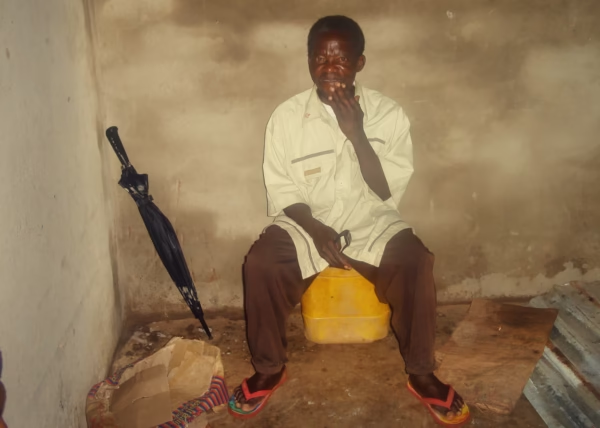
I rain upon those whom I have already warned
Everything gives us a glimpse of what is to come.
By using these signs, we are better prepared.
This proverbial phrase is uttered by the rain or by Lesa. Once you have made the mistake of being surprised by the rain, you start using the signs of its approach as a warning.
A comparable proverb was recorded for the Lamba region at the beginning of the last century, see Doke (1927, proverb 156), with a different explanation:
Abo ndoka ndababula ∵ Those I rain upon I tell.
The thunder is God’s warning of coming rain.
Proverb 251
Icupo nimpwa, nangu shalula twalikulyako
Mu cintu conse tukofwaya ukucita, mwaliba amafya ayo twingasangamo.
Mu cupo mwaliba amafya abaupana basangamo, telyonse muba insansa iyoo. Kanshi tulingile ukushipa sana pakuya cimfya.
Marriage is like an eggplant; though bitter we shall continue eating it
With anything we get involved in, we will encounter difficulties to overcome.
It is not always that married couples are happy; problems are encountered there. We must stay strong to overcome them.
Proverb 252
Mwaume, kasembe
Efilandwa pa fintu ifyendela pamo.
Ukwitwa ati mwaume mu bumi bwakwe kano ali na kasembe lyonse, icilanga ukuti wamilimo.
Ukwikala kwesu fwe balala ne mitundu imbi, umuntu pakuya mu kupa kano asenda isembe ico iciba Icilangililo cakuti uyu muntu ali kaaba wa milimo, talipo umunang’ani.
Isembe lilanga ukuti kuti amupususha ulo mwaba mu bwafya bwakusanswa ne ciswango!
A man, an axe
This phrase is used for two things that are supposed or required to be closely connected.
In real life, a man needs his axe greatly, as he uses it for all kinds of purposes. Therefore, to be considered a man, one must always carry an axe, a symbol of being hard-working and capable.
In the way we live as Lala people, and in other regions: when a man goes out to marry, he should carry an axe. This symbolises his energy for work and his lack of laziness. Furthermore, as a weapon, the axe signifies that he will protect others when confronted by a wild animal attempting to attack.
Proverb 253
Amano afuma mwifwesa aya muculu
Tekwebapo ati bakulu beka bakwata amano akufunda. Angafuma kuli bonse.
Nomwaice kuti abafunda pantu amano mambulwa pambi efyo umwaice aumfwile ifyo mwe mwebakulu muteshipo.
Umwaice ilyo ali ku sukulu, kulaba ifintu fimo ifyo abakulu bataishibapo ena aya fisambilila nowise fundako abakulu.
Knowledge comes from the small plain anthill and goes to the big anthill
It is not true that elders possess all knowledge; it can come from anyone.
A young child may teach the elders what he or she has been taught by others, perhaps having heard something the elders did not know.
At school, children learn all sorts of knowledge which they can then share with elders.
Proverb 254
Insoka kusuma bwimba kupela
Kusumwa ku nsoka ninshi ubwimba bwapela. Ukucita icintu ngatapali fimbi ifyakucita.
Pamo nge nsoka lintu yabutukila ku bwimba, ifwaya ukupusuka! Nomba ngawakonkanyapo ukwimba naena amano alapwa ngo bwimba bwapela.
We muntu ngawa pelelwa amano, taukwete cimbi icakucita kulaba nomba kucita ico tawacilafwaya kucita mukupusuka.
A snake will only bite when it comes to the end of its lair
When people feel that they have no alternative, they need to act instantly without much further consideration.
When a snake flees into its ground hole, its intention is to escape the intruder. However, if the intruder persists, it will turn to defend itself by biting.
Whenever someone is in trouble and there is no other way out, they will do whatever they feel will save them.
Proverb 255
Mwana pabo tabifya masha
Abantu bafwaya ukulolesha sana kuli mbo bataishiba (bwino).
Ukutali kwenu teti usubile ukutashiwa nangu ucite ciweme shani.
Mwe ngomba sha fila ngamwaile kukumanina kumbi, balya abapali incende bakatasha fye ingomba shabo epela.
Icishinte ca lwimbo cilasangwa namu lwimbo lwakonkapo: Umweni tawamiya – Nga nikwesu nga nawamiya / nashana / nacinda
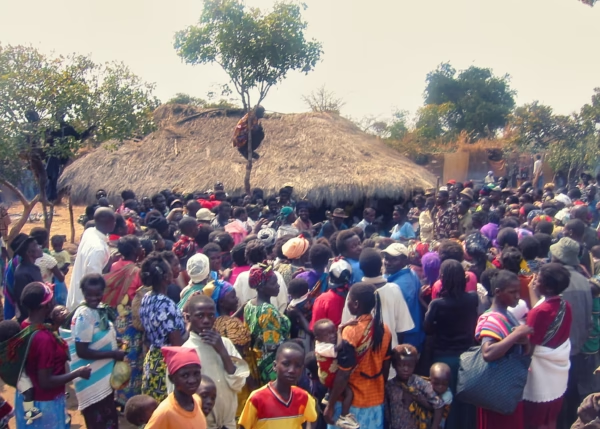
Your own people do not spoil the dancing
People tend to be more critical of those they do not know well.
Do not expect praise when you visit other places, even if you do the right things.
When dancers from different areas meet in a certain locality, those from that locality will be praised in comparison to the visiting dancers.
The same theme is found in the following song: A stranger can never do good – When he’s at home, it is good / it is dancing / it is dancing.
The same proverb was recorded for the Lamba region at the beginning of the last century, see Doke (1927, proverb 789):
Mwana pabo tabifya masha ∵ The person at home does not spoil the dances.
When gathered from far and near to one village to dance, people will criticise the dancing of visitors, but never that of one from the host’s village. This proverb is quoted, when the evil deeds of a favoured one are passed for good.
Proverb 256
Akanwa ka milandu keene kaitubulula
Ngoli no mulandu uulingile ukutekanya, ukuteka mutima pantu kuti wailetelela mufyo ukososa, nabantu baishiba ati niwe wacitile. Ukukana teka umutima kuti wailetelela.
Icintu icabipa nga nacicitika pancende imo, we wacitile ngawatemwa utwakulabila labila, abantu bakeshiba’ti ewa citile, pantu tasungilepo akanwa kakwe.
The guilt of the mouth is revealed by what comes out of it
Matters may worsen if you are talkative on issues related to what you are accused of. Never be too loose-lipped in such situations.
When something bad has happened in a locality, never be at the forefront, taking a leading role in discussing it. People will suspect your involvement because you have not kept your mouth shut.
The same proverb was recorded for the Lamba region at the beginning of the last century, see Doke (1927, proverb 37), with a different translation and explanation:
Akamwa ka mulandu kene kalituba /kalibala ∵ The mouth that accuses makes itself known / starts quarrelling with itself.
When a man goes to another village to make an accusation or lodge a claim for compensation: after sitting and talking for a respectable time. He himself makes known his errand, beginning with the above phrase: otherwise the people might think that he had just come to gossip.
Proverb 257
Ishuko lya munobe tabalilalila panse
Enco bebela ati cila muntu alapelwa ishuko, tekwebati bonse nomba mwalikuli nama shuko.
Kwaliba inshita imo iyo tunukulamo ubowa. Ubowa buntu bwayafya ukunukula nga cakuti tamulipo neshuko bulya bushiku. Kuti mwaenda imilundu iingi ukwabula ukunukulapo. Boneni, abanenu ukwisa kupita umo mwasa mukwenda, bo baisa kunukula, pantu mwe mwasa mukupishapo bwaka amenso.
Your friend’s fortune is not your fortune either
All people have some luck, but not all at the same time.
There is a time when you want to pick mushrooms. You will find it difficult to do so if it is not your day. See what happens! In the very area where you are searching, others have already picked the mushrooms; they are all gone. Their luck was not yours.
A similar proverb was recorded for the Lamba region at the beginning of the last century, see Doke (1927, proverb 475) with a different explanation:
Ishuko lya mubyo talilalilwa posonde ∵ The good luck of your mate is not laid outside.
Everyone does not have good luck. Because your mate sleeps comfortably outside, do not think that you can do the same a lion might snatch you up, and you may not have his good luck.
Proverb 258
Tabatana mucele munama, ngokalonga kwisa?
Kwaliba ifintu ifyaikatana, cimo cifwaikwa mu cinakwe.
Ilyo mwanakashi aipika inama mu nongo, pakuti iyi nama yumfwike bwino, kano babikamo umucele. Nomba kati taulungile ngu mucele wakulunga mwisa? Efyo umunani uuli onse ufwaya pakuti umuntu ukosa kulya omfwike bwino.
Why not add salt to the meat? What else would you use it for?
Certain things that form perfect combinations and cannot be separated.
When a woman is cooking meat in a pot, salt must be added for it to taste good. If you have no salt, what are you going to do? All relishes require it so that when a person eats them, they taste good. There is no meat without salt.
Proverb 259
Umwana wa munobe, mukulu munobe
Tekuti wishibe ifyo umwana wamunobe akesa kuba nga akula kuntanshi.
Mubwikashi bwesu, twaliba nefibusa ifyaba nabana.
Aba bana besa mukukula, limbi filya fine basela apo pancende nokuya ikala kumbi. Ulo papita imya iyingi, balya bana pambi balyupa nokufyala abana. Pali mbalya bana paisa kufuma umo nokupila mu nanda yobe. Ninshi ulya mwana wa munobe asanguka umukulu munobe, mwebafyashi babili mwalenga abana babo ukupana.
Your friend’s child may become very close to you
Even when you know a person or a situation well, it is still hard to predict what will happen in the future.
For instance, you cannot know what your friend’s children will become as adults. Some of these children may move away as they grow up. Many years later, those same children might marry and have children of their own, who, in turn, could come to marry into your family! That friend’s child will then become very close to you through that marriage.
Proverb 260
Mwenka muli buno buno nemfwi nefishamena
Fyonse fintu fyalikwata munshila fipita. Kwaba mu fitentekwa ifya kukonka.
Cilangililo cakuti ngokofwaya ifibusa fimbi fingilemo muku kwafwa kupwisha bwafya. Muku pwishisha bonse bwafya, kano twaumfwa na malangulushi abo.
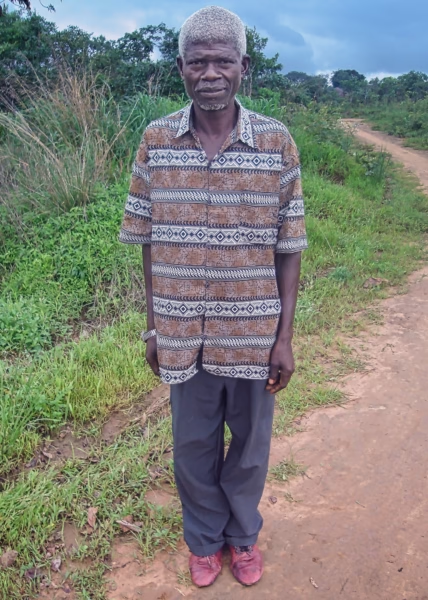
As the days pass one by one, grey hairs also grow
All things have a trajectory; there are certain steps one must take.
For example, when solving a problem, we may need to involve outside friends. This is a good, sometimes necessary, step on our way to a lasting solution, as we need their views.
The same proverb was recorded for the Lala region in the 1930s; see Anonymous (1937, proverb 37).
Proverb 261
Icikupempula ecikulya
Ukucenjela nefibusa ifitupempula.
Abantu balipusana mumano. Bambi bafwaya ukonaula ifyupo nangu bucibusa pakati kenu. Umunobe kuti akokutandalila libili libili ukwabula iwe ukuti wishibe amano akwe. Bambi batampa nokufwaya umukashi wamunabo, mukasanga ifyupo fyaonaika. Limbi mukutandala kwabo bali namano akwiba icipe cimo icabasekesha pananda yobe.
Those who visit you regularly, may break up your marriage
Be careful with people who visit you regularly.
People have different motives; some of them want to disturb marriages or friendships. You may receive regular visitors without knowing their intentions. One of them might propose to your wife, which could lead to a disbanded marriage. Others may plan to steal something from your house during their visit.
Proverb 262
Icikwanka bacibwena kumampalanya
Ku fintu ifyo umuntu acita mu bwikashi bwakwe emo bamumwena ifyo aba.
We muntu nga uli kape kape kuti abantu baishiba ati uyu muntu waluse, pantu taifinya iyoo.
The help you get is based on what they’ve seen you do
People will judge you based on what they have witnessed you do in their lives.
If you are fond of giving gifts, people will know you as that type of person, even if this is a simplification of your personality.
Proverb 263
Ukucenjela kwa nkoko, pungwa tasakamana
Icintu nga ukocifwaisha, nangu bambi bafwaye ukufisa, iwe kano ukacikwate pantu inshita tailafika iya kucikwata.
Inkoko ilyo yakwata utwana utunono, kwaliba icuni pungwa icifwaya ukusenda utwana no kulya. Inkoko ileeshako ukufukatila bwino utwana. Nomba kulaba inshita ilyo yalabako, elintu pungwa apona nokwisa ikatapo kano nangu tubili ngana twikala apepi sana. Kanshi pungwa alindila fye inshita yonse.
No matter how clever the hen, the scavenger-eagle isn’t worried
Even if others or circumstances prevent you from getting what you want, you will eventually get it when the time is right.
When a mother hen has chicks, there is always a bird that wants to eat one of them. The mother hen does everything she can to keep the number intact, but there comes a time when she forgets that the bird is there, and she loses one or two. The bird is always ready to pounce.
Proverb 264
Utufi nga twacila umuni kunya
Tulokuli abacenjela mufyo tukososa.
Ngawapela lyashi ndyo lingakumana isonde lyonse, cishupile ukulifumyamo. Yambi amafumbo yafwaya fye amasuko ayepi: Ina angula iyo. Takuli ukulondolola. Kuba ukwishiba bwino cintu angula iyo. Mu cakulekesha takupo ifya kweshaesha: icilubo cinga kubika mu bwafya.
Once the stool leaves the anus, it is defecation
Let’s be careful what we say.
When you give a speech that goes viral, it is hard to retract it. Some questions only require a yes or no answer. In such cases, do not elaborate. You are either familiar with something, or you are not. If it is the latter, do not attempt to answer; a mistake will get you into trouble.
Proverb 265
Pakuti amenso menda
Ube uwanaka kumalyashi atalingile ukukosa.
Ube uwa iluka kwishiba ifinga kuletelela namalyashi ayashupile.
Tekwesha ukusosa amalyashi ayashupile mu cintu bwingi ngatawishibe intulo. Kukulekelesha ngataukwete icishinka, ukalusa umucinshi pakubepa.
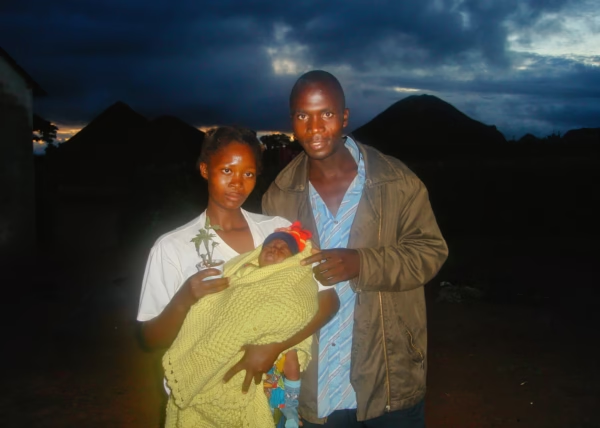
Because eyes are like water
Be cautious with delicate matters.
Eyes and water must be handled with care, as they are both very delicate.
You shouldn’t discuss sensitive topics in public if you don’t know the source. Ultimately, if you cannot prove something, you lose your dignity by lying.
The same proverb was recorded for the Lamba region at the beginning of the last century, see Doke (1927, proverb 1007), with a different explanation:
Pakuti amenso menda ∵ Because the eyes are water.
The eyes look right ahead, as water runs straight on; anything behind or on either side can be overlooked.
Proverb 266
Kofwa tabalya, icibalya ni nyanje
Ulo mukosala pa fintu fibili ifiboneka ukupalana, mungasenda icitalingile. Calinga mwakwata inshita yakwipushanya icinga linga bwino.
Bakofwa, ifyana fya tushishi, bamunsunga munsunga, imititi ne fishimu finga boneka ukupalana, nomba tefyonse filikwa.
They don’t eat snails, but they do eat grubs
When two options seem similar, chances are you’re making the wrong decision. It is advisable to take the time to inquire what is best.
Snails, grubs, larvae, maggots, and caterpillars may look similar, but not all of them are edible.
The same proverb was recorded for the Lamba region at the beginning of the last century, see Doke (1927, proverb 556), with a different explanation:
Kofwa ta ba lya, ici ba lya ni nyange ∵ One does not eat the snail, what one eats is the crab.
That won’t swallow. Said if one observes that one’s companions are passing personal remarks about one.
Proverb 267
E bucibusa bwaba pakati kaba mutantamfula naba cibelo
Nji nsoselo ilabilwa pali bucibusa bwakana.
Kati waicena ku kakumo kamo, ukomfwa bukali pabili: ku kakumo napa fimba apo icibelo calundwa ku musana. Pakuba no mutantamfula, icibelo cilomfwilo bulanda kuli ba kakumo kabuka kubati kwakaba ubukali. Mu bwikashi bwa lelo tulanga ubulanda kubena mupalamano ifibusa ngafyaba ne cililo.
That is a similar kind of friendship to that between thigh pain and the thigh
This proverb is used to describe a compassionate friendship.
If you have a cut on one of your toes, you will feel pain in two places: the affected toe and the protruding part where the thighbone joins the hip. By having this pain, the thigh is sympathetic to what is on the toe, as though it is sharing the pain.
In our lives today, you show grief when your friend in the neighbourhood has a funeral.
Proverb 268
Kalubula ukuswa nipa lulembo
Conse icintu caliba ne ntulo. Icishininkisho ci kankala sana.
Nangu uko cafuma kwati ngefyo amwabona kalubula ninshi mwishibe ati nipa kalonda nangu pa lulembo afuma.
Ngakulipo icikolangilila pa cintu, tacingabapo icacine, nomba ukushininkisha cawama ukubona ifipalileko.
Blood oozing is from an inoculation
Everything has a source from which it comes. Evidence is important.
Now, if you were to see blood flowing on a person’s arm, it is coming from the inoculation that has just been set.
If there is an indication for something, it is not unlikely that it is true, but to be sure, it is better to first see the evidence.
Proverb 269
Akasha kalala apali mutima
Ukucita icintu ico ukofwaya nomo ukofwaila.
Umuntu alikwata kampingu wakucita ico akofwaya, ngafilya tubona utuni ukwikala pa misambo apo tukofwaya utwine.
No muntu nao engila incito iili ku mano ukwabula ukumupatikisha iyoo.
The little duiker sleeps where its heart is
Do what you feel is right according to the circumstances.
People have their own feelings about what to do, just as birds choose which tree branches to sit on after a flight.
Similarly, a person decides on a profession without being forced.
The same proverb was recorded for the Lamba region at the beginning of the last century, see Doke (1927, proverb 63), with a different explanation:
Akasha kalalala apali umutima ∵ The little duiker sleeps where his heart is.
A man marries the woman his heart is set on.
Proverb 270
Akanwa kamo takomfwa bwalwa
Mu bwingi emuli amano. Umo teti asuminishe ukuti fili bwino.
Ifyakulya nefyakunwa fimo fimo fyalinga abengi basoonda pakuti mukwate icishinka ukuti nafiwama pamo ngo bwalwa. Ukuwama kwa bwalwa bwingalenga abantu ukusansamuka kano utunwa utwingi twasoonda.
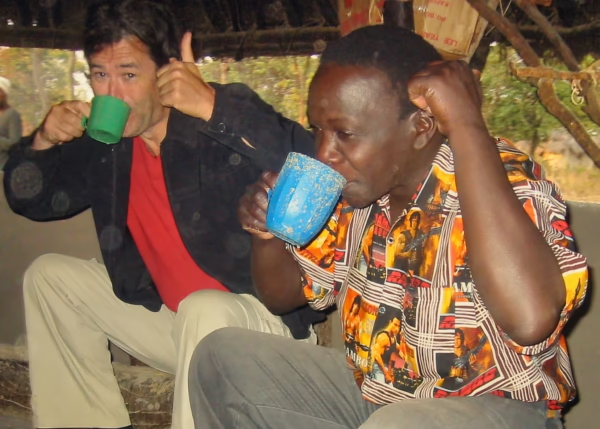
One mouth doesn’t taste the beer
Wisdom is the product of many. The opinions of more people are needed to declare how good or bad something is.
Certain foods and drinks require more than one person to have foretastes before concluding whether they are fit –with sufficient alcoholic content, in the case of drinks, or palatable, in the case of food– or bad.
This is to ensure that visitors get value for their money. Good beer will make them happy and provide an enjoyable stay.
The same proverb was recorded for the Lamba region at the beginning of the last century, see Doke (1927, proverb 36):
Akanwa kamo takomfwa bwalwa ∵ One mouth doesn’t taste the beer.
It must be passed round for all to pronounce the verdict as to whether it is ready to drink. In multitude of counsellors there is wisdom.
Proverb 271
Akalyo kamo takatoba citenge, icitobe citenge kanwa
Akalyo akanini kaba lukoso, ukulaka kulonawula.
Icitenge ni nsaka umo abantu bakumana pakulya inshima, nomba kati umo acelwa kufika nokusanga akashima akanini, tasakamanapo iyoo. Nomba ngacakuti palya paba ukulaka, ecingalenga ukutoba icitenge.
Little food does not break a company; what breaks the company is the mouth
The amount of food does not matter, but what comes out of the mouth does.
The communal eating place is meant for all to have their meals there. If one arrives late and finds a small portion of food, they will not mind; the company will remain intact. However, where there is quarrelling or backbiting, the company will break.
The same proverb was recorded for the Lamba region at the beginning of the last century, see Doke (1927, proverb 21):
Akalyo kamo ta ka toba citenge, icitobe citenge kanwa ∵ One little morsel of food does not break a company, what breaks a company is the mouth.
The citenge is a gathering of persons who always eat together. If one of the number is late, and finds but little of the food left, he would not break with his companions: what would break up the gathering is quarrelling.
Proverb 272
Uwapupa nyina wapulila bonse abafwa
Ukwakana kwali cindama.
Ulo abantu bafwa baya babikwa pa ncende imo mukutusha. Kati waya muku pupila ku manda, amapepo enu onse alakwana kuli bonse abalele mpalya. Enshila yakwa kaninamo. Mu nshila imo ine ngo uwasunga icakulya ca mucungulo, asungila bonse mu kacelo pantu nabo bakafwaya ukulya nabo. Ekwebati: ngo uwasunga cakulya, asungila bonse.
Whoever prays spiritually for a deceased mother also prays for the rest of the dead
Sharing is important.
When people die, they are all laid to rest in one place: the graveyard. Therefore, when you perform your ritual at that location, your prayers will reach all those buried there. This is a form of sharing.
Similarly, a person who reserves food in the evening does so for everyone in the morning, as many will ask for a share. The one who reserves food, reserves it for all.
Proverb 273
Nibana kali mwitobo
Abatotela lwenka ndulya wabapa ubupe.
Ilingi line ngawapela umunobe icabupe, balatotela sana ukushimika nakuli bambi ati ulya muntu muweme, nangula icakulya inshita bakolya ukutotela sana. Nomba ngacapwa balalabukilako.
Those who thank you are still busy eating what you offered them
Those who thank you will soon forget about it.
In most cases, when you offer someone a gift, you will be praised, and they will tell others that you are a good person. They will also praise you as they eat your food. After that, they forget about it.
Proverb 274
Munshipaya alatola
Ishuko lishila munshila ishipusenepusene!
Telyonse ati abaya mukulunga ebepaya inama, iyo. Limbi kuti waima ati kanyendepo mpa pa mpanga mukunukula ubowa, ku ceshuko kusanga bwaka inama ili fwile iyo bambi abantu balashile. Nabendauka cabe mu mpanga kuti batola inama iyo inkalamo yashileko.
Non-hunters can come back with meat
With a little luck, people can achieve unexpected things.
It is not only hunters who return with ‘the red thing’. Someone might venture into the wild to pick mushrooms and end up with game meat because an animal died at the spot where the mushrooms were growing. Similarly, those searching for masuku fruits might be lucky enough to find a leftover piece of meat left by a lion.
Proverb 275
Amano mambulwa
Amano twakwata afuma ku mano acifyalilwa ku benji. Tulapandashanya amano na banensu umo twaikala. Takwabapo umuntu ufyalwa namano, pantu amano twisa muku asanga panwe sonde.
Ilingi line ngatatwishibe ifyakucita ne cintu cimo, twalinga twaipusha pakuti abacishibile batwebako ifyakucita. Yaliisa amasukulu umo tuya mukunonka amano, ayo nafwe tungapelako abanensu abateshibilepo ayo bakofwaya.
Ukukwata amano ayo utakobomfyapo ninshi na pindu tapapo, cimo nokutayakwatapo. Awayabomfya, nabanobe kuti bakutasha nokusambililako.
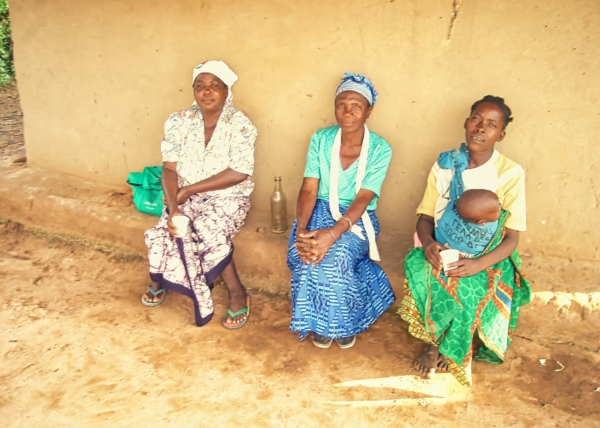
Wisdom is acquired
Each person’s wisdom is the product and heritage of many. We share ideas and knowledge with those we know. No one is born with knowledge; we come to find it here on earth.
When we don’t know how to approach an issue, we must ask so that those with the know-how can guide us. At school, we learn knowledge that we can pass on to those in need.
To be knowledgeable and not use this knowledge means there is no justification for having acquired it. When you use it for others, you are likely to be praised by your friends, and at the same time, they learn from you.
The same proverb and a longer version of it were recorded for the Lamba region at the beginning of the last century, see Doke (1927, proverbs 88 and 1688), with a different explanation:
Amano kubulwa / Amano mambulwa ∵ Wisdom consists in being told.
A word of correction to the self-satisfied, who considers that he knows everything.
Bumano ndilikwatile tebo, amano mambulwa ∵ It is not ‘wisdom I have of myself’, wisdom is being-told.
Proverb 276
Abang’o tabatulanapo
Takwabapo ukulabila pa fintu umunobe acita kati nawe efyo ucita.
Incito itafwaikwa ku bantu abenji ilingi line icitwa ubushiku pamo ngo kwibila abantu nangu ukwipaya. Abacita ifi tabafwaya ukutula abanenu.
Thieves do not expose each other
There is no reason to point out what others do wrong when you yourself engage in the same types of activities.
Activities that should be hidden from others are typically done under the cover of darkness, particularly stealing and committing murder. Those who engage in these acts do not reveal each other’s wrongdoings.
The same proverb was recorded for the Lamba region at the beginning of the last century, see Doke (1927, proverb 153), with a different explanation:
Abang’o ta ba tulana ∵ Thieves do not tell on one another.
They know too much of one another’s secrets to risk letting any out. Honour among thieves.
Proverb 277
Umukulu mupundu, ulatwalila mwi luba
Abantu abengi balikwata ubupe na mano afisama mukubweneka abaicefya, mubupina yangula ubukote.
Amafya esa pali ifwe, caisa sangwa aba bantu ebesa mukwafwa pali nga mafya. Lelo nangu bwafya bungeshila mu nshila ishupile, umukulu angesapo nenshila yakubomfya ubungo nangu amano abakulu bambi pakupwisa mbulya bwafya.
Insoselo imo yeka kuti yabomfiwa mu nshila abaice batanga fwaya kwakana naba byabo Kano ukubafwa bo ngacali bawamine: “Nga amano yapelwe nakuli we, nomba we wafilwa kupelako nabambi.”
An elder is like the mupundu tree, which bears fruits beneath its flowers
Many people possess talents and knowledge hidden beneath their simple, poor, or aged appearances.
When problems arise, these individuals often prove to be the ones who help solve them. No matter how challenging a situation may be, an elderly person can devise a solution using their intellect and the collective wisdom of other elders.
This proverb can also be applied to situations where young people are unwilling to share their own knowledge but expect help when needed: “Wisdom was shared with you, yet you fail to share it with others.”
The same proverb was recorded for the Lamba region at the beginning of the last century, see Doke (1927, proverb 720), with a different explanation:
Mukulu mupundu u lekatila mwiluba ∵An elder is a Pundu tree that bears fruit in the flower.
Though one sees only flowers on the tree, the fruit is there hidden; it will come to view in time. Said to anyone who says he hasn’t an article, when asked for it.
Proverb 279
Icikolokolo cikubepa, cufi munobe mukwanu
Umwana wabene mutaupilapo pamo angakubepa ukucila uo mwaikatana mu cupo.
Ulo waupila mu nanda, umunobe nao aisa kupilamo mweko mo, mwe nomba babili mwaba abanankanshi mu cupo. Ifyo angomfwa kubuko bakolabila pali we, akesa kukucenjeshako.
An outsider may cheat you, while a brother-in-marriage is your brother
An outsider, someone with no connection to you, might deceive you. However, those you are connected to through marriage will not.
Suppose a man marries into a family, and another man also marries into that same family. The two then become brothers by marriage. If one overhears what the in-laws say about the other, he will warn or inform the other accordingly.
Proverb 280
Ifyalula muntu bung’omba fyamipashi
Cilaposa nshita ikulu ukutabona pa muku yakwamba ukwishiba ngu muntu.
Umuntu angaboneka kubati ni mubomba bwa kwimba, kushana nokushika nyimbo nomba mukuya kwa kashita kaboneka ati takumako ku mipashi ya calo.
Cishupile kwishiba imibele ya muntu mpaka mwabona imicitile yakwe iya cila bushiku nokumfwa amashiwi alabila umwalekana lekana. Angula ngo uwaicefya ukwalula uwa bunkalwe naba taololoka ukulungama.
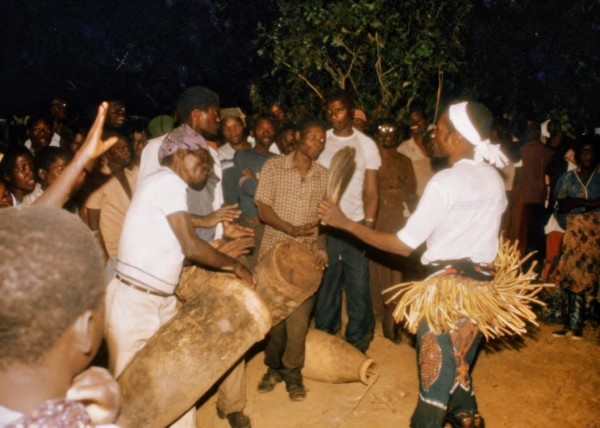
What changes a human being into an esteemed singer-dancer-composer are the spirits of ancestors and specialists
It takes more than first impressions to truly get to know someone.
A person may appear to be a talented singer-dancer-composer, but later it might turn out that they have no genuine connection with the spirit world.
It is difficult to ascertain a person’s character until one has observed all their daily actions and heard their voice and words in a variety of circumstances. Perhaps then the humble turn out to be rough, and the crooked to be straight.
Proverb 281
Akana kabubele bunkumbwa
Icakubalilapo cila tentembwa sana. Ubwafya bonse buleta ubulanda ku bafyashi.
Umwana ibeli alatentembwa sana ukucila bambi, elyo ngakwacitike cibipile kuli ngu, cilaleta ubulanda sana.
The first-born is sorrow
The first-born is adored more than the children who come after. Every trouble this child experiences is felt as sorrow by the parents.
Utmost care is taken with the first-born child, and should something unfortunate happen to him or her, it brings great sorrow.
The same proverb was recorded for the Lamba region at the beginning of the last century, see Doke (1927, proverb 25):
Akana ka bubele bunkumbwa ∵ A first-born child means sorrow.
He is always treasured more than the others: and any misfortune to him causes keener sorrow and anxiety
Proverb 282
Aka kubulile mfwa yaba noko, limo kalabile
Ilyashi libipile lilendesha kwenda; sumina ico wabalilapo ukupokelela.
Umuntu uuli pa lwendo, ngabamutuma ukutwala ilyashi. Lyakuti bacite nabacite mukabebe ati banyinenwe balifwile. Ifyo alabila pamuku umo mulingile ukufikonka.
Who ever informs you of your mother’s death, will have only one thing to say
Bad news travels fast; accept what you hear first.
Imagine a man on a journey is asked to pass the message to you that your mother has passed away. He will not know more than this, so it is useless for you to start asking questions. Therefore, you must take what he says as it is.
The same proverb was recorded for the Lamba region at the beginning of the last century, see Doke (1927, proverb 7):
Aka kubulile imfwa ya noko, limo kalabile ∵ The little thing that told you of your mother’s death, it is once that it spoke.
Bad news travels fast. A traveller passing through a certain village is commissioned to tell So-and-so at another village that his mother is dead. Not being certain of having heard everything, he gives the message. ‘Perhaps your mother is dead.’ His news, nevertheless, must be believed.
Proverb 283
Ku mbonshi takuya ubwela
Fimbi ifyo mwalwile tafibwelelapo ifyo fyali. Mube nokwishiba ulo mukosuminisha pa lwakwalula.
Mu buntunse bwesu, abantu abafwa balabashika ku mbonshi ya mishi uko amatontonkanyo esu atupela ukulanguluka ati tabakabwele nakambi. Ku mbonshi kuba ukwatikama eco ne manda shabafwa eko babika.
From the west, no one returns
Certain changes are irreversible. Therefore, take care when making big decisions.
In our Lalaland, the west is regarded as unsuitable for living; people who die are buried on the western side of the villages. The west is dense, which is why cemeteries are placed there.
The same proverb is mentioned for the Lala region in 1942 and 1946.2Munday (1942b:8) and Lambo (1946:46). A related fact is that drums have to be played in eastern direction in ritual music. Only spirits return from the west. For the south of Congo, van Malderen3Van Malderen (1941: 118, 121). gives the following song text brought by a shing’anga at the initiation of a spirit-possessed (like the Cibombe ca cisungu): “The child goes eastward and returns from the west.” This means: The patient/initiate goes away as a human being and returns as a spirit, that is, a medium during possession.
Similar and comparable proverbs were recorded for the Lamba region at the beginning of the last century, see Doke (1927, proverbs 599, 1653 & 1747), with a different explanation:
Ku mbonshi takuya ubwela, uwa yako alelilila ∵ To the west he does not go who returns again; he who goes, goes for good.
A native superstition that one who goes west never returns. Thus if a man is delayed from returning on a journey, they say that he has gone west. The natives also believe that if a man is buried looking west, his spirit will never return; but if he is buried looking east, the spirit will return, and be born again into some babe.
Webo uli imbonshi, tawalululwa ∵ You are the west, you won’t be turned round.
You are obstinate.
Ikanga ilyaile imbonshi talyabwelele ∵ The guinea-fowl that went west did not return.
Don’t travel westwards.
Proverb 284
Ubucilanshila tabwafya
Mubwikashi bwesu tamwafya amafya umo twikala.
Ulo twafyalwa tulasanga amafya ayo tuli nokupitamo. Mu calo mwaba naba tupata kanshi ubwafya bwalikwisa palifwe.
Crossing roads is inevitable
In the course of our lives, we cannot avoid facing problems.
From the moment we are born, we are faced with challenges that we must overcome. In this world, there will always be people who hate you, so be prepared for adversity.
Proverb 285
Abapalu tabendela mwiyamba limo
Abantu bakwata imilimo imo ine tabafwaya ukubombela pamo.
Abapalu banama ilingi tabafwayapo ukwendela pamo pantu imisango babomfya pakwipaya inama yalipusana. Eico tekuti afwaye umunabo ukwishiba.
Master hunters will not go together on a hunting trip
People with similar special skills do not like to work together.
Master hunters do not like to go hunting together because their methods of hunting animals differ. They do not want others to know how they do it.
The same proverb was recorded for the Lamba region at the beginning of the last century, see Doke (1927, proverb 154), with a different translation:
Abapalu tabendela mwiyamba limo ∵ Hunters do not walk in the same forest.
Persons of one trade do not live together: each has his own domain.
Proverb 286
Abapushi tabafwayanapo
Abantu abanang’ani abaikalila fye ukulomba lomba tabafwaya bantu bambi nabena ukulomba pa ncende bekalila kano nibofye beka.
Ukuitemwa ekulenga abantu uku kana fwaya ukuba pamo ukutontonkanya ati nakalimo tafyatukumane.
Beggars do not like each other
Lazy people who only want to lead an easy life would not like other lazy people in their village, because their presence could expose them.
Selfishness draws people away from loving each other, as they believe there will not be enough for everyone.
Proverb 287
Ikanga ililele insala kumutwi mupupulo
Ngawa pusa icilefwaikwa cimo, nafyonse fimbi filakosa.
Ikanga litalile bushiku bwafumapo talilalapo ukufikapo pantu mutwi uba uwaipekanya ngakwa citikapo cimo ubushiku.
Umo twaikalila panshita imo, tukumanya amafya ngo afwaya ukuya bombelapo lwenkolo. Mpakafye yabombelwepo, tatwaikalile. Yakula tupela bwafya bwakulanguluka. Mpaka ubwasuko buboneke epakuti amano ekalile.
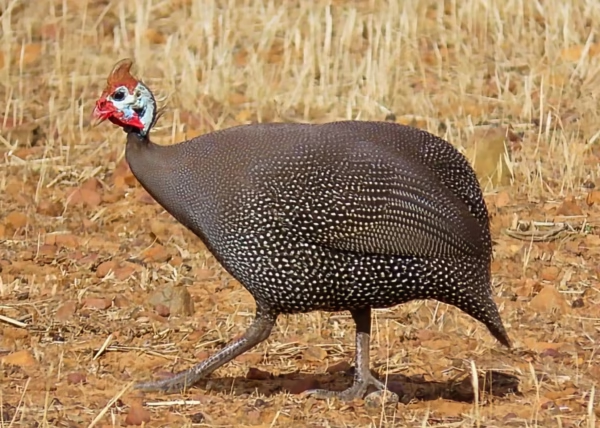
A hungry guinea fowl may sleep, but its head is always on guard
If you are missing one important thing, everything else becomes a lot more difficult.
A guinea fowl that had no food the previous day will not sleep soundly, as its head will always remain alert in case an opportunity arises at night.
In our daily dealings, at some point, we will encounter a problem that needs an urgent solution. But until that solution is found, we shall not be at ease; it will give us headaches. Only when a solution is found will our minds be free again.
The same proverb was recorded for the Lamba region at the beginning of the last century, see Doke (1927, proverb 380), with a different translation and explanation:
Ikanga ililele nsala kumutwi mupupulo ∵ The guinea-fowl that slept hungry, his head is a stick for dewdrying.
A stranger to whom the villagers have refused food, after a night of hunger, will start off early in the morning, before the sun is hot, and the dew dried. The guinea-fowl, after a hungry night, leaves the trees early and uses his head for knocking off the dew on the grass, as he looks for food.
Proverb 288
Mwimbona mamba mu numa nine nafyele imbeka
Wikwata ubupingushi pafyo ubwene kunse.
Nangu ningaboneka uwafiko, lelo ifyo nabomba teti musumine ati nine nafibombele.
Kwaliba bana abanansungu abaweme sana icakwebati awabona banyinabo, tekuti usuminepo ati ebabafyele. Kanshi twilasula ifyo abantu bamoneka. Nibani beshiba ati uyu namayo akafyala kateka wa calo? Takwabapo.
Don’t look at the dirt on my back; it was I who produced the beautiful one
Do not base your judgement on outward appearances.
I may look dirty, so you might not believe that I was the one who produced this beauty.
Consider beautiful girls whose mothers, when you see them, might amaze you. Therefore, let us not make conclusions based on how people look. Who can know which woman is or will be the mother of a president governing a country? No one can.
Proverb 289
Umukulu nga awa tafya kabepesho
Ulo twapanga icilubo, tususha abaibelele ukuba ne cilubo.
Fimbi fintu fipona bwaka nomba cilatukosela ngafya citika kuli ifwe.
Twalinga ukubomfya amano ambi nokusumina ati tungafilwa. Tepakuletela lyashi limbi ukufilwa kumfwisha ifikomo.
When adults fall or fail, they will look for excuses
Whenever we make a mistake, we try to blame someone or something else.
Certain things just happen, but we find it challenging when they happen to us.
We need to change our mindset and accept that sometimes we’ll fail. Don’t make up stories or ignore the facts.
Proverb 290
Icicetekelo ne subilo filangusha imilimo.
Tatusakamana ukuti apa ndeimba akanama palikosa pantu tuleshiba ukuti ako tukoimba kali panshi apa, kanshi epa kukosa sana mpaka tukembe. Nci cilatupela ukukosa muku kutaibwelamo.
Ulo twimba imbeba, shilafuma nokubutukila mu kwaingila ku memba ambi. Pantu wasakushibona ku menso obe, epa kukwata icicetekelo nokutaibwelamo.
The little animal that entered its hole while you were chasing it, will not be difficult to dig out
It is easier to work when you have hope and expectations.
We do not mind even if the ground is very hard to dig. We continue the hard work because we know the little animal is there underground. This gives us determination and prevents us from despairing.
When you go out to dig for mice, they will come out running fast and enter other holes. Just because you saw them with your own eyes, you will have more determination and despair less easily.
A similar proverb was recorded for the Lamba region at the beginning of the last century, see Doke (1927, proverb 27):
Akanama wingishe takakatasha ukwimba ∵ The little animal that you have sent in (to its burrow) is not difficult to dig.
Hope and expectancy make all the difference to work. One does not mind how hard the ground is round the burrow, if one knows that the quarry is within.
Proverb 291
Ameno mafupa
Mu bwikashi bwesu, telyonse ungatetekela ukweba ati abanandi balintemwa ku fintu ubona.
Ulo pakati kenu nabanobe kwalubana, nabakupata nabo bakulaisa pa nanda yobe nokulanga ukuseka sana. Nawe pakubona ameno abo ulo bakoseka, ukeba ati balintemwa libe balikupata. Ifili mukati kabo fimbi.
Teeth are just bones
Even though a person may smile at you, you cannot know what is going on in their mind.
Even those who hate you will visit your home and enjoy laughing with you. When you see their teeth as they laugh, never conclude that there is mutual friendship when there is hatred. You never know what is inside of them.
Proverb 292
Ulushaba lumo lwaimishe mfumu pa cipuna
Indupwa shilakwata inshita yakulilamo icakulya. Akantu nelyo kacepe shani, imbi inshita kalakwata umucinshi wakuka konkela.
Nomba palaba limbi ilyo mukolya, pakulya penka mwaponyapo cimo ico muli nokubomfya, tamwaikale fye, mwalaima mukubula cilya cintu pakuti mukonkanyepo ukulya.
Ngefyo nji nsoselo ikolabila, imfumu yalikulya kapansha nomba lumo ulubalala kalupona, elyo imfumu yaimine mukutola ndulya lubalala.
One peanut forced the chief to leave his throne
Small cases can have big consequences. No matter how insignificant a thing may seem, at some point, you will be compelled to address it.
There are times when you are eating and something drops on the ground. You will not let it go; you will stand to pick it up so that you can continue eating.
The chief was eating some peanuts. One dropped, and the chief had to leave his throne simply to pick it up.
Proverb 293
Nafwe nsonso, lelo balokwisa abalwendo
Uku neng’ena kwa ncende imo iya mubili kulangapo fimo.
Kulaba inshita imo ilyo icipeni cisunkana libililibili kwati kututuma, nangu mu minwe nangu mukati ka lukasa mwaneng’ena ninshi mwishibe ati twalapokelapo fimo nangu kwalacitikapo cimo.
I have a tingling in the sole of my foot; visitors are coming today
A tingling sensation anywhere in the body is a premonition that something is about to happen.
There are times when, for instance, eyelids behave differently by shaking automatically. This tingling means something will happen at your place or elsewhere. This could be the arrival of visitors or another event taking place.
The same proverb was recorded for the Lamba region at the beginning of the last century, see Doke (1927, proverb 822), with a different explanation:
Nafwa insonso, lelo balukwisa abensu ∵ I am dead with tingling (in the sole of the foot), visitors are coming today.
Tingling in the foot is believed to be a sign of coming visitors.
Proverb 294
Pacaabu, betapo uwo wishi
Ukubombela muli cilupwa nangu ifibusa pakubala.
Calyanguka ukupele cilangililo ca muntu waishiba ngokososa kwi bumba, ukucila umuntu umbi utakwishiba.
Nowabusha abantu pa caabu (apo abantu babukila inika) mwakusanga’ti aitapo abo eshibile ngale ukubabusha ilyo atangatampa ukwabusha bambi. Yonse nshita baba mu mano obe.
At the ferrying point, they start first with friends and relatives
It is normal to consider family and close friends before others.
This is, for instance, seen at a ferry point on a river where the ferryman will start with relatives and friends before others are given the service of being ferried.
When using a name as an example when addressing a public meeting, you will use one of family or friends rather than a random name. They are always on your mind.
Proverb 295
Mukutu ali enka, taikutula
Ngoli weka tapali ifyo wingafunguluka mu mano.
Ifingi ifyo tutwala pa nsaka abanensu balafiwamya. Nga walyupa elo munanda mueshupana naba kashi, ili lyashi ngawalitwala pansaka banobe kuti bamona umo bengakwafwilisha pakuti mwaikala bwino.
Self-reliance will not solve all problems
When you decide to do everything on your own, there is no way you will advance in wisdom.
Whatever affair we take to our family or friends, they help us solve it. If you are married and have marital problems, once this issue is brought to them, they will try to help solve it so that you restore your love.
The same proverb was recorded for the Lamba region at the beginning of the last century, see Doke (1927, proverb 721):
Mukutu ali enka talikutulula ∵ Wisdom by itself does not unfold itself.
A chief, who dispenses with his wise advisers, and depends only on young men, will find that he alone has not wisdom to meet an emergency when it comes.
To download the whole proverbs book Mu Zambia Amano Mambulwa as a pdf, click here.