Proverbs in Zambia ∴ deep proverbs 1

Proverbs in Zambia: deep proverbs in Chibale 1
Of the two articles on proverbs that the people in Chibale consider deep, this is the one that presents proverbs that teach us how to avoid problems and how to solve them when they do occur. They can also be found in the third part of the digital book Mu Zambia Amano Mambulwa, see here. The whole book can be downloaded here.
Other articles in this series
The proverbs about how to behave and what to do when problems arise, considered simple in Chibale.
The proverbs about what to expect and how things work, considered simple in Chibale.
The proverbs about how to behave and what to do when problems arise, considered more demanding in Chibale.
The proverbs about what to expect and how things work, considered more demanding in Chibale.
The proverbs about what to expect and how things work, considered deep in Chibale.
Proverb 201
Bwela kabwa kanji, kutanda kwa nshiku shonse
Ulo icintu cakanga ukucitika mbulya bushiku, kwesha nakambi pantu ngawaleka ukwesha ninshi ukafilwa.
Cibinda ewalokwita akabwa kakwe, ati bwelako, apo wafilwa ukwikata inama lelo, wakwisa kwikata lumbi inshiku shinji.
Ulo umuntu aya mukulunga mu mpanga, ela mwi shuko ngaya kwipaya inama. Kati tendelepo bwino tekuti alekepo ati nomba capwa! Akesa kuyamo bumbi bushiku mu kwesha.
Come back, my dog, there are so many more days to come
When something does not work out, try again. You only fail if you stop trying.
The hunter is asking his dog to return because there was no success in hunting that day; at the same time, he wishes the dog well for the coming days.
When a hunter goes out hunting, he does so with the hope of a kill. If not successful, he will continue trying until one day he is successful.

The same proverb was recorded for the Lamba region at the beginning of the last century, see Doke (1927, proverb 164), with a different translation:
Bwela kabwa kanji, kutanda kwa nshiku shonse ∵ Come back my little dog, travelling (hunting in the bush) is a thing of every day.
Said by the villagers to a hunter returned without success; never mind, hunting is a thing to do every day: one day you will be successful. If at first you don’t succeed, try, try again.
Proverb 202
Insala ni ndiminwa te mpulilwa iyoo
Nji nsoselo ilabomfeshiwa lyonse ulo inshita imilimo ya bulimi yafika ku mpelo. Ikotwibukishako ukwebati tatulingile ukulolesha pali bambi ukutufwaila ifyakulya mukuya mukulomba lomba.
Calinga tukoicimfya insala muku bombesha na maka mu mabala nokufumya ifingi. Ukulomba cilanga fye ukuti tatwakwetepo amaka akuilimina fwe bene no lupwa.
Hunger requires farming, not begging
This proverb is used at the end of each farming season. It reminds us that we should not depend on others to provide for food by begging.
You must overcome hunger by working hard in the fields to produce more. Having to beg shows that you have been too inactive in farming, for yourself and your family.
Proverb 203
Mwalya imo mwashika no bucinga
Mwati ukulya inama imo, elo mwashika no bucinga mwaliba nokulokesha ifya mupepi mu fintu kucita nokuta languluka ifya kuntanshi.
Ciba kubati amwa ikata nama mubucingo bwenu, peka apo mwashika mbo bucinga kubati empela yafyonse. Mulingile ukulanguluka fyaku bomfya bweka mbu bucinga nakuntanshi.
You have eaten one animal, and you have buried the trap
You are being short-sighted in your dealings and not thinking about the future.
It is like after trapping an animal and then burying the trap, as though it is the end of everything. You need to think of using the same hole for further use.
Proverb 204
Nawe, uli ne mangala kupena!
Uwa mutima ubi ku bantu nokufwaya ukutinwa.
Umuntu utafwaya kumwalula bamwebati ubukali bwakwe bwa cibanda pantu tomfwapo ku bantu, abyata kwati kampeshi.
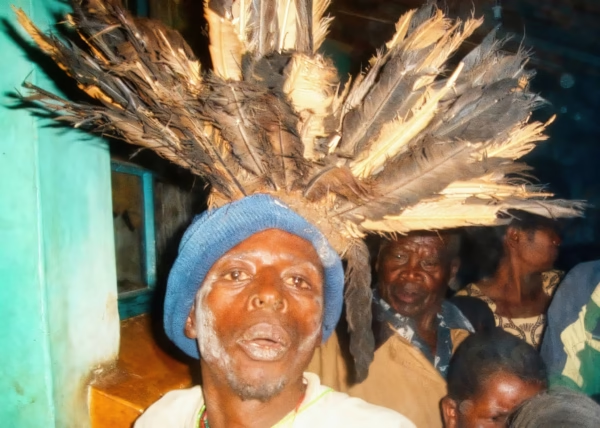
As for you, you have a headdress that flashes like lightning!
This is said about those who want others to fear them for their hard hearts.
A person who refuses to take advice is referred to as acting like lightning.
The same and a similar proverb were recorded for the Lamba region at the beginning of the last century, see Doke (1927, proverbs 881 and 679):
Nawe uli ne mangala kupena ∵ As for you, you have a head-dress that flashes like lightning.
You have an evil temper
Mba shani pali nebo u fwite ngala? ∵ How is it that over me you array yourself in plumes?
Why are you so spiteful, as though arrayed in a war headdress of feathers to kill me?
Proverb 205
Akatili kafwa kulushinga lwakako
Ukuba abaibukila nefintu tusosa nangu ukucita. Ukubebeta ukumona ifingesa pantanshi pali fwebo.
Epamo nakatili, kesa mukufwa ku lushinga, pantu umwando bapyata ufuma ku mpapa yakako.
Abapanga amafunde bantu abene, nomba ciboneka kubati yabantu bambi maka maka ngauli necifulo capamulu. Ku ceshamo palya pa cifulo ngawafumapo, wakusanga ati amafunde mwapangile akukosela.
A steenbok dies by its own bow string
Be extra careful with what you say or do, and consider the long-term effects.
The steenbok dies from being shot with a bow, the string of which was made from its own tendons.
People themselves, especially those in positions of authority, make laws that others are expected to follow them. However, when they leave those positions, they find the laws to be difficult to endure.
The same proverb was recorded for the Lamba region at the beginning of the last century, see Doke (1927, proverb 69):
Akatili kafwa ku lushinga lwakako ∵ The steinbok has died (been killed) by its own sinew.
The arrow that killed it was hurled from a bow strung with steinbok gut.
Proverb 206
Nkaka ku maboko, ku molu ndokwenda
Tulokukwata umutima wa luse ku banesu pantu nafwe limbi tungasangwa mu mafya amo ene.
Umuntu ilyo aba na mafya, niku bantu tubutukila pakuti batwafwe. Nomba kulaba inshita imbi wacelwa ukubwesha ico wapokele. Umwine nga aisa mukufwaya, tweba ati, unkake ku maboko pakuti ndokubomfya amolu ukwenda mu kufwaya icipe cobe.
Tie my hands so I can go, using my legs
Let us give our debtors some breathing room, allowing them time to find the money or item in question.
When we are in trouble, we rush to our neighbours for help. But once we are late to repay a debt and the owner comes to ask for it, we say: “Tie my hands so I can go, using my legs to find your item.”
The same proverb was recorded for the Lamba region at the beginning of the last century, see Doke (1927, proverb 993):
Nkake ku maboko, ku molu ndukwenda ∵ Bind my arms, with my legs I walk.
If you want me to pay your debt, give me the opportunity to get about and raise the money.
Proverb 207
Ndi mumbulu nshilangwa mabinda
Mu milimo naishiba sana tekutipo unange ifyakucita.
Imimbulu ninama shimo ishaishiba amabinda ampanga, elyo shenda ishingi. Shalishibikwa mu musango shumfwaninamo pa kulunga nokubesha. Ngecilangilo pakusowa inama, shicita iyasunako kunama ikobutuka kushala ikolya.
I am a wild dog; don’t tell me how to hunt
This is my specialisation; I don’t need anyone to show me how to do it.
Wild dogs are animals that know all the hunting grounds of the wild and they move in large numbers. They are well known for their hunting prowess and organisation. For instance, when chasing an animal, the one that tears a piece from the running animal remains behind to eat.
Proverb 208
Cimbwi afwile ntangalilo
Cimo cimo pakashita kamo. Tubombe imilimo apo amaka esu angatupesha.
Imilimo ngayafula tulingile ukubomba umo umo ukutasendela pamo yonse. We muntu umo wine ulokufwayako ukuya mukutema icitemi elyo nakambi pamo penka utekepo inshima! Ngawalabomba shani? Lekelako bambi nabo babombe.
The hyena died for wanting to go down two paths
One thing at a time. Let us do our work according to our possibilities.
When there is too much work to be done, let us do one thing at a time. If you plan to go out to cut trees and at the same time you want to cook food, how are you going to do that? Leave other works to be undertaken by others.
Proverb 209
Noko wamunobe tekatilwa pa lwino
Ubusunge bucililepo buya ku ba kuifyalila.
Walinga ulokupusanya imibombele nabafyashi ba munobe. Takwaba mufyashi unga kusunga ngabanoko.
Mu lupwa, abafyashi baleshiba ifya kusunga cila umo umo. Lelo teti basunge cimo cine aba mu lupwa bonse.
Your friend’s mother will not allow you in the kitchen
Good care will be given to the first-degree children.
You must change your behaviour when dealing with your friend’s mother. No other woman takes care of you like your own mother.
In a family, the parents know how to treat each member. However, they cannot similarly care for all the children in the extended family.
A similar proverb was recorded for the Lamba region at the beginning of the last century, see Doke (1927, proverb 962), with a different explanation:
Noko wa mubyo utekatilwa pa citupa ∵ The mother of your mate, who is not caught at the loft.
One of your father’s wives, who is not your own mother. In the families of the polygamist, the mother will not beat her own child if found taking food that has been stored in the loft, but she will soundly thrash the child of one of the other wives, if found so doing in her house.
Proverb 210
Uwawa taimina
Cikotukonkomesha ukuba abakwafwana na banensu.
Abena mupalamano ebesa mukwafwa umo nga aba mubwafya pantu takwete amaka. Ilyo we muntu waba namasanso nge cililo, abo wingasubila ukukwafwa bena mupalamano
Fallen and unable to lift himself up
Be helpful to your neighbours.
Neighbours always help each other out when one of them is powerless. When you have a funeral, the people you expect to come to your aid are your neighbours.
Proverb 211
Shimucita panini panini, apokele mwikalafye umukashi
Ukunonka mukubomba akamulimo nangu kacepeshe, pa kulekelesha ukakwatilamo amalipilo ukucila ukwikala fye.
Telyonse wingakwatilamo ishuko lyakukupako uto ukabila mu bumi bobe. Mu cine ngataukobombesha teti usubile akalusangu ukufuma kuli onse. Iwe ngawaikalafye tapali neco ucita, umwanakashi uwa upwa kumunangani kuti afumako nokwisa upwa kuli iwe pantu ulabombako nokusanga utufwaikwa mu bwikashi bwa muntu.
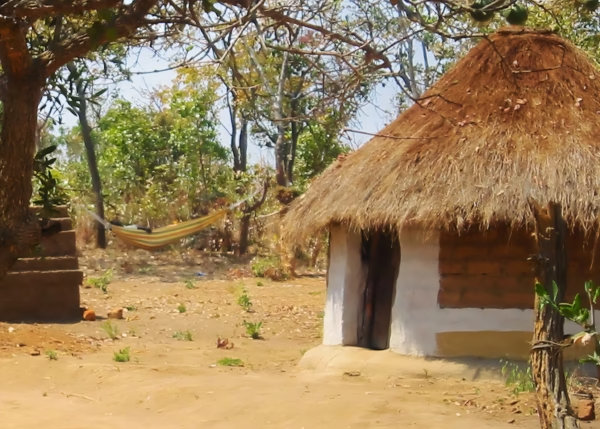
The man who worked little by little gained himself the wife of the lazy one
Working, even if only little by little, will eventually bring you rewards. Sitting idle will lead to loss.
Life’s essentials are not always given as gifts. If you do not work, for sure, do not expect gifts from anyone. If you spend your time lazily, eventually the woman married to you will seek a divorce and marry a laborious man, where life will be easier and its essentials more readily available.
Proverb 212
Ubukala bwa mbwa bwingila pacepace
Ukupoka icintu ukofwaya ukufuma ku bantu bambi walinga wapelako akashita/watekanya ukutatwala mukasaku. Ukucita nangu njebe ukwimaka inanda, kulaba ifyakukonka. Icibalilapo kutama injelwa, ashauma elo mwaishiba apa kwimakila. Boneni nakambi mwapekanya ifi fwaikwa fyonse. Fyonse ifi fibe umo fikonkanina. Nga ni kunanda, umutenge eulekelesha. Ensoselo imo kalwila wa buntungwa umuyashi Simon Mwansa Kapwepwe atemenwe ukubomfya ukulosha ku basungu. Ilyo baingilefye muno calo, bakwete ululimi uluweme pa umulandu wa mukuba wesu mpaka batampa ukututeka ngefyalo ifi: Nyasaland, Northern na Southern Rhodesia. Kwali kulwisha sana mpaka baisa tupa no buntungwa. Ifi efyo Kapwepwe aumfwile pantu abaleteka tabafwaile ukupela ubuntungwa ku bantu bafita mu kwangufyanya.
The dog’s penis enters slowly slowly
When you want to succeed in achieving something important, you must give it time and not be in a hurry. Consider building a house; there are steps to follow. First, bricks have to be moulded, and when they are dry, then you see where to build. Ensure all the requirements are on site, and so on, until putting on the pre-constructed roof. One of Zambia’s freedom fighters, Simon Mwansa Kapwepwe, liked to use this proverb when referring to the whites. As they arrived in the early days, they used sweet talk, but because of the rich copper deposits, they eventually colonised the countries Nyasaland, Northern, and Southern Rhodesia. And they fought tooth and nail to remove them until independence was granted. This is how Kapwepwe felt because the colonisers did not want to grant independence to the blacks too soon.
Proverb 213
Katili we kanama leka abakulu bakushile isaala
Ulo uli mwaice nabakulu epo bali, calinga waicefya mukucita ifintu pantu nawe akashita kobe takalafika.
Ukuba mwine mushi, kano waikala muli ngulya mushi pakashita akatali pakuti waishiba nabantu walikubonapo. Ukwishiba imisango yabo yonse nawe bakwishibe bwino. Kati mwine mushi afwa, elo bangatontonkanya ukukubikapo kati walinga.
You, steenbok, little animal, let the big ones leave the place to you
When you are still young and elders are present, it is always good to humble yourself when undertaking things, as your time to act will eventually come.
To become a village headman, you need to reside in that village for a long time to become acquainted with the people you’ll be leading; to become familiar with their behaviour and make sure they are familiar with yours. Only after the current headman passes away, can the elders consider appointing you as the new headman.
Proverb 214
Inama imakene ilalengesha ilele
Ukuba pa ntanshi mukucita ifya bipa kuti basuka abantu babifishishamo nabaikalile. Bwaba kwati bulwele bwa palupwa.
Palupwa ngapali baa bantu abashitekanya mukusosa sosa balengesha nokuti nabalupwa bambi babipilamo pa mulandu obe uwakuitakisha.
A standing animal also endangers the lying animals
Attracting the attention of others through negative habits has consequences for those related to you who do not exhibit such behaviour.
When a family includes talkative members who are not careful with their words, others may wrongly assume that everyone in that family is the same.
Proverb 215
Mumbwe ukulila kubona uko ashintile amatako
Mube abaipekanya. Umuntu pakucita cimo amona uko ashintilile amaka.
Calyafya ukupangila ukwipaya insofu ngata ulapekanya ifi fwaikwa. Nangu ukofwaya ukushita icintu, kano wabala wapekanya indalama shakushita ico.
Before the jackal makes a sound, it ensures it has a hideout
Be well-prepared.
When undertaking something difficult, one should know what is required, for instance, where to get help.
It is unwise to plan to kill an elephant without adequate preparation. Similarly, when you intend to buy something, ensure you have the money at hand to purchase it.
Proverb 216
Akafumbe kantu ufumbete
Sekela mu fintu ukwete.
Akafumbe ako wikete muminwe eko ucetekele ukulya, pantu utuli mumpanga te tobe iyoo. Napa kupekanya icakulya balinga umunani ukwete.
Na mu bwikashi bwesu pakukwata icuma, tulingile ukulinga napo tupelele amaka. Ciba namukufwaisha ifyo mungabomfya pa mananda yesu, uku kumbwa ifyo bambi bakwete tacawamapo, emwisa amano akwiba. Shiteni ifintu ukulingana ne ndalama mukwete, apa pelele amaka enu.
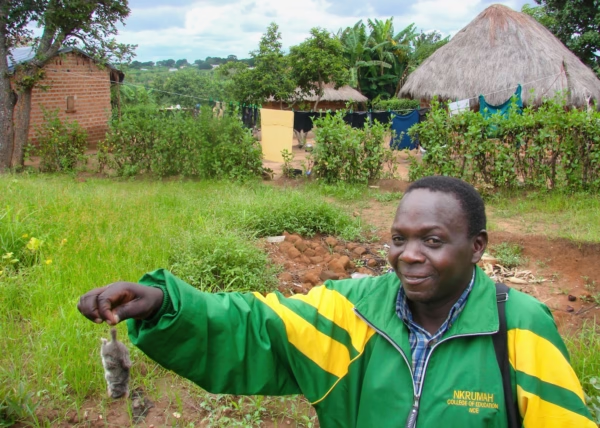
Stick to the little oily mouse in your hand
Be happy with what you’ve got.
The little oily mouse you are holding in your hand is what you truly have to enjoy as a relish, not all those large animals still in the wild or at the butcher’s.
In the way we live regarding wealth, we should be content with what is available; let us not go beyond our limits. This includes the limit of what is to be used by the family. Do not be swayed by the lives in your neighbours’ homes, as this may tempt you to steal. Buy what matches your budget.
Proverb 217
Tailowela ukutumene
Ukutaisunga mu cilabile labile kunga leta amashamo.
Tecakwesha ukulanda ifintu ifyo utangacita we mwine pantu kuti wailetelela.
Ilingi line abantu balasumina mu bufwiti, kanshi ulo ukososa pa cintu bwingi wishibe ifyakusosa pantu kuti wailengesha.
Tacalinga ukusosa ifyo utangacita kwati kusosa ati: uyo onse uwaibile katondolo yanji, nkamulowa. Tawishibe pali lilya ibumba palipo naumo uwakwata amano abufwiti. Ena akesha ukucita elyo ngafyacitika, bakeba ati ni ulya asosele pacintu bwingi, libe teopo kwalifye ukutinya, kanshi ni umbi.
Do not harm yourself by being reckless in your talk
Reckless talking may cause misfortune.
It is not advisable to speak on matters you are not involved in or claim knowledge you do not possess.
Imagine claiming that you can bewitch someone: “I am going to bewitch the person who stole my sweet potatoes”, when you cannot do such a thing. Others might then do it, and everyone will conclude that you did it, because you said so yourself.
Proverb 218
Mungulube alapaminwa pa ako alya
Ilyo tatula cita icintu conse, tulingile twashininkinsha ukusanga iciine, uku tacita mukasaku!
Munjili bali mupamine pantu ewali kwiba fyakulya mu cifwani.
Ngatwaumfwa ilyashi ili tatusekeshe pafya citika, twalinga twatekanya pantu limbi tukabepesha no muntu ushacitile.
The bush pig is beaten for what he has eaten
Before deciding on what to do, we must find out the truth and not act in haste!
The bush pig is beaten because he was the one stealing food from the field.
If we receive messages that do not please us, we must take them lightly and discover their meaning before accusing an innocent person.
The same and a similar proverb were recorded for the Lamba region at the beginning of the last century, see Doke (1927, proverb 761 and 762):
Mungulube alapaminwa akwa lya ∵ The river-hog is beaten for what he has eaten.
Don’t punish the innocent.
Mungulube alatulika aka alya ∵ The river-hog is made known for what he has eaten.
Don’t spread false accusations. One should only report that about which one has evidence, as in the case of a pig eating the maize.
Proverb 219
Uwapama nafyala, apamina limo
Tekwesha ukukwata mutima wa cifukushi.
Mulutambi lwa ciLala, umuko talinga kwikata banafyala, mulandu. Kanshi ulo kuli ukutosha pakati ka muko nabanafyala, pambi angabapuma pantu ukubekatamo bwaka naco clangs ukubapama.
Ukuba nji nsoselo yapela cilangililo umo taulingile ukushinshikila. Tekwebapo ati efyo ungacita kupama banoko fyala.
When you intend to beat your mother-in-law, do it fully
Don’t be half-hearted.
In the Lala culture, a son-in-law is not allowed to touch his mother-in-law; it is an offence. So, when there is quarrelling between him and the mother-in-law, he might as well physically beat her because mere touching her is already regarded as beating.
Of course, this proverb presents an extreme example of a situation in which you should not be half-hearted. It is not meant as an incitement to beat your mother-in-law.
Proverb 220
Nawe, uli icipekepeke icisabi ica mu Lubembe!
Ku mwana utatina balwendo.
Ici sabi cipekepeke bacilinganya ku mwana utatina abalwendo abo teshibe kwati alibeshiba. Ba mupalanya ku cisabi icipekepeke icisangwa mu nika beta Lubembe ici tatina abantu.
As for you, you are the big pekepeke fish in the Lubembe river!
This is said to a child who does not fear strangers.
Children who are not wary of strangers but approach them as though they know them are likened to the cipekepeke fish found in the Lubembe River, which does not fear people.
The same proverb was recorded for the Lamba region at the beginning of the last century, see Doke (1927, proverb 874):
Nawe uli cipekepeke icisabi ica mu Lubembe ∵ As for you, you are the big Pekepeke fish in the Luwembe River.
Said to a child, who is not careful about strangers, but goes to them as though he knew them well. The Pekepeke is a large toothed river fish, that does not fear people.
Proverb 221
Niwe pungwa, munshiponya isako!
Tekwesha ukuyumfwa. Umuntu alinga ukuba uwakwafwa abanankwe ilyo baba mu mafia.
Pungwa alishibikwa ukukana ponyapo nangu isako limo panshi. Kwisa tola onse masako akopona ulo akopupuka.
Mu mikalalile yesu tatwakwanishapo kukwata fyonse, eico ilyo wasanga ukuti cimo icintu pamo nga umucele, walinga ukuya pokako paba nenu. Nomba ngawaba nga pungwa, ukesa shupikwa kuntanshi ilyo ukabulilwa kamo.
You are the scavenger eagle, the non-dropper of feathers!
Don’t be too self-centred. A human being should be helpful to others when they are in trouble.
The scavenger eagle is famous for never dropping a feather to the ground; it picks up every feather that falls from its plumage.
In our lives, we do not always have the necessities we require. So, when you miss one thing, like salt, you have to seek it from your neighbours. Now, if you behave like the scavenger eagle, you will find it hard when you run short of anything.
The same proverb was recorded for the Lamba region at the beginning of the last century, see Doke (1927, proverb 1034), with a different explanation:
Ni we pungwa muntaponye’sako ∵ You are the eagle, the non-dropper of a feather.
Should the scavenger-eagle drop one of its feathers when flying, it would swoop down and catch it, tearing it to tiny shreds. Unless the bird is killed, a feather is never found intact. Hence this term is applied to the miser. Lenge: Cungwe ta ponya lipepe.
Proverb 222
Peepe pabena wishi tasalapo
Tekutipo lyonse ukuibona palobe weka. Bonako naba kushingulukile apatali ukuta konka beka aba mumbali mupepi.
Ulo wafika muncende iyabwangu, calinga waishibana nabena mupalamano obe pantu ebakakwishiba amano obe, nokukwafwa ebakakwafwa..
The he-goat will not choose from his father’s family
You cannot always be focused solely on yourself. You must consider everyone around you, not just your immediate circle.
When you visit a new area, it is better to get to know those next to you so that they understand your behaviour because once in trouble, they will be the ones to help you.
Proverb 223
Tabasala nkuni, nobuselekete bonse ninkuni
Tawalinga ukukana ico bakupela ngo bupe. Tekuba uwakusala, lyonse kufwaya fintu ifikulile, notunono nato tuli bwino kuli iwe.
Twaikala mu calo ca malanda ukushingwana no bucushi ubwalekanalekana. Ilyo umo uwa luse akumfwilo luse noku kupa cimo, iwe walinga ukupokelela, tekususha ati kano mwampela cakuti na cakuti. Ne nkuni shine kuteba ishili shonse.
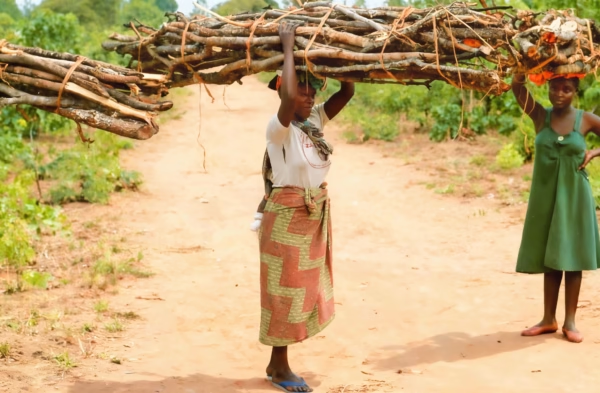
Don’t be selective about firewood; all wood will do
Receive whatever you are given as a gift. Don’t be choosy, only wanting the bigger things; the simple ones are also good for you.
We are living in a world with all kinds of problems. Now, when someone is kind enough to give you something, you, as the recipient, are supposed to receive it, not to choose. Even firewood from other trees can serve the same purpose.
Proverb 224
Shikala no mwabo
Bikeniko onse amano kufintu mwapelwa.
Bomfyeni italanta mwaba nalyo ukucila kwesha ifyo mushapelwa ifyo mutali nokucita.
Nshimu shaishibikwa cipi cipi nomwabo, mubumi bwabo bonse. Takwabapo ukulekaleka ukwesha fimbi ukucila mukusenda mwabo wakupangila ubuci.
Bees with nectar
Focus on what you have been given.
Take advantage of your talents instead of trying all sorts of things you weren’t meant to do.
Bees are always associated with nectar throughout their lives; it is their forte. They do not change their livelihood to anything other than gathering nectar to make honey.
A similar proverb was recorded for the Lamba region at the beginning of the last century, see Doke (1927, proverb 473), with a different explanation:
Ishikala shi lekala ne mwabo ∵ Those (bees) that sit down, sit down with nectar.
Said when offering a visitor food.
Proverb 225
Niwe pungwa ukolelemba, nabashukile bakotola lelo!
Sumina kuli mbo abanga kwafwa.
Ba pungwa nangu ifyuni fimbi filangilila abantu apali icakulya/ maka maka inama. Ulo abantu ngabaya nkulya, cacine balasanga inama ilifwile. Nangu pungwa aba uwakuibwenesha, alafwa bambi kusanga buswete.
Incito shaba ishapusana pusana. Mbalya basambisha babomba bwaka, nomba mwenka mulya emufuma intungulushi shiteka. Abalengele nimbalya baba sambishe pakuti babe pali mfilya fifulo ifyo bataibukilepo.
You are a scavenger eagle hovering, and the lucky ones are going to pick meat!
Recognise those who can help you.
Scavenger-eagles and other birds that hover in the sky signal to people that an animal has been killed there. And when people go there, they are sure to find a dead animal. So, even though the scavenger eagle is very self-centred, it helps others to find meat.
There are many different types of work. Teachers do their work of teaching the young, and others become leaders. However, the main reason they hold such high positions is their teachers. Will they be aware of that?
Almost the same proverb was recorded for the Lamba region at the beginning of the last century, see Doke (1927, proverb 1035):
Pungwa ulukulelemba, abashukile balukutola lelo ∵ The eagle is hovering, the lucky will pick up (meat) today.
On seeing vultures or scavenger-eagles hovering in the distance, the natives will all turn out to search for the dead animal that has attracted the birds; the finder will be the lucky one.
Proverb 226
Nawe, uli shikilwe taumfwa!
Nji nsoselo ilabilwa ku muntu uuli be miya ya kutomfwa nokukana sumina ifunde.
Ngataukoumfwapo ifyo abanobe bakososa ninshi mu buntu tawabamo.
As for you, you are resolute in not listening!
This is said to a person who is stubborn when it comes to listening and taking advice.
If you don’t take good advice from friends, then you are not worth being a human being.
The same proverb was recorded for the Lamba region at the beginning of the last century, see Doke (1927, proverb 884), with a different explanation:
Na we u li shikilwe, ta umfwa ∵ As for you, you are intractable, you do not listen!
Said to a disobedient person.
Proverb 227
Akanwa kobe kalalila bungoma!
Ukulabila kobe ukubipile kulomfwika konse konse.
Mwinji umo nji nsoselo inga bomfiwa. Ukupinta fyonse ati fyacine nokusalanganya konse. Sunga nge nkama fyonse ifya nkama. Wileta lupato pa bantu kufyo ukolabila.
Your mouth sounds like a drum!
Your loose talk is heard everywhere.
This proverb can refer to several things. You believe everything you hear and then tell everyone. You need to keep private affairs private. Do not create enmity between people through your talk.
The same proverb was recorded for the Lamba region at the beginning of the last century, see Doke (1927, proverb 45):
Akanwa kobe kalalila bungoma ∵ Your mouth sounds like a drum.
When you quarrel the whole countryside hears your voice, as through a drum were sounding.
Proverb 228
Imfwa ya kutali yakulilila mu muloshi
Nji nsoselo kuti yabomfishiwa (mu mfwa, ukufyalwa kwa mwana nabalendo mutenekele) uko balupwa bangaya mukubabona, nomba ico kufiteshibikwa bangayako inshita imbi angula ukutayako.
Ukupokela mashiwi a cililo alakunta mitima. Tauipekenye noku kutwala mu malangulushi. Kulisha akamuloshi panini, ukuteshiba ifya kucita ndulya lweka. Apo cililo tacilapwa, ungesha ukuyako limbi. Angula kutumako akandalama kulupwa luli namasanso.
Death from afar is mourned by whistling
This proverb can be used in situations (a death, a newborn baby, an unexpected visitor) where people are expected to rush to come, but due to circumstances, they may arrive late or not come at all.
Receiving a funeral message from far away is heartbreaking. You’re unprepared; it throws you into mental disarray. You whistle softly, unsure of what to do at that moment. But since the funeral hasn’t taken place yet, you can try to attend anyway, or you can send some money to the bereaved as a contribution.
The same proverb was recorded for the Lamba region at the beginning of the last century, see Doke (1927, proverb 403):
Imfwa ya kutali ya ku lila mu munsu ∵ Death afar off is mourned by whistling.
If a man is far away from the scene of death, and hears that so-and-so is dead, he does not wail in the approved fashion, as he would were he at the village of the dead; he just whistles: Wheu! and says: ‘Oh my friend is dead!’
Proverb 229
Abakulu babwene ulukasa lwa nkalamo kabashikapo
Ukuba ngo mukulu uwa mano, kukwata amano aku shinshintila ifintu ifingaleta ulupato, nangu umwenso ku baice.
Umukulu ali nabaice mu mpanga elyo abwene apapitile ulukasa lwa nkalamo. Atontonkenye ukushikapo ukuteba abaice ico abona. Atinine ati nganabeba ninshi bonse balakwata umwenso, tatwaendepo bwino.
The elder saw the lion’s paw print on the sand and wiped it out
A wise person always tries to avoid bringing out things to the public that may cause confusion or fear.
An older man went hunting with young people. He spotted a lion’s footprint on the ground. He rubbed off the print and did not inform the young ones about it. He feared that if he told them, everyone would become even more afraid, and the hunt would not go well.
The same proverb was recorded for the Lamba region at the beginning of the last century, see Doke (1927, proverb 1328):
Umukulu walibwene ulukasa lwa nkalamu, kashikapo ∵ The grown man saw the footprint of a lion, and he covered it over.
The wisdom of the adult, who, when he saw a lion’s spoor near the village, obliterated it, lest the villagers should get a fright.
Proverb 230
Imbwa ngayatemwa ukusowa ba kolwe balafunda ibolo
Ubone ati tausangilwe muli fyonse ifinga kubika mu bwafya.
Ba kolwe baishibikwa ukutakwata uluse. Enco imbwa ingacenekwa apakulu.
Muno calo twaikala twalinga ukuibebeta ukubona amabumba akuba nayo mu malyashi anga kuleletelela ku mafunde a calo.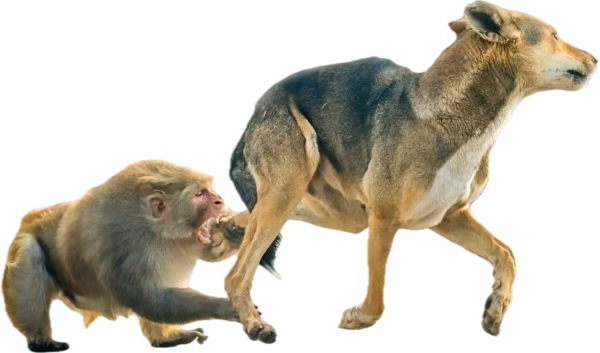
When dogs like to chase monkeys, they end up with a torn-off testicle
Be careful not to get involved in anything that could lead to trouble.
Monkeys are known for their ruthlessness, and a dog could end up seriously injured.
We live in a world where caution is necessary when joining discussions that might lead to legal trouble.
Proverb 231
Ako usulile, ekopa noko
Twilakwata ukusula pantu tatwishiba ifyakuntanshi.
Tacalingapo ukusula ilyo icintu tacilapwa, pantu ifyo tumona ku menso limbi filatubepa. Nelingi umo twaikala kuti wasanga ukuti ilyo banoko balifwilwa, teti wishibe abangabopa, namailo waisa mukubeta ukuti eba wiso, abo wasulile.
The one whom you underrate, may marry your mother
We shouldn’t ignore or underrate others, as we don’t know what lies ahead.
Judging solely based on your own criteria may lead you to be the loser. In our traditional way of living, a father may die, and the mother may then marry again at a later time. So, your stepfather might be one of those men you always see.
Proverb 232
Uluse lwalile nkwale
Ukukwata uluse ku bantu abashitontonkanya bwino kulaletelela.
Kulaba limbi wakongwesha umunobe ka ngwee pantu ali mubwafya ubukulu. Nomba inshita mwapangene ukuti abweshe yapita. Nomba we mwine ukuti uyeko mukwipusha, kusanga ifyo akoasuka tafilolelemo, nokwebati: kwati pali kandalama kabo! Nkakupa nganakabona. Unga lusa umunobe … ne ndalama shobe.
Mercy may bring hatred
Being merciful to people can sometimes backfire.
Imagine lending money to a friend in difficult times. Now, when the repayment date arrives, she might mock you, by saying: “Are you coming for that little bit of money? I’ll pay you back when I have it.” You could end up losing both your friend … and your money.
Proverb 233
Ni we fulwe amano ulibikile mu cikwambulwa
Uuli cenjele nomba taukobweneshapo.
Amananda alikwata nshila shaku pusukilamo ifinga ponena palya penka kwati ni nsala nokuya kwata indalama. Inanda icenjele ilasungako utwa ndalama. Ndulya ulo inshita yababipila bakonkanyako ukufwala ifyakale nokutaposaika indalama. Ndulya ulo icakulya cacepela enshita nanda ya mano ibomfya ndalama pakushita icakulya. Bonse mu mushi batampa ukulabila pali njilya nanda itafwaya ukwebako bambi pakusunga njilya nkama.
It is you, the tortoise, who has stored the wisdom within your shell
You are clever, but you do not show it.
Households have different ways to survive shortcomings such as hunger and lack of money. A clever household will save some money. So, while times are not bad, they still wear older clothes and do not spend much money. And then food becomes scarce, and that is the time when the clever household will have money to buy food. Everyone will be talking about that household not having shared this secret.
A similar proverb was recorded for the Lamba region at the beginning of the last century, see Doke (1927, proverb 229):
Fulwe amano a li bikile mu fikoba/ fikwamba ∵ The tortoise stored his wisdom in his shell.
One’s wisdom is not all on the surface: a seeming ignorant man may prove to be very wise. In Lamba lore the tortoise is depicted as one of the wisest of creatures.
Proverb 234
Akabwelelo kalalya
Ukubwelela inuma kula twala mu mafya.
Abantu abaupana, ilingi balapusana mu mikalile batampa noku tosha nangu ukulwa.
Pa miku iinji lyonse kulwa, icishele balalekana, pakuti baya ikalila umo umo.
Umuye nshiku limbi umwaume nangu umwanakashi atemwa ukubwelela nakambi mu cupo.
Icikonkapo balya bantu kutampa nakambi ukushupana limbi mwaisa fuma nemfwa ya umo.
Epa fuma nanji nsoselo.
Retracing your footsteps may be risky
U-turning sometimes is dangerous.
Married couples may sometimes disagree in their homes, leading to arguments or even fights. If this persists, they might decide to separate and live apart. As days pass, they may decide to reconcile. However, they often revert to fighting which could tragically result in one of them losing their life. This proverb is based on this and similar scenarios.
The same proverb was recorded for the Lamba region at the beginning of the last century, see Doke (1927, proverb 2), with a different explanation:
Akabwelela kalalya ∵ The little thing that returns eats.
Said to a man who has been away from his wife and home for a long time. When he is about to return, his friends will warn him that he will have a big law case to ‘eat’, for having neglected the work at the village, if he goes back, so he had better remain.
Proverb 235
Icilonda cilonde nshiku
Mukupusana kwamilandile nomunobe ngakwali ukubi, kulasungwa mu mutima na munshiku shakuntanshi ishikoisa.
Umunobe nga akulufyanya caliba icishupile ukulabukilako, kanshi ciba ukwenda naco mpaka yangula akese kupapata.
A wound will haunt you for days
When you differ with a friend in words, the anger lingers for days to come.
When a friend wrongs you, it is difficult to forget about it until he or she comes to apologise.
The same proverb was recorded for the Lamba region at the beginning of the last century, see Doke (1927, proverb 294), with a different translation:
Icilonda cilalonde nshiku ∵ A wound follows the days.
A wound takes time to heal: it keeps pace with the days.
Proverb 236
Cikonko mutima pamo no bwanga
Ciweme ukubelela uluse kuli mbo abakulufyenye kuta konkanya kukwata amalangulushi panshita ntali.
Wingililemo ngo uwo balufyenye ku munakwe talabukila ifyakale. Nomba ye akonkanyapo ukucusha cibusa wakwe mukwibukisha icilubo acitile kuli ye. Umukulu eulingile ukuleta mba babili pakupwisha mbu bwafya. Muku pwishisha ndi lyashi epo akulibomfya nji nsoselo.
Deep hatred in the heart rages like a witch’s poison
It is important to forgive those who have wronged you and not to maintain a hostile attitude for too long.
Imagine someone angered by a friend who does not forget the past. Instead, they continue to mistreat their old friend because they keep remembering the bad thing that friend did to them. An older person will be needed to bring the two together to resolve the issue. She will summarise the problem using this proverb.
Proverb 237
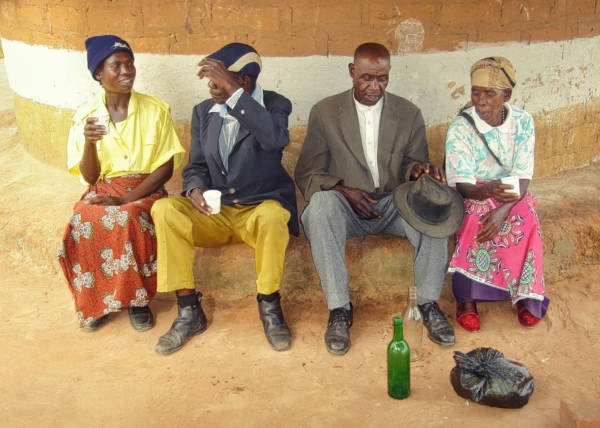
Iminwe taikata tufi
Mwilokulolesha ku milimo iya fiko.
Ilyashi lyonse liweme lyaimekwe ku minwe. Iminwe efibombelo fyakuku twala pantanshi. Ukunina nokufika pa mulu wa lupili kutampila panshita. Tekwesha ukuituntumba muku kana kubomfya maboko pantu paku lekekesha mukaipakisha pa milimo mwabombele. Kufuma mukubomba milimo yafiko emu keshila imbale nefyakulya fiweme.
Hands do not touch faeces
Do not look down on dirty work.
Every success story builds on hands; hands are tools for advancement. To reach the top of a hill, one must start from the bottom. Don’t be too boastful to avoid using your hands because, at the end of the road, you will be enjoying the fruits of your labour. From dirty work comes a silver plate full of food.
Proverb 238
Umwana utomfwa apulikilwe umulemba mukutwi
Ngaba kupandako amano, walinga ukuyasenda bwino nokuya konka
We mwana wilayangala nabanakashi angula nabalalume abo tawishibile bwino, kuti walwalilamo amalwele a pusana pusana.
Children who did not follow advice got into trouble because of their ears
Advice must be taken very seriously and adhered to.
My child, do not go about with people you do not know very well; at the end, you will contract different diseases.
Proverb 239
Ubwalwa ninsokolola twebo
Ukulabila pamuntu ukolelwe, alalabila ifingi ifyo atanga labila ngata nwenepo, ukushipa kubafye akashita akanono.
Shimbi inshita, ifyo mulabila kati mukolelwe fingamubika mu bwafya pantu limbi kuti fyacena abo abakumineko mu lyashi mukolabila.
Beer is the revealer of cases
This saying is used when people, under the influence of beer, reveal more than they would normally dare to do, becoming brave for only a short time.
What you reveal when you’re drunk, could lead to problems, as you may provoke people who are worried about the case.
Proverb 240
Icikulu pa nama matwi, ili nensengo kashimena
Cikankala ukumfwisha nokumfwa kufyo bakupandako amano ulo ucili ukokula.
Nge nama mu mpanga ukufikapo pa mushinku, amatwi aka nkala ukubaka ulo uli mubwafya.
Twikala nabakulu abapitamo mu fingi. Milimo yabo ukulanshanya naba cikula bwangu mukuta cita ifilubo.
What is most important to animals are their ears; they will make the horns grow
It is important to listen as well as to be able to take advice when you’re growing up.
Like animals in the forest growing to maturity, ears are very important for preparing for any danger.
We live with older people who have been through a lot. It is their duty to talk to the young, so they don’t make big mistakes.
The same proverb was recorded for the Lamba region at the beginning of the last century, see Doke (1927, proverb 280) with different explanations:
Icikulu pa nama matwi; ili nensengo, kashimena ∵ The important part of an animal is the ears; that which has horns, they grew (after birth).
(1) With the buck, which are hunted by man and wild-beast, the most essential thing to self-preservation is the hearing; the horns used for self-protection are not nearly so reliable. Prevention is better than cure.
(2) The most prominent parts of a buck’s head are the ears and horns; the ears it was born with, the horns came later.
(3) When an animal is killed the meat is divided out, but the ears are put aside for cooking and eating, when the people dance to the spirits (shane cinsengwe). Here the ‘important part’ means the honourable part.
Proverb 241
Kosakosa talya utwabakulu, nakanaka eulya utwabakulu
Ngatawaba no mutima wa luse, ulingile ukusambilishiwa ifya kwikala nabantu mu mutende pakweba ati utemwikwe nokupokelelapo amalumbo.
Stubborn towards elders, you won’t eat; respectful towards elders, you will
When you are not kind-hearted, you need to be taught how to live in harmony with others and be loved, so that you may receive praise.
The same proverb was recorded for the Lamba region at the beginning of the last century, see Doke (1927, proverb 576) with different explanations:
Kosakosa talya twa bakulu, nakanaka e ulya utwa bakulu ∵ The haughty does not eat of the adults’ food, it is the willing that eats of the adults’ food.
A haughty child, who will not go an errand when bid, gets none of the tit-bits of food from the men; but the willing obliging child is the one who shares in the dainties.
Proverb 242
Tabasuula kalonde kakale
Ifya kale angula abakulu tababa ifinangwana no kusulwa. Ukupita nokwishiba ifyaliko efifwaikwa.
Ukubomfya nangu ukusala ico waishibapo kale ukucila icabwangu.
Mukusala ifibombelo ifyo bakuletela, walinga ukusala ico wabomfyapo kale pantu walicishiba nefyo cibomba, pantu limbi ngawasenda icabwangu ngatacaishibila ilya ncito, tapali ico ukacita. Nangu naukwatapo umulimo uko kabilwa ukubombekwa pabantu abalofwaya ukubomba, walinga wasendapo umo nangu abo ababombapo kale pantu uyu mulimo baliwishiba kale.

Do not shun using an old hoe
Old things or older people are not worthless; past experiences are valuable.
From two or more items, pick the one you are used to, the one that has proven its worth.
Of the equipment before you, it is better to pick what you have used before because you already know how it operates. If you pick a new one and are not accustomed to its use, you will fail.
Similarly, if you have some work to be done, it is better to pick from the job seekers those who have the right experience for that work.
A comparable proverb was recorded for the Lamba region at the beginning of the last century, see Doke (1927, proverb 1093), with a different explanation: ∵
Tabapufya kalonde, ngo kabona ilya mulilo ∵ Don’t despise a little hoe, even though you should see one of fire (i. e. a large strong one).
(1) Half a loaf is better than no bread. (2) A little hoe that has done good work should not be despised, even if one gets a better.
Proverb 243
Akanwa kobe ka cibanda!
Utunwa twesu twaba ne milimo iyingi, kuleta ifiweme. Ukutaibomfya bwino kuti kwaletela ifibi fingi. Ukupokela ukutashiwa kufuma kuli bambi, tulingile twaba abakumfwana nabo. Ukubomfya akanwa ku lulimi ulubi bakakweba ati abomfiwa ne fibanda.
Your mouth is that of a bad spirit!
Our mouths have many functions, usually for good. Misusing them can have negative consequences. To receive praise from others, we must maintain good relationships with them. When you use your mouth for unacceptable language, you will be considered influenced by bad spirits.
A comparable proverb was recorded for the Lamba region at the beginning of the last century, see Doke (1927, proverb 40):
Akanwa kobe ka cibanda ∵ Your mouth is that of a devil.
A Lala and Lamba proverb.
Proverb 244
Ulushimu lubi luntu luteele ku mwaabo
Imilimo yamu bwingi ciweme ukubombela pamo bonse.
Cikankala ukwafwana naba nobe kubati ni mufililo.
A bee that doesn’t collect nectar is a bad bee
Communal work must be done by all.
It is important to help one another, for instance, during funerals.
A similar proverb was recorded for the Lamba region at the beginning of the last century, see Doke (1927, proverb 1301) with a less general explanation:
Ulushimu lubi luntu ulu talwile ku mwabo ∵ The bee is evil that went not to the flowers.
The youngster who goes out with the hunting party, even if he carries nothing or kills nothing, is fed with the hunters. It is the stay-at-home, who is blamed.
Proverb 245
Akabale katushinguluka
Twali tumpikwa nokukana iluka.
Mwingililemo umuntu abomba naba nankwe ukukolonganika ndalama shaku bombomfya mu mushi mukusunga inkoko shamu mushi. Ukupwishafye ukushitisha uyo ena aleka ukumoneka pakuti akaibomfeshe isho ndalama umwine. Abantu bayafwileko uku kolonganika ndalama bakalanda ati twali shingulukwa na kabale.
The blind spot surrounded us
We were fooled and didn’t realise it.
Imagine someone organising a fundraiser to raise money for village affairs by rearing village chickens. After the sale, however, the organiser disappears without a trace , having used the money for himself. The people who contributed to the fundraiser would then say they were surrounded by the blind spot.
A comparable proverb was recorded for the Lamba region at the beginning of the last century, see Doke (1927, proverb 73):
Akabale ka tu shinguluka ∵ The ophthalmic spot circles round us.
Wisdom is hidden from us. Even as God sends the white spots in people’s eyes, and one day you or I may suffer from them, so we don’t know the truth which is hidden, and we should not argue until we have knowledge.
Proverb 246
Uteka atekela bonse
Ukwakana caliba bwino. Ukusunga ifyakwakanya ciweme.
Ngawasunga ifintu, twebe ati icakulya, kwishibila limo ati nabambi bakafwaya ukubapako. Neci ngalenga ukuti besungapo icili conse nico tabaikwitepo.
Mubulimi bwa fyakulya, abali nefingi balakanyako nambo abakwete utunono. Tulokwibukile ati twalinga twayafwako nabambi. Ici cikumine naku masambililo, uulingile ukwafwa bambi abatakwete bwafwilisho bwakuya pa ntanshi mu masambililo.
Your keeping is the keeping for all
Sharing is normal. Keeping for sharing is good.
When you keep something, for instance food, just know that others will also want to take part. The simple reason for them not having kept something is that they were not satisfied, while you were.
In farming food, those with abundant food share with those who have too little. We keep in mind that we must support others. This is also connected to educational standards; you will try to help others who have no support for further education.