Proverbs in Zambia ∴ more demanding proverbs 2

Proverbs in Zambia: more demanding proverbs in Chibale 2
Of the two articles on proverbs that the people in Chibale consider more demanding, this is the one that presents proverbs about what to expect and how things inevitably work. They can also be found in the second part of the digital book Mu Zambia Amano Mambulwa, see here. The whole book can be downloaded here.
Other articles in this series
The proverbs about how to behave and what to do when problems arise, considered simple in Chibale.
The proverbs about what to expect and how things work, considered simple in Chibale.
The proverbs about how to behave and what to do when problems arise, considered more demanding in Chibale.
The proverbs about how to behave and what to do when problems arise, considered deep in Chibale.
The proverbs about what to expect and how things work, considered deep in Chibale.
Proverb 148
Nkalamo ukukalipa itampila pabo
Ubukali bwa nkalamo butampila cabe ilyo yafyalwa, ico icaba cimo ceka no muntu umunkalwe ufyalwa.
Kwaliba abantu bamo abatafwayapo ukulengululwa, kano ico basosa ecekeco. Nangu mweshe shani, kano ifyo asosa efyo mucite. Limbi babetati, bamunshololwa.
The fierceness of the lion begins at its home
The lion’s vicious behaviour starts from birth. The same applies to a man with a wicked heart.
There are certain people who never wish to be corrected, only wanting others to follow their orders. Even if you do your best to convince them, they will only insist that you do as they wish. Sometimes, they are called the unruly ones.

A similar proverb was recorded for the Lamba region at the beginning of the last century, see Doke (1927, proverb 994):
Nkalamu ukufwemba, alafumya pabo ∵ Lion derives his raging from his home.
A bad-tempered man is born so, even as a lion-cub is born vicious.
Proverb 149
Mwenda mainsa taceba kwiulu
Tulingile ukuba abaipekanya mu ncito ili yonse twaibimbamo nokwishibati nshita ikapingula ifya kucita.
Inshita amainsa aisa, tuleshiba ati ni mfula nomba. Kanshi twalinga ukuipekanya ifyakufwala fya iyi nshita. Na mu mainsa tulokubomba nga lyonse.
Katulabile ati ulabombela umuntu. Nomba, lyonse bwaka alakupela ifya kucita, napo ungaisosha ati aliba nensambu shakucita ifyo?
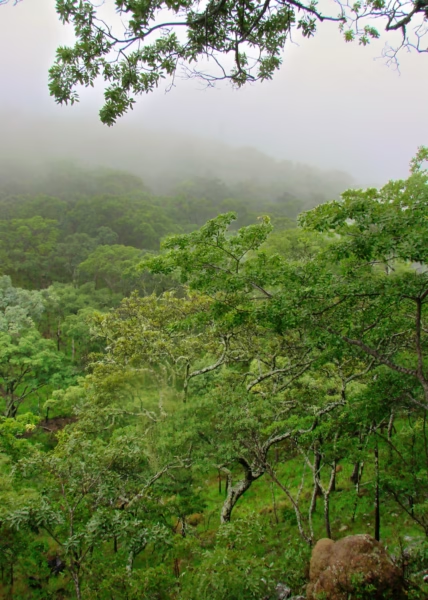
When traveling in the rainy season, one does not look at the sky
We must be prepared for any work we undertake, but circumstances dictate our actions.
During the rainy season, we know that it will rain, so we must prepare ourselves with appropriate clothing for that period. We should continue working normally, even if it rains heavily.
Suppose you work for someone. Now, every time he gives you an assignment, are you going to dispute whether he is authorised to do so?
Proverb 150
Ubukulu bwa nkoko, masako
Inkoko ipimwa ulo ikolola ukubikapo na masako. Nomba cilya cipimo tecopo pantu fimbi ifilinga amasako tatulyapo!
Ulo tukoshitisha inkoko tupimina kumo na masako, takwabapo uko bafukula elo bashitisha iyoo. Kanshi ubucindami bwa nkoko masako.
The size of a chicken: its feathers
While it is true that you can only judge something by its appearance, you should be aware of the downside of judging by outward appearance.
When we want to sell a chicken, we consider its size along with its feathers. Thus, the chicken’s appeal is its feathers. However, this is not ideal, as feathers are not eaten.
Proverb 151
Tabwakwete munkumbi kabumena?
Icintu conse calikwata intampilo.
Kuti wapusanya shani icintu libe taulatampako ukubombelapo?
Mubwikashi bwesu muno calo, umuntu onse alakwata ico atemwisha pakuti akese ba bwino kuntanshi. Ulo tuya ku sukulu tulafwaya ukusambilila pakuti nafwe twise tubeko ifyo tukofwaya.
If it had no stem, would it grow?
Everything we do is based on past actions and prior preparations.
How can you achieve something if you do not begin working on it?
In this world, we all have future plans we wish to achieve. When we go to school, we aim to learn so that we become what we aspire to be. We prepare for a long journey. We raise our children to ensure they do well.
The same proverb was recorded for the Lamba region at the beginning of the last century, see Doke (1927, proverb 1057), with a different explanation:
Tabwakwete munkumbi kabumena? ∵ Had it no stem, would it grow?
Everything must proceed from something; there must be a stem from which the mushrooms grow.
Proverb 152
Pa kufumapo kambi kasuba ukanaka
Ukasumina kumashiwi nakwena lintu ukashala weka.
Sansamuka ulo abafyashi bobe bacili abomi noku shupikwa lintu nabaya. Tawaka kwate ubusungishi bwaku bafyashi.
You’ll agree, the day I have left you …
You’ll accept what I have told you the day I leave you behind [I die].
Rejoice while your parents are still alive and regret when they are gone. You will no longer have parental care.
Proverb 153
Uwa kalema takaleka
Ndeta misoka taleka.
Uwabelela ukwiba ifyabene mu mabala nangu mu mayanda naena eko fyamutwala. Kanshi lyonse bwaka wakusangwa mu fifungo.
A bad habit is hard to break
Once you live like that, you can not stop.
Someone who is used to stealing from the fields or from homes because he has become dependent on stealing will only stop when he ends up in prison.
Proverb 154
Apali umunwe epali ne bala
Ico wimininepo eci citika.
Mwaliba imilimo iingi nomba cila umo alikwata uko camutwala nokukoselela eko abikisha amano pakuti imoneke.
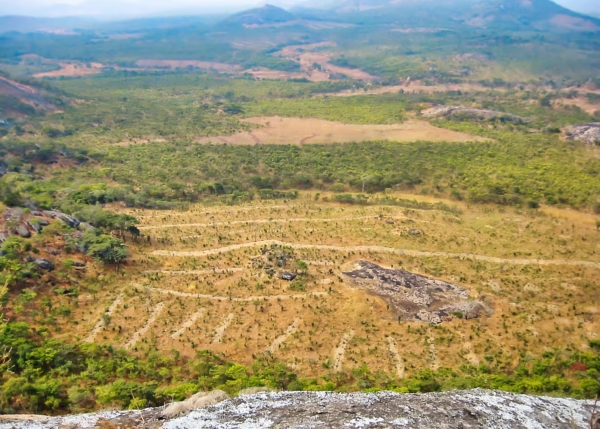
Wherever your finger points, there will be a field for you
People’s intentions differ, just as people differ.
There are many types of talents in the world, and each of us pursues what is valuable to us in order to see results in the end.
The same proverb was recorded for the Lamba region at the beginning of the last century, see Doke (1927, proverb 112), with a different explanation:
Apali umunwe epali ing’anda/ibala ∵ Where the finger is there is the house/garden.
If a person passes a certain spot, repeatedly points to it and remarks what a nice spot it is, he will be sure to build or have his garden there later on.
Proverb 155
Akalyo akanini kalaleta umulyolyo
Ngawapelwa utunini, epa kufwaya nafimbi.
Nji nsoselo ilabilwa patwa bwalwa utunini namu makwebo afyakulya. Balapela dyonko pakuti wishibe ubune bulimo. Bukulu bwa cipimfya wapelwa ebulenga ukushitilapo nafimbi.
A little food makes you want more
When you get a little, you want more.
This proverb is applied by small beer and food businesses. They offer you a small foretaste, so you can experience the quality. The small portion size entices you to buy more.
The same proverb was recorded for the Lamba region at the beginning of the last century, see Doke (1927, proverb 22), with a different explanation:
Akalyo kanini kalaletela umulyolyo ∵ A snatch of food brims on the desire to eat.
Give them an inch, they take all.
Proverb 156
Akanwa kamufungo kene kailetelele
Nga ulipo nacimo mu mano, kuti wailetelela nga taucenjele mukusosa.
Ilyashi lisoswa mucalo lingi, eico umuntu uuli no mulandu, ala supa lyonse eukososa pakuti abantu bamumfwe. Nomba mukulabila labila nangu tewepo bepwishe, bonse baleshiba ati niwe umulandu ukumine.
The mouth of the guilty one will betray him
Even though your guilt is not yet clear, your reckless language indicates your connection.
Topics of discussion are many in this world, so it is not wise for a guilty person to take the lead and have people listen to them. Because of this continuous talking, even though you were not asked, people will conclude that you must be involved!
Proverb 157
Nalilile mu mpanga, tamuli icamwine
Ifyasangwa fyonse fya bonse, takupo umwine.
Mu mpanga ba Lesa babikamo ifintu ifya pusana pusana pakuti fyafwe abantunse. Kanshi takwabapo umwine fya bonse uwabalilapo ku fibona.
I ate it while in the wild, so it belongs to no one
Everything found in the wild is for all; there is no ownership.
In order to help mankind, Lesa put so many different things in the wild. You cannot claim them as your own!
The same proverb was recorded for the Lamba region at the beginning of the last century, see Doke (1927, proverb 830):
Nalilile mu mpanga, tamuli camwine ∵ I ate it out in the veld, it belongs to no one there.
The veld is commonage, no one can prevent you from cutting down a tree to get at honey when you are in the bush.
Proverb 158
Akalilile nyina, ni mwisaana kafumine
Ifya fiseme fikasokoloka ku ntanshi.
Abana banono balafyengwa ilyo abafyashi babo babepaya, nomba ico balingile ukwishiba cakuti aba bana bakesa ishiba nowacitile filya mpaka nabo bakacite icilandushi icabipa.
The thing that cried for its mother emerged from the egg
Eventually, what is hidden will be revealed.
Children who have been treated unfairly, for instance, will understand this as adults and will come to bring trouble to the wrongdoer.
The same proverb was recorded for the Lamba region at the beginning of the last century, see Doke (1927, proverb 10), with a different explanation:
Akalilile nyina ni mwisana kafumine ∵ The little thing that mourned for its mother, it is out of an egg that it came.
An accusation of foolishness against anyone who, when killing the mother and father, wants to let the little baby live as being harmless. It will grow and hear how its parents were treated and then bring trouble on the murderer. A Macchiavellian maxim: If you kill the parents, kill the child as well.
Proverb 159
Ubushiku bwaluba umukote ne cimbwi canye mfwi
Apa calola mukwebati, ificitika fyaba nenshila/nangu impela iyakubwenako.
Mu nganda mwikala, abana ilinji balaya mukwangala kubanabo. Kulya kwine ulo bafyashi babanabo bapekanya icakulya, nabalya bana bambi balalyako. Ulo babwelela kunanda yabo, abafyashi tyabeshibapo ati abana babo nabalya. Ngabapekanya icakulya, nabalya balile ku mulandu wa mwenso pantu balibakanya balaya mukulya. Ico besa mukubwenako mikutile! Uli apa nebo naikuta, libe inshima icily ikulu. Epo beshibila ati balililepo kumbi. Nokulingana ne nsoselo, ulo umukote aluba, nakonse uko bakosanga apa nyelele icimbwi pakuboneka mfwi mfwi, bakatontonkanyati cimbwi calile bakuti nabakuti.
An old man goes missing and the hyena excretes grey hair
We must always consider the relationships between things and the hints about these relationships that are given to us. When an old person goes missing, the faeces of a hyena can tell the story of that missing grey-haired person.
In a home, children go out to play with friends. Where they are, the parents prepare food for all, so including for them. But when they return home, their parents will also have prepared food, not knowing that they have already eaten. Because they have been warned never to eat at other homes, the children will still partake in the eating but will not eat much. Then the parents will know that the children ate somewhere else.
Proverb 160
Mwaice kulumbula kabondo kansha, ninshi alikabwene
Abaice taba bepapo mu fintu fimo. Ifyo umwana umwaice asosa ninshi alikabwene, tekuti asosepo ifyo atabwene.
Pa nanda kati abalume baipayapo akanama (ubuswete) ngabana bena liba elyashi uko baya mu kwangala naba nabo. Necilenga ninci: tabeshibapo ati ili lyashi lingaleta ulupato kubakulu bambi pantu tababa peleko ifyo abana bakolabila.
A child who mentions a duiker’s leg has seen one
Children do not lie about certain things. This sort of thing cannot be made up by a child, so it must have been seen recently.
When a man kills an animal and brings it home, his children may make it an important news item for other children. They do not know that those stories might lead to families disagreeing because the meat wasn’t shared.
A similar proverb was recorded for the Lamba region at the beginning of the last century, see Doke (1927, proverb 1401):
Umwanice tashimbula kabondo kansha, kani akashimbula, alakalyapo ∵ A youngster doesn’t mention the foot of a duiker: if he mentions it, he eats it.
A child is guileless. It is no good denying, you have incriminated yourself by dropping out the word, and then retracting it. There is some reason for your having said it.
Proverb 161
Akalimba ka kwashima takapwa misango
Icakwashima tacilipo cobe. Tontonkanya pa kashita ka kubomba.
Umuntu nga aashima icipe, alinga ukucibomfya bwangu bwangu pantu abane kuti baisa mukupoka panshita ateneke.
Tatulingile ukucisunga pa nshita itali kubati cesu.
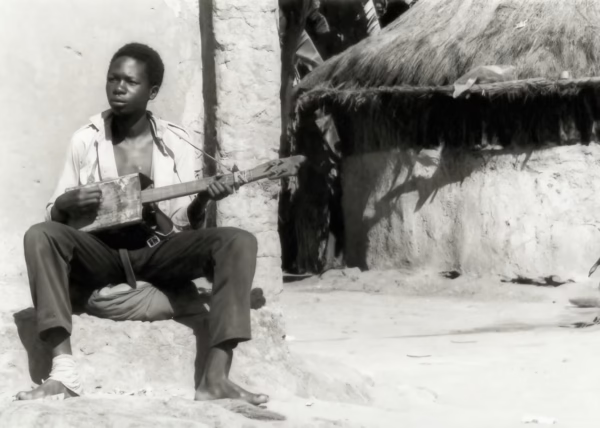
A borrowed musical instrument won’t give you time to play all types of music
A borrowed item is not truly yours. Consider the time factor.
When you borrow anything, be it a bicycle or a banjo, you should start using it for its intended purpose promptly, as the owner might want it back at any moment.
Do not keep it for too long as if it were your own.
The same proverb was recorded for the Lamba region at the beginning of the last century, see Doke (1927, proverb 11), with a different explanation:
Akalimba ka kwapula takashila misango ∵ A borrowed kalimba doesn’t finish a tune.
The owner is so accustomed to walking about with his instrument that he cannot lend it out long enough to play a tune through.
Proverb 162
Imfula pakuya epo yonaula ifisabo
Ilapwa nga yapwililila.
Imilimo iyingi isa mukonaika lilya line yaya mukupwa.
Shimbi nshita ifilyo fya mwibala filonaika ku mfula pa kulekelesha, nokukula fyalikula kale. Icipupu ca mfula cilenga amataba esu ukuwa panshi ilyo nenshita ya mfula ukupwa ili mupepi, elo teti mu abushe yonse mwibala, elo yonse yacili abishi!
It is only when the rainy season is almost ending, that crops are spoiled
It is only finished when it is truly finished.
Most work runs the risk of being spoiled, especially when it is almost complete.
Sometimes, crops in the fields, already ready to be harvested, are spoiled when the rains are almost ending. Rains that come with strong winds push the maize stalks down at the end of the season, and it is impossible to salvage them all while they are still fresh.
Proverb 163
Malinso ukontela akasuba nipabakulu
Taulipo icishi ukuba weka. Ciweme ukwipusha abantu abapitamo pakuti bakwafwe.
Mu cine tatwafyalwapo na mano, eco twalinga ukwipusha ku bakulu. Mbo abapitamo mu mafya nomutali, banga kupako amano nga. Nci pakuti cibombe, nku kwishibana bwino nabo kulingile ukuba ukwakosa.
The house lizard sunbathes near the elders
You are not an island. Do not stay away from elders who can share their knowledge with you.
The truth is that we are not born with knowledge; we learn it from elders. Having experienced both favourable and unfavourable situations, they are able to share their wisdom. For this to be effective, our relationship with them must be strong.
Proverb 164
Ubucushi bupa amano
Ngatapali icilekokushupa, tatukwata ukutontonkanya ukucilile palya pantu fyonse fili bwino.
Icalo ca Zambia caba pakati kafyalo ifingi elyo nobukwebo bwafintu tukabila sana bupita muli ifi fyalo. Kununa uku ifipe fyesu fyalikupita mu Southern Rhodesia (lelo Zimbabwe) mpaka Ian Smith aishile poka icalo ku maka. Apa pene nokumfwana kwalipwile, kanshi nomba Zambia atontonkenye inshila shimbi ishakubomfya pakuti ifipe filokufika muno calo. Pa nshita imo ine Zambia alikwafwako nokulwila ubuntungwa bwa calo ca Southern Rhodesia.
Kanshi ukucula kwa Zambia kwalengele ukukwata umupaipi wakuleta amafuta ukufuma ku Tanzania, babikapo ne njanji Tazara.
Poverty gives wisdom
When nothing is troubling you, you do not need to employ your wits as much, for all is well.
Zambia is a landlocked country, and all its cargo must pass through the neighbouring countries. Previously, all our imports travelled through Southern Rhodesia (now Zimbabwe) until Ian Smith declared a Unilateral Declaration of Independence for that country. From that point, the relationship deteriorated. As Zambia suffered greatly, a plan for an oil pipeline from Tanzania and the Tanzania-Zambia Railway was implemented.
Proverb 165
Nine menso twende, matwi shala
Lyonse boneni mu bumi ifinene ukucilapo ifinakwe.
Bacibulu banga bomba imilimo ikosele pantu bakobona ncito ili pantanshi yabo.
My eyes say: let’s go. You, my ears, remain behind
Always consider which things in life are more important than others.
Deaf people can do physical work because they can see the work ahead of them.
The same proverb was recorded for the Lamba region at the beginning of the last century, see Doke (1927, proverb 932), with a different explanation:
Nine menso twende, matwi shala ∵ I am eyes let us go, ears stop behind.
When visiting, use your eyes, but do not listen to the scandal that is spoken.
Proverb 166
Icupo musana
Uilengule ukubona ulo utangacita.
Tekubapo penka mucupo. Nakambi cikupapusha ukwebati mu cupo mwaba ifya kukumana nomwanakashi. Ipushanyapo naba mfunda wafyupo mbo bakakweba ifyo bakasubila kubonamu cupo. Napo uka kwanisha ukusansamusha mwina move inshita yakuba mu cupo nankwe? Nci cakuba cimo pafingi bakukweba.
Pa kuya mumpanga mukwipaya nama, longanika fyonse ififwaikwa pantu tawa kakwatepo inshinta imbi iya kubwelela kumushi. Kati ekwamba, pokako amalamuno kuli mbo aba fibombapo akale.
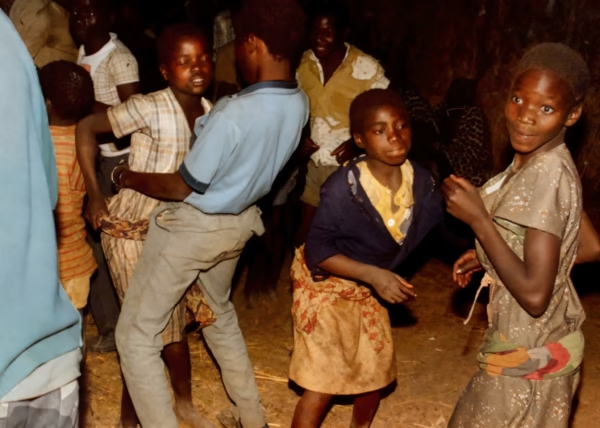
Marriage involves the waist
Make sure you’re prepared before you act.
You don’t just get married. It shouldn’t surprise you that marriage involves sex. Contact marriage counsellors who will discuss with you in detail what is expected of you. Are you fit to satisfy your partner during sex? This could be one of the issues explained.
If you go out to hunt, gather all the requirements, as you may not have time to collect them by returning home. And if it is your first time, seek advice from those who are familiar with such ventures.
Proverb 167
Cungulo alapeteka
Epa kunaka nomba. Icintu conse caliba nakashita apo cikesa kupwila. Akasuba kalafuma akacelo nokuwa icungulo.
Tulingile ukwishiba ukuti nangu twingacita icilishani, kuntanshi cili nokupwa. Kwaliba abana bashumfwapo kubafyashi babo. Mukasanga atumpa nokubutuka ukufuma pananda. Abafyashi tabasakamana, beba fye ati akobwela. Nomba ulo kawa akasuba, yakwana inshita yakulala, ulya uwabutwike amano esamo kubwelela ku nanda, apa nomba anaka. Nomba ninshita ya mufyashi ukumufundako panono kuka bwembya pakuti eshibe ati ifyo acitile filubo.
The evening makes humble
Time will tell. Everything takes its time to come to an end. The sun rises and, at some point, it will set down.
Whatever we do, we should remember that one day it will come to an end. There are children who are very naughty with their parents. They tend to run away from home thinking that it is over. Parents do not worry because they know that time will come when the child returns. When the sun sets down, the guilty child comes back humbled, and the parents treat him with a few strokes so that he realises the wrong thing he did.
Proverb 168
Ubunga bupelele noko tabalyamo
Tekuti ucetekele uli onse ukucila ulupwa lobe angula ifibusa ifinga kusunga.
Umufyashi umwanakashi abaka abana bakwe pakubalilapo. Iwe kati teba noko tabaka kupe icakulya bapekenye.
Mealie meal prepared by the mother will not be shared with others
You cannot expect anyone other than your family and close friends to take care of you.
A mother feeds her children first, so, if she is not your mother, she won’t feed you.
Proverb 169
Ako tutalya tukalila mukanakwe
Nangu wingayumfwa kukwata maka pa fintu fimbi, telyonse wingafikwatila.
Ifyo ‘tatulya’ limbi tungalila kupitila mu fyakulya fyaibela.
Ifishimu, kwati nina munsungwe nsungwe, fyakulya libe fitula ku fipempele ifyo tutafwaya ukulya. Nakambi tatulyapo imyambo nomba isabi ilyotulya lyena lilalya.
Nangu tungaseka abantu abalya imyambo yangula ifipempele, kuku lekekesha bonse tulalya imyambo ne fipempele.
“We don’t eat that”, but we might do so through other forms of food
No matter how much control you think you have over things, you don’t always have it.
What we believe “we don’t eat” we may consume in other forms. Some caterpillars are eaten, but they originate from larvae that most people would rather not consume. Similarly, we don’t eat worms, yet the fish we consume do.
Even though we might laugh when people eat worms or larvae, ultimately, we consume them.
Proverb 170
Kalulu tapusuka mpya shibili/shitatu
Nci cila labilwa umo casangwa nokupwisha bwafya pantu usangilwemo talikukwata ishuko ilya kutekatwa.
Mu mpanga amwapita umulilo, kulaba ukuteya utululu pakukwatako umunani. Nga mwateya pamo apendela akalulu, elyo mwaya kuteya nakumbi, nangu acabashani, pambi kakoisa kwikatwa.
Ecimo cine nangu kati ulu mung’o, bumbi bushiku ukekatwa.
A hare will not escape the fires in two/three places
This is said of a situation which will eventually be resolved, as the person involved will not always be fortunate enough to avoid capture.
When a piece of forest is burnt, people typically set animal traps, particularly for hares. If traps are put in two or three different places, at least one trap is likely to catch an animal.
The same applies to thieves; one day they will be caught.
Proverb 1711Photo 127.
Akanika kupota bwino nipa mabwe
Ifintu fyaikatana tafilekanapo.
Tulomfwa uko utunika tupota bwino nico panshi apa ponena amenshi paliba amabwe.
Nangu bafyashi abakwata abana balamoneka bwino pantu balaba tangata mukubafwailako ifyakufwala ne ndalama shakubomfya ku milimo iyalekana lekana kwati bulimi.
Imfumu nayo pakuti baite ati mfumu kano ili nabantu mu calo.
Ne mfumu ilingile ukusunga abantu baiko bwino.
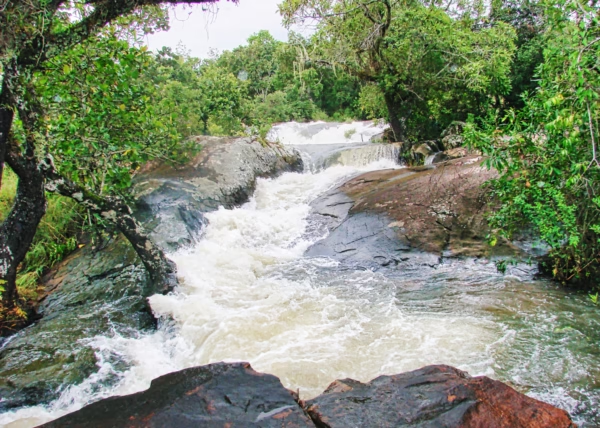
The sound of a waterfall in a river is nice because of the stones
Some things are inseparable. When something is the result of two or more factors, we cannot simply point to one of them as the cause.
When you hear a pleasing sound coming from a waterfall, it is because the water drops onto the stones.
Parents do not only care for their children. Once the parents grow old, they will depend on their children for support, such as providing decent clothing and money to use for various projects, such as farming.
A chief, to be considered a chief, must fulfil the duty of looking after the people in his chiefdom.
Proverb 172
Musekela nama emulya cifupa
Ukuba uwaipelesha mukubomba imilimo kuntanshi kuti twalambulwa.
Ulo bacibinda baya mu mpanga, bambi abantu balaipelesha ukuya nabo pakuti baya bafwako ukusenda inama pakubwela. Aba ebo na cibinda alambula pa mulimo babombela. Nomba ulya uushala mu mushi pakuti ese alyeko bwaka tapali ico asangamo, tei nao asubile ukukwatako icipinswa.
Helping to pick up the meat ends in eating a bone
When you volunteer to help, at the end you are likely to be rewarded.
When hunters go out hunting, some people volunteer to accompany them so that they can help in carrying the meat after the hunt. These are the people the hunter rewards for the work done. But those who remain in the village waiting to partake in the eating should not expect a good share.
The same proverb was recorded for the Lamba region at the beginning of the last century, see Doke (1927, proverb 767), with a different translation:
Musekela-nama e mulaya-cifupa ∵ He who greets the animal is the one to eat the bone.
Ready help is rewarded. He who goes out readily to help the hunters carry in the dead animal, is the one who gets a tit-bit for a reward
Proverb 173
Sontwa minwe mwana takula
Umwana ncita fibi balamusontaula, teti abe neshuko.
Abantu balatasha iciweme mukwita amashina nayambi abacitile. Nomba nduno kati bakusonta lelo na mailo weka we, tawakakwate ishuko mu bumi bobe. Umwana kati lyonse nincita fibi lyonse kusontwa nangu wakula ukaba umuntu umubi.
Umwana pakukula, abafyashi bakwe eba mubona imisango yakwe no kwishiba kati akaba bwino yangula iyoo. Nga wacumfwila balamutemwa sana, nomba ngatomfwapo yonse nshita kusontwa iminwe, imikulile yakwe taiba bwino pambi alemana mukutangalapo bwino ngali temenwe ukulwa naba nankwe.
A child who is constantly being pointing at will not develop well
A child who is always pointed at may not be blessed.
People praise what is good by naming those who achieved it. However, if you are pointed at today and again tomorrow, you may not be lucky in life. When a child frequently does bad things and is therefore often pointed at, he will also, as an adult, be a bad person.
During a child’s growth, parents observe all their behaviour and know what type of person they will become. If well-mannered, parents love him dearly, but if ill-mannered, with fingers always pointing at them, their development becomes unstable; they may become lame due to fighting with friends.
The same proverb was recorded for the Lamba region at the beginning of the last century, see Doke (1927, proverb 1048), with a different explanation:
Sontwa-minwe mwana takula ∵ The child who has the fingers continually pointed at him does not grow up.
A Lamba belief: that pointing at a child causes his early death.
Proverb 174
Umwana wandi afyalila mukwenda
Ukuta konka bwino muli fyonse kunga lenga nolupwa lobe ukuta konka bwino.
Abanakashi balacindikwa ukusala ukukwata cupo cimo umo bonse abafyashi bakapela ifunde liweme ku bana babo. Abana baba nabawishibo abapusene pusene tabakakwate ukucindika bawishibo bali nabo. Icupo cacine cileta insansa nomutende ku lupwa lonse.
My daughter has children by different fathers
Instability in any aspect of your life may affect your family’s stability.
Women are respected when they choose to marry within a single union, where both parents discipline their children well. Children with different fathers cannot be disciplined by their current father. A proper marriage can bring happiness and stability to the whole family.
Proverb 175
Imfinshi tailya, icilya cintu cenda mumfinshi
Abantu ababi bomfwa bwino ukucita ifibi kwabula ukubabona, mumfinshi.
Kanshi kano lyonse mwaba abakucenjela kufyo musosa palwelele, pantu abantu babi bakakwata apakwingilila nokucita nco cilubo kunuma yobe. Bonse abaumfwileko kufyo walabile bakesa kweba bwaka ati niwe.
Icilangililo nipa buloshi. Awa eba muntu ati nkakulowa! Bancita fibi ebakacita nabonse bakalanguluka ati niwe wacitile. Mukwipifya, ifintu fibi ficitwa mu mfinshi.
Darkness itself does not harm, but what moves within it does
Bad people feel it is always good to perform their actions unseen, in the dark.
Therefore, you need to be careful about what you say openly, as bad people may take advantage of it and act behind your back. Everyone who hears you speak will conclude that you are the one responsible.
An example is that of witchcraft. Imagine you said to a person: “I shall bewitch you!” Now, the bad people will carry out the bewitching, and everyone will think of you as the one who did it. In short, bad actions are done unseen, in darkness.
The same proverb was recorded for the Lamba region at the beginning of the last century, see Doke (1927, proverb 397), with a different explanation:
Imfinshi tailya, icilya cintu icenda mumfinshi ∵ Darkness doesn’t eat (one), what eats is the thing that travels in the darkness.
Said to a person afraid to go out in the dark. In itself the darkness is harmless, the danger is with the wild-beasts that lurk in the dark.
Proverb 176
Umungu wambuto ni Lesa wabika
Fimbi fintu, tatwalinga nokwipusha ifyo fyatampile, kufisenda ngefyo fili.
Lesa ewapangile fyonse fintu. Nokuta twishika alibikilemo ne mbuto.
Kubana kufyalwa, abakulu balalondololapo utwamalyashi utwakale pantu bali pitilemo nokubona. Tapali nshila iyo mba banakufyalwa benga shininkishishamo muli nga malyashi kati acine. Ubwasuko nimbu: Tamwaliko, fisendeni fye.
The seed for this pumpkin, Lesa put it there
With certain things, we don’t have to ask ourselves how they came to be; we should take them as they are.
Lesa created all things, which obviously included seeds for plants.
To the young, elders tell stories of the past simply because they experienced what was there. There is no way for the young to verify this information. The answer is: You weren’t there, just take it.
The same proverb was recorded for the Lamba region at the beginning of the last century, see Doke (1927, proverb 1357), with a different explanation:
Umungu wambuto ni Lesa abika ∵ The calabash for seed, it is God who puts it away.
It is God who prompts us to save some seed for sowing, and not to eat it all.
Proverb 177
Uwaingila mu mushitu tomfwapo inswaswa
Ukuba uwashipa ne ncito twasenda.
Kwaba incito ishipusene pusene nomba cili ukuipima fwebene ukusala incito tukofwaya ukubomba.
Muli bucibinda balaya, mu mpanga umwaba ifiswango ifyo ifinga twipaya. Kanshi tulingile ukushipa ukukana ba no mwenso. Incito yabu malukula, yakusunge fitumbi fyabantu abakofwa ku malwashi nangu mu masanso apa musebo. Nomba ngataushipile tekuti uyi bombe ilya ncito.
Whoever enters a thicket in the wild should not fear the rustling of dry leaves
In for a penny, in for a pound.
Before embarking on any work or activity, you must ask yourself if you are prepared to see it through.
In hunting, one ventures into the wild knowing there are beasts that may kill us if we are not careful, so we must be courageous and unafraid. The work of being a mortuary attendant, checking and tending to dead bodies resulting from illnesses or from road accidents, also requires courage. Without it, one cannot do that job.
Proverb 178
Amenso abwene ing’ombe, lelo ese atambe imbushi?
Ukwishiba nokukwata ifyaliko e kafundisha wacine pantu alelula ifyaliko. Kati walibwenepo ing’ombe ku ncende imo, tekutipo ikucimfye kwebati ni mbushi wabwene. Kuti baesha kukwesha, elo ungabomfya nji nsoselo.
Abantu balafwa, nge cilangililo, kumulandu wakuteshiba imiti. Ulo njimiti yabwangu (‘mbushi’) yatampile ukubomfiwa, abantu balikwete nshila (‘ngombe’) yakucimfishishamo amalwele. Lesa eka ewaishibe ifyo yakobomba nokubomba bwino. Lisambililo kubana kufyalwa ukupokelela nokubomfya amano akale mukuyasumina nokwesha ukuyabomfya.
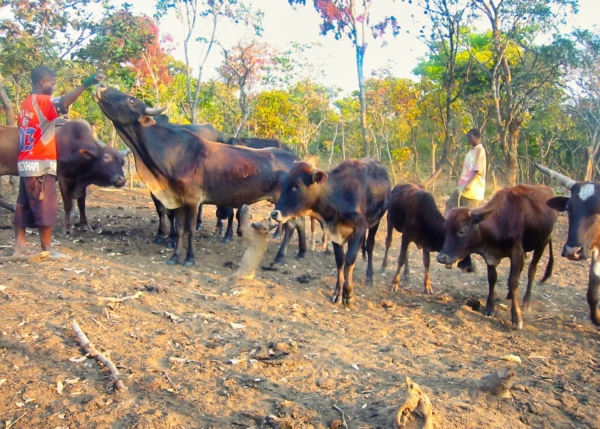
Eyes that once saw cattle now see goats?
First-hand experience is the best teacher, as it reveals what was truly there.
If you saw cattle somewhere, you will not be convinced you saw goats. However, others might try to convince you otherwise, and then you can use this proverb.
People die, for example, due to a lack of knowledge of herbs. Before scientific drugs (‘goats’) were introduced, people had methods (‘cattle’) to overcome illnesses. Only Lesa knows how it worked, but it worked nicely. It serves as a lesson to the young, to sometimes take ‘old’ advice with the full belief that it is worth trying.
The same proverb was recorded for the Lamba region at the beginning of the last century, see Doke (1927, proverb 104), with a different explanation:
Amenso abwene ing’ombe, lelo ese atambe imbushi? ∵ Eyes that have looked on cattle, are they today to come and look at a goat?
A man who has travelled far and seen much, refuses to be interested in anything his companions may shew him at home.
Proverb 179
Akasuba walya impwa tashikola, pamo fiya
Uuli onse anga lubapo limo nomba ukukonkanyapo ukucita cimo ceka, cinga kubipila. Pasopo! Mulandu obe.
Impwa shalikwata ifikola mukati, nomba nga walya muku umo, tapapo ifi citika. Ngakulya imiku nemiku umubili ulatampa kumfwa ububi.
Impwa won’t intoxicate you the first time, but if you keep eating it, it will
Anyone can get away with one mistake, but if you keep on doing dubious things, it will harm you. Beware! It will be your fault.
Impwa (a type of capsicum) contains intoxicating substances, but if taken once, there is no effect. If taken repeatedly, the body starts reacting negatively.
The same proverb was recorded for the Lamba region at the beginning of the last century, see Doke (1927, proverb 61), with a different explanation:
Akasuba ulye mpwa tashikola, pamo fiya ∵ On the day you eat the Pwa fruit it does not make you drunk; they (the evils) go together (= mount up).
If you do a misdeed, you don’t necessarily get into trouble the same day, but surely your sin will find you out later; and then you will have to pay for an accumulation. The lupwa is a bitter fruit growing on a small bush; it is used when cooked for relish; in appearance it resembles, when ripe, a large capsicum.
Proverb 180
Lwimbo lumo talwipaye nama
Tefyonse fintu fya tambalala angula ukunaka ukucimfya.
Imisango inji angula amaka yangafwaikwa ukulingana nenshita.
Kuli ukubomfya muti ikali pakwipaya insofu, iyo mutangabomfya pa kwipaya kalulu.
Saleni amashiwi nokucita bwino pakulanshanya nabantu aba pusana pusana.
One song doesn’t kill game
Not everything is straightforward or easy to achieve.
Different methods or efforts may be needed depending on the situation. It takes a powerful gun to kill an elephant, something you wouldn’t use on a rabbit.
Choose your words and actions carefully when dealing with different people.
Proverb 181
Amenshi ni noko, tabipa
Wikanapo ifintu ifikankala kuli iwe.
Pafintu tufwaisha sana sana ku mubili, menshi. Ulo waba ne cilaka ca menshi, ufwaisha sana ukunwa amenshi nangu limbi tayakobonekapo ukwela, ukanwa. Eico umufyashi obe mwanakashi nangu aboneke umbi pa menso, ni noko walinga ukumupa umucinshi. Kuti abanobe balanda ifibi pali ba noko, iwe tekuti ufisumine.
Water is like your mother: neither can ever be bad for you
Don’t deny the things that are important for you.
Of all the bodily needs, water comes first. When you are thirsty, there is a great desire to drink water, even if it may not be clean. Similarly, even if your mother appears unattractive, she is still your mother and deserves respect. If some friends speak ill of your mother, you will not join in.
The same and a similar proverb were recorded for the Lamba region at the beginning of the last century, see Doke (1927, proverb 103 & 960):
Amenda ni noko ta bipa ∵ Water is your mother, it is never bad.
When driven by thirst, one will drink any water. A man will never call his mother bad, however evil-looking she be, or however much his companions revile her.
Noko ta bipa ∵ One’s mother is never bad.
However ugly, she is not so to her own child.
Proverb 182
Kanshi ishamo limonekela nakutulo
Tuli bantu na mano. Ilyo tucili abomi, libe natubuka yangula tulilele, tubomfya amano mu kwikala bwino nokwafwa bambi.
Limbi limbi kuti fyacitika ulo ulele walota ukusangwa ne shamo munshila utenekele. Elo, apapita utwanshiku, iwe, yangula umbi umwina mupalamano, wasangwa bu bwafya ubukulu. Tekubapo fyeka ifyo walotele mbulya bushilu, lelo mu musango umbi uwakukusha, yangula muli ngulya mu musango we shamo.
Misfortune may reveal itself during sleep
We humans are endowed with wisdom. As long as we live, whether awake or asleep, we will use wisdom to order our lives and help others.
It may occasionally happen that during your sleep you dream of experiencing misfortune in an unexpected situation. Then, a few days later, you, or someone else close to you, find yourselves in dire straits. Although it is not necessarily what you dreamt that night, something has led you into an unfortunate situation.
Proverb 183
Inanda tabaibwena kumutenge ubune
Te fintu tubona ku menso efingalenga ukushininkisha ati efyo fyaba.
Ulo tubona abantu abaikala mu cupo kunse yananda bali abansansa, tekwebapo ati fyonse fiweme mu nanda. Ifilandwa mukati ka nanda fimbi yangula ifitawemepo ifingalenga icupo ukupwa.
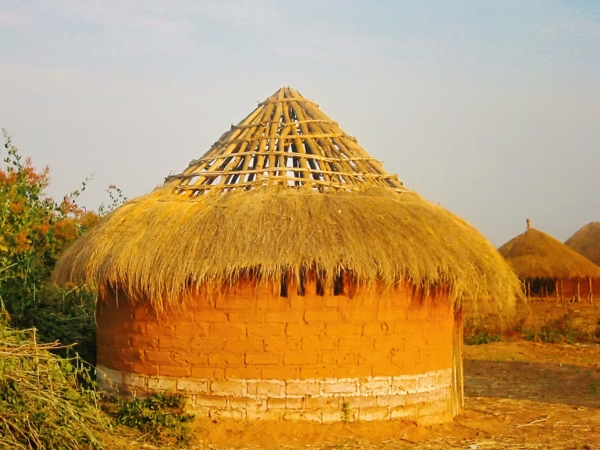
The value of a house can not be seen from its roof alone
What we see is often insufficient to conclude that something is good or always that way.
When we observe married couples appearing happy outside their homes, we cannot assume all is well. What is said and done inside the house may be rather different and could ultimately lead to divorce.
Proverb 184
Mungulube tabuka bwaka, kubona ici mubusha
Icintu ngaca citika ninshi kulipo icalenga.
Mungulube mukasuba tendaukapo, nomba amwasanga akobutuka ninshi pali abamubusha afwayepo ukwakuti akafisame.
Na bantu bene, tekutipo ukalipe bwaka apatapo nangu cimo, kano bakukalifya nawe epakulalipa..
The bush pig does not wake up for nothing: something must have roused him
Something happens for a reason.
During the day, the bush pig does not run about. So, when you see him running just know that something made him wake up and run for safety.
The same thing with people: you don’t get angry just like that, something will have provoked it!
The same proverb was recorded for the Lamba region at the beginning of the last century, see Doke (1927, proverb 763):
Mungulube tabuka lukoso, kubona ici mubusha ∵ The river-hog does not wake for nothing, for it is something that has roused him.
Said to excuse a man for his anger: he has cause or provocation. A river-hog is not seen running about in broad daylight, unless something has disturbed him, and he is seeking another place of hiding.
Proverb 185
Uko tauli imbwa yobe taibutuka/taikata
Bambi abantu balasankanya malyashi, nakuli mbo aba bafwako.
Ilyo umuntu aashima imbwa yenu mukulunga, bali ishiba ati ilabutuka nokwipaya inama. Nomba kubucenjeshi bwabo pantu tabakofwayapo naiwe we mwine bakulumbeko, besa mukubeba ati teyopo ikete inama. Nakambi akesa kwashima mbwa imo yeka.
When you are not there, your dog suddenly fails to run/catch
Some people make up stories, even for those who help them.
When a person borrows a hunting dog, they know it is a very good dog at running and killing animals. Because they think they are too clever and do not want to share the spoils with the dog’s owner, they cheat the owner by saying the dog failed to run after/catch the animal. Still, they will borrow the same dog again next time.
Proverb 186
Inshiku tashicela mumo
Ifintu kuti fyayaluka fimbi, tuleba abakusubila.
Ificitika umuye nshiku filapusana.
Nga wali cula, telyonse ukabelelela, bumo bushiku bamo bakesa kwafwa.
Days do not dawn all the same
Things can change; we should remain expectant.
What happens daily varies from day to day, or over periods of days.
If you are poor, it does not mean that you will be like that forever; one day people may come and help you.
Proverb 187
Umweni acindamina ku mukaya
Abanga cindika umulwendo nimbalya abo aya atandalila, te bantu bambi abatamwishibilepo iyoo.
Umuntu kati afuma ku mushi ukuya ku tauni mukubona ulupwa, mbalya abo asanga nkulya bamwishiba eba kumusansamukila ukulanga bambi ati ulya muntu mukaya wabo. Nabambi abaibelele bakakwata ukucindika ngulya muntu. Amwa mupufya, cingapela kwisa ku bantu bambi?
A visitor is treated with respect by the people who know him well
It is normal to expect that when you visit people who know you well, they will show you respect. However, you cannot expect this from those who do not know you.
When you leave home and visit towns to see relatives, those you find there who know you well will receive you with respect. They also do this to prompt others to give you respect.
If you show a negative attitude towards someone you know well, what will you do towards unknown people?
Proverb 188
Iciiba mutima, iminwe taibapo
Fwailisheni fili ku mutima ifilenga fimo ukucitika.
Umutima ku muntu ekampingu wafintu akofwaya ukucita. Ulunkumbwa nalo ilyo amenso abona lulenga umutima ukufwailisha inshila yakukwatilamo cilya cintu.
Icikonkapo kutemwa ukubula cilya cintu nangu ukwiba pakuti ba mutima basekelemo. Mwabona nomba, iminwe eyisenda ncilya cintu. Kunuma nku, kabwalala bali kumuputula amaboko pakuti bonse bamubone. Iminwe yaculilamo, libe umutima wikele tondolo.
Fwe bantu ilinji line bambi balafwaya ukutubomfya pakuti ngawaikatwa bonse bakaseka iwe. Kanshi tube abaibukila pa fintu abantu bambi bakofwaya fwe tubacitile.
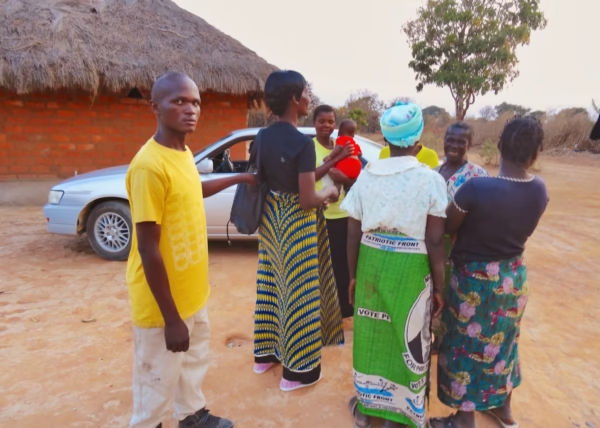
The thief is the heart, not the fingers
Try to understand what lies behind a certain action.
The heart in a person decides what to do. The desire for something after having seen it, prompts the heart to seek ways to act. What follows is the desire to obtain that item through theft. Now you can see: the hand picks that item, but the decision was made by the heart. Long ago, a thief had his hand cut off so that everybody could see! The hand suffered while the heart remained untouched. Often, ordinary people are the ones who are being used in evil acts so that, in the end, they will be blamed instead of the real perpetrators. So, let us be careful to check what assignments they want us to undertake on their behalf.
The same proverb was recorded for the Lamba region at the beginning of the last century, see Doke (1927, proverb 327):
Iciba mutima, iminwe ta iba ∵ The thief is the heart, the fingers do not steal.
Proverb 189
Kasolo afulila pa lubwebwe tekuti akelepo
Kufintu fikoboneka mungeshiba icikonkapo.
Kasolo uwaimbila ifuli pa mabwe, kwishiba bwaka ati taikalepo apa nshita itali.
Nabantu bene pakwimaka umushi, balabala babona incende ilingile apali umushili wa filyo, apa tekalilwa amenshi ne miti yakutemamo utwakwimakila.
If a mouse digs a hole where there are many stones, it won’t stay there for long
From what you see, you can tell what will come next.
When a mouse digs where there are many stones, you know that it will not stay there for too long because the hole will not go deep enough.
This is also applicable to people who want to establish a new village. The first thing to do is to see if the soil is good enough for crops, the area is not waterlogged, and there are enough trees. If you do not look for these signs, you might be surprised and leave sooner than you want.
Proverb 190
Mwipika umo alashatisha
Cikankala ukukwata ifyakupusana pusanako mu bumi bobe.
Ngatakuli ifyakupusanako, ukulya kukaba ukwacepela elyo nefikashalapo mu mpoto fikalala.
Ukwipika Nako kuti kwacitwa mu nshila ishapusana. Ngateifyo, cikapela mbo abakolya ukutendwa nemipikile yenu. Nge cilangililo nci, kati ni cilemba, natumbi tulingile ukusanshwako pakuti iboneke kubati niyimbi.
Nci tekwebati Niku cakulya ceka iyo cili nakufintu fimbi kubati kwikala mu ncende ishipusene pusene nokumona nafimbi yangula ukufwala ifyakufwala ifipusene pusene.
Always the same recipe makes the pot burn what is inside
It is important to have variation in your life.
Without it, there will be less enjoyment, and the food remaining in the pot will be burnt.
Cooking can be done in different ways; otherwise, those eating your food will become bored. For example, if you are cooking beans, something should be added to create a balanced and appealing meal.
This principle applies also to other aspects of life, such as changing your residence to experience something different or wearing different clothes.
Proverb 191
Ifitenge fibili filefyanya
Amabumba alekene kuti akwata ulupato ku inankwe. Amabumba abili tayakwata amalangulushi amo ene.
Ngamwali belela uku kumana nabantu bamo bene mwibumba limo pa ncende imo ine yakutushishapo, tekuti ukwate kususha kwabula umwenso kufyo bacita nokukonka ifya mwi bumba apo bakumanina libili libili mu ncende shimbi.
Ico bakonka ca bantu ukupanga utubungwe ututafwaya kufwailisha ifilenga tumbi utubungwe ukusela.
Two groups despise one another
Separate groups may dislike one another. Two camps often do not share the same views.
When you are accustomed to meeting with the same group of people in one resting place, you may not be open to the practices and considerations of another group meeting regularly in a different resting place.
The tendency is for people to form groups that are reluctant to explore what motivates other groups.
The same proverb was recorded for the Lamba region at the beginning of the last century, see Doke (1927, proverb 363), with a different explanation:
Ifitenge fibili filefyanya ∵ Two meetings slander one another.
In one village there should be only one gathering for talk; if there are two they will only work in opposition.
Proverb 192
Icatwala iise, nga mupini ngatwakula umbi
Calyanguka ukufwailapo fimbi fintu, lomba calyafya uku pyanikishako fimbi.
Kwaba fimo ifyo twingomfwana fwe bene palwesu elo fimbi kwipusha kuli bambi.
To lose a hoe! If it were the hoe handle, we could make another one
Some things are easy to replace, while others are difficult.
There are matters that we can resolve ourselves and matters for which we need the involvement of others.
Proverb 193
Kwenu ni kwikoshi
Ukwishiba no kwibukisha intuntuko yobe calilinga pantu ukaluba ukwakuya nga wapelelwa uko waya.
No muntu nawo ilabako inshita ekata kwi koshi, kanshi epa fuma ne nsoselo nji.
Umuntu mwalalume ngaima ukuya mukupa, alasha ulupwa lwakwe nokuya ikala ku buko. Nomba nangu angekala ifyo, alilinga ukuloku tandalila ku mushi wakwe pakuti akoishiba ifikocitika nkulya, tekulabililako iyoo.
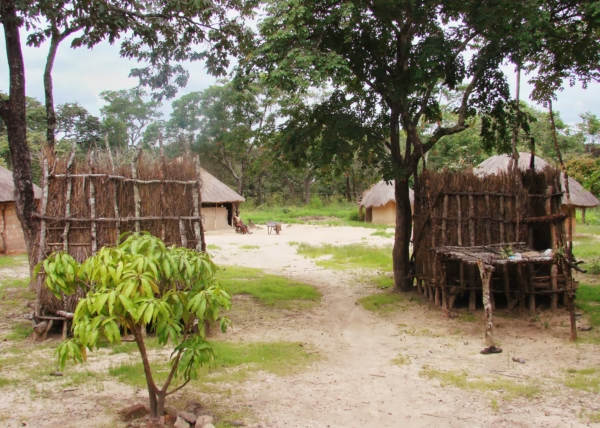
Your home is like the back of your neck
It is advisable to know and remember your roots, because when confronted with major problems, you will hesitate to go back to your village if you haven’t been visiting it.
Touching the back of the neck is a habit of many, especially when they want to think carefully.
When a man leaves his home to go out and marry, he makes a new home elsewhere, leaving behind his relatives. It is wise to frequently visit your home so that you remain updated, instead of forgetting it completely.
Proverb 194
Ing’anda utalalamo baikumbwa umutenge
Tekutipo wishibe ukuloleshafye pa cikopa ce buku.
Cili icamano ukuipela akashita kakulu ulo utalaishiba ifya kucita.
Ungakumbwa mutenge muku ubwena kunse, nokuteshibati ulaloka! Nomba nipesa munga ukumbwila?
You admire the roof of a house you don’t sleep in
You cannot judge a book by its cover.
It is wise to give yourself plenty of time before making a big decision.
You can admire the roof from the outside, not knowing that it leaks! And what is there to admire then?
Proverb 195
Mutima e muntu wine
Ubuntu bweka tabwa pwililikapo.
Tulafwaya amano akubwena bambi mu micitile yabo. Twalibatemwa paficitwa fyabo ifiweme nokubapata pa ficitwa fyabo ifibipile. Amano alasokolola buciine bwa bantu kupitila mu micitile yabo. Tekutipo fibombe fyeka, ukwabula ukwikatana.
The heart is the human self
Human beings alone are not complete.
We need wisdom to see others as they are through their actions. We will love them when they do good and hate them when they do evil.
Wisdom will reveal people’s true nature through their actions. It cannot function in isolation, without social interaction.
To continue with the proverbs considered more demanding in Chibale, click £here.
To download the whole proverbs book Mu Zambia Amano Mambulwa as a pdf, click here.
Footnotes
- 1Photo 127. ↩︎