Proverbs in Zambia ∴ simple proverbs 1

Proverbs in Zambia: simple proverbs in Chibale 1
Of the two articles on proverbs that the people in Chibale consider simple, this is the one that presents proverbs that teach us how to avoid problems and how to solve them when they do occur. They can also be found in the first part of the digital book Mu Zambia Amano Mambulwa, see here. The whole book can be downloaded here.
Other articles in this series
The proverbs about what to expect and how things work, considered simple in Chibale.
The proverbs about how to behave and what to do when problems arise, considered more demanding in Chibale.
The proverbs about what to expect and how things work, considered more demanding in Chibale.
The proverbs about how to behave and what to do when problems arise, considered deep in Chibale.
The proverbs about what to expect and how things work, considered deep in Chibale.
Proverb 1
Nkaya mailo abala pa cungulo
Mube abaipekanya ngamukofwaya ukucitapo cimo.
Nga uli nokuyapo kumbi mailo, calinga watampilapo ukupekanya pa cungulo. Calilinga ukupekanya lintu taulaima. Nga bulendo, bona ukwebati fyonse ifikofwaikwa fyaba pa ncende imo. Ulwendo lwa mukulunga, boneni ati imfuti, akasembe, ubonga bwa mufti epo buli, kati malala fwaileni limo icakulya cakusenda kati bunga, natumbi utufwaikwa mu mpanga.
Leaving tomorrow starts in the evening
Be prepared when you undertake something.
If you are going out tomorrow, it is better to start preparing the night before the trip. It is essential to prepare before going out. For an ordinary trip, ensure all necessities are gathered in one place.
If it is a hunting trip, make sure you have a gun, an axe, and bullets. If you plan to be away for more than a day, prepare food to carry and other essentials needed in the wild.
Proverb 2
Uufunda lushishi taulateba
Icakubalilapo citangile. Citeni cakubalilapo icikulu pali njilya nshita elyo icitakofwaikapo panshita imbi.
Ngatwaya mukuteba inkuni, tulingile ukuteba inkuni pa kulekelesha elyo twafunda ulushishi.
Abakunaila inshima, tekuti usambepo ku minwe ulo inshima taingaisa pantu unga sambapo bwaka.
Do not prepare the rope before collecting firewood
First things first. Address what is most important at the moment, and then what is important at a later stage.
When collecting firewood, we first gather the wood. Only then do we collect fibre at that location to make a rope for tying it.
You can wash your hands when the food is brought. Washing them elsewhere might mean you do not get any food, as others may have finished it all in the meantime.
Proverb 3
Pakwakana ubunga tapaba nsoni
Twilokuba nensoni pa cintu tukofwaisha, twalinga twasosa nabambi baishiba.
Ubunga cintu cimo icifwaikwa ku mubili wesu pakuti tukule namaka, kanshi ilyo mu le akana, akanenifye bwino umulinganganya, takuli ukumfwa insoni iyoo, nga bwacepa landa.
There is no shame when it comes to sharing mealie meal
Let us not be bashful about something essential, please say it out so that others know.
Mealie meal is essential for our bodies. So, when you are sharing, share equally. Never be shy:
if your share is small, say it out.
Proverb 4
Mungulube alilile umwando emukuputuka
Tekulusapo isubilo.
Angula ifyo tukofwaya bwangu tafibonekelepo, tekulusapo isubilo. Tulingile kukonkanyapo pakwisa kukwata yangula ukupwisha amapange esu.
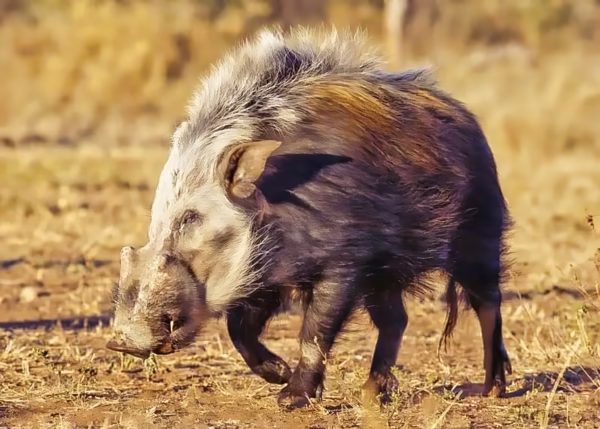
The bush pig cried as the rope was about to be cut
Don’t give up hope.
Even if we don’t see immediate results, we shouldn’t lose hope. We must keep going in order to accomplish our goals.
Proverb 5
Amakanga abili alapuluka
Cita cimo panshita imo.
Ulo ukosowa ikanga, tacakwafwe ukwesha ukusowa abili. Sowa lyenka limo.
Ukucita/ukusenda fibili yangula nafimbi weka panshita imo tacawamepo pantu wakulusa fyonse nokushalapo bwaka. Calinga wakoselela pacintu cimo mpaka ucipwishe. Elo nomba ungaya ku cakonkapo.
Chasing two guinea fowls you will fail
Take things one at a time.
When you are chasing guinea fowl, it will not help when you try to chase two. Chase only one.
Taking two or more things on at the same time is not smart because in the end you will have nothing. You better concentrate on one thing until you finish it. That’s when you can go to the next one.
Proverb 6
Abana bankashi baebene ulushaba
Icitemwiko ecilanga ukuti mbaa bantu ba mulupwa lumo pa fintu fikoboneka.
Tumo utuntu tatwalinga nokwakana, nombafye pantu mwalitemwana filacitika. Kapansha umo teti mu mwakane no munobe, nomba apo paliba icitemwiko kwakana.
Tekuti fibefye mu cakulya, cili namukwafwana naba nobe.
The children of the sisters shared one peanut
Love for all shows that these people are from the same family in whatever they do, however small it may seem.
Some foods are too small to be shared. Peanuts are a good example! One peanut here is shared between the children of sisters, a thing which can not be extended to an outsider.
This may not be only in food sharing but also helping others through work.

A similar proverb was recorded for the Lamba region at the beginning of the last century, see Doke (1927, proverb 148), with a different explanation:
Abana-ba-nkashi bali abene umuninga ∵ The brothers divided a peanut.
Brothers should share with one another. The story goes that two brothers were so fond of one another, that, when one picked up a single peanut, he split it in half to share with his brother.
Proverb 7
Bulapo, tekupa
Ifilandwa kwati nimfi, ku mulwendo uuwu wayawaya ukupokelela ico bamupa.
Ukuba ngo mwine, niwe walinga ukwakanya na banobe. Abalwendo nganaba kufikila pananda yobe, ni nsambu shobe ukubakanya.
Take, it is not up to you to give
This is said, for instance, to a visitor who hesitates to take what is being offered.
As the host, you must take the lead in sharing with others. When you have visitors at your home, it is your duty to share with them and their ‘duty’ not to refuse your hospitality.
A similar proverb was recorded for the Lamba region at the beginning of the last century, see Doke (1927, proverb 1686), with a different explanation:
Bulapo takuli kupa ∵ Take! is not giving.
Give me some, don’t ask me to help myself; I should be too bashful to take sufficient.
Proverb 8
Mungulube, akalindi ako; abali babili balabulana
Ukubombela mukumfwana capamo ciweme sana.
Tulingile ukuba abakumfwana lyonsefye pakusopenshanya ifingaleta ubusanso kubanensu.
Ilyo abantu babili yangula abengi bakoya mukashila-tondo uyo utangile alabulako abanankwe ifili kuntanshi, kati muuso yangula akalindi pakuti abali kunuma baibukila.
“Bush pig”, “there is a hole”; two persons warn one another
An understanding working relationship is a good thing.
We have to be united at all times to alert each other of potential dangers.
When people walk in single file, the one at the front will call out if he comes to a hole in order to warn those behind against stumbling.
The same proverb was recorded for the Lamba region at the beginning of the last century, see Doke (1927, proverb 760):
Mungulube akalindi ako, abali babili balabulana ∵ River-hog, there’s a hole, those who are two together tell one another.
When walking in single file along the narrow bush path, it is the duty of the leader to call out if he comes to a stump or a hole, in order to warn those behind against stumbling.
Proverb 91Photo 133 and Photo 134.
Nawe, kwenu takwali bakulu!
Tawafundwapo?
Kwaliba intambi isha seka ku mitundu yonse kwati pakupokelela icintu ku bakulu kupoka na maboko abili, nomba iwe wabomfya fye ukuboko kumo! Nomba epa kumwebati nawe twafundwa pantu konse bwaka abakulu eko baba.
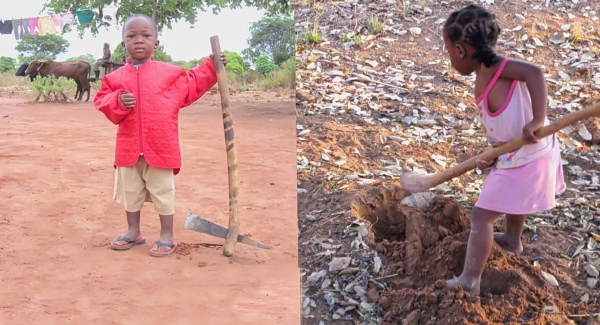
As for you, there were no elders at your home!
Have you not been taught at home?
There are certain manners common to all regions like using both hands when receiving a gift from an older person. Now, if you use only one hand, that is when they will say that you must have grown up in a village without elders. Elders who could have taught you are everywhere else.
The same proverb was recorded for the Lamba region at the beginning of the last century, see Doke (1927, proverb 861):
Nawe kwenu takwali bakulu ∵ As for you, there were no elders at your home.
You are stupid! There were evidently no elders in your village to teach you wisdom.
Proverb 10
Kabusha takolelwe bowa
Ukwipusha ekwishilapo nafimbi. Ibukisheni: amano mambulwa. Calinga ukwipusha ekukwata icacine.
Inshita sha mainsa, ubowa ubwa pusana pusana bulamena mpanga yonse. Umo mwine bumbi tabulikwa nangu bwapalana no bulikwa. Eico ngataukoipushapo ukalya nefya kukukola, pambi ufwe no kufwa. Awaipusha mbo abaishiba bwino ubowa wanukula, tawakolwepo. Ifyakulya fisangwa mu mainsa fingi kanshi ulingile ukwipusha pafintu filikwa pakweba ati wikolwapo.
The one who asks will not be poisoned by the mushroom
Asking is knowing more. Remember: wisdom is acquired by being told. It is advisable to ask to learn the truth.
During the rainy season, different types of mushrooms grow. Some of them are poisonous and are never eaten, even though they look like edible ones. Now, if you do not ask, you may eat a poisonous mushroom and suffer. However, if you ask those who know about the kind of mushroom you have picked, you will not be poisoned. There are many fruits you can eat during the rainy season, so make sure you ask which ones are safe.
Proverb 11
Ncenjeshi musha wa cipuba
Tacawama ukutumfya abanobe pantu pakulekelesha ukesa moneka icipuba.
Ukubepa abanobe lintu ifyo ukososa fyabufi, pakulekelesha ukesa sangwa mu bwafya nabanobe bakakuseke.
Fond-of-fooling-others will end up a fool
The one who uses deceiving tricks will end up a fool.
It is not wise to use trickery with your friends, as in the end you will appear foolish.
Cheating your friends, when you yourself know that it isn’t true, will ultimately lead to trouble with them, and they will laugh at you.
Proverb 12
Cindika akaice nako eli kakucindike
Nci cilalandwa ku muntu ufwaya umucinshi, cibe ena talangapo mucinshi kuli bambi, maka maka kuli mbo abaice kuli ena.
Abana abanini basambilila imisango iibi neiweme kufuma kubakulu. Imisango yonse abaice bamona eyo bapashanya ukucita. Eico twalinga ukubalanga isuma pakuti nabena baba abantu abenenene. Ilyo wacindika umwaice, naena akatampa ukucindika abantu bambi, ekukula na mano. Ico conse umwaice aumfwa kumukulu, eco naena acita.
Respect the young and they will respect you
This is said to someone who asks for respect while not showing much respect to others, especially to the young.
There is no escaping the fact that the young will learn good and bad manners from their elders. Young people emulate the behaviours they see. We need to show them good behaviour, so they will become good citizens. Giving respect to the young will encourage them to respect others, as young people follow the example of their elders.
A similar proverb was recorded for the Lamba region at the beginning of the last century, see Doke (1927, proverb 182), with a different explanation:
Cindika akanice, nawe kakucindike ∵ Respect a little child, and let it respect you.
Treat inferiors with respect, if you desire deference from them. A kind word always pays.
Proverb 13
Nawe, uli musombo tawikuta!
Uku pashanya kumuntu uwatemwa ukulya icitala.
Ukulya kwa citala, kanshi takupo kubona abakolya kano naye alyeko bamupashanya ku musombo wa mpendwa uwo nangu amwaitilako amenshi tawisulapo.
As for you, you are a burrow that is never filled!
This is said to a person who is fond of eating.
Whenever they see others eating, people who are fond of eating are likened to an ant-bear’s hole that never fills when water is poured into it.
The same proverb was recorded for the Lamba region at the beginning of the last century, see Doke (1927, proverb 878):
Nawe uIi musombo tawikuta ∵ As for you, you are a burrow, that is never filled.
Said to a person who is always eating; he is as hard to fill with food, as an ant-bear hole with water.
Proverb 142Photo 119.
Mwe baume, mwebali babili tabalwa!
Ukumfwana mwebali babili kuweme.
Ulo mwebali babili muli palwendo lutali, caliwana bonse mukoumfwanina pamo ukucila ukutalikana.
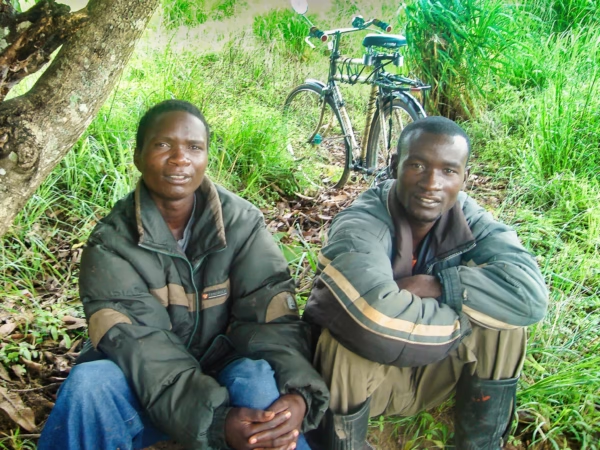 Companions, two together do not fight!
Understanding one another is vital.
When you are on a long journey together, it is advisable to agree with each other rather than argue.
The same proverb was recorded for the Lamba region at the beginning of the last century, see Doke (1927, proverb 799):
Mwe bame, abali babili tabalwa ∵ Mate, they who are two together don’t fight!
An axiom of the road; if you have to companion with one another, it is best for both that you should agree.
Proverb 15
Nawe, uli kangulungulu, tawishi nefibalabila!
Ukukana ishiba ifya kusosa.
Umuntu uwaya ku cilye mukulubulula afwile apekanya bwino ifyakulabila pa mulandu. Talingile ukulaisosha umwine ilyo akopela bunte bwakwe pantu umulandu kuti wamu wila.
As for you, you are a fool; you do not know what you are talking about!
This is said to a person who makes inconsistent statements.
When you go to a court session, you should have proper evidence. It should not conflict with the other things you have already said, otherwise you will be found guilty.
The same proverb was recorded for the Lamba region at the beginning of the last century, see Doke (1927, proverb 877):
Nawe uli kangulungulu, tawishi nefiwalabile ∵ As for you, you are a fool, you do not know what you said.
Said to a person who contradicts himself, when giving evidence.
Proverb 16
Nawe, uli mwitwa-libili!
Utomfwisha kano libili.
Abantu bamo tabomfwishapo amwamwita umuku umo kano mwabwekeshapo libili. Mu nshila shimo bamo nabo kano wakomailapo pa cintu mukofwaya ulya muntu acite.
As for you, you always need to be called twice!
This is said to a person who never listens properly.
Some people don’t listen properly until you call them twice, which often means constantly prompting them to do what you want.
The same proverb was recorded for the Lamba region at the beginning of the last century, see Doke (1927, proverb 879):
Nawe uli mwitwa-libili ∵ As for you, you are the twice-called.
You never listen till called twice.
Proverb 17
Akaboko kalakonka kabyakwe
Icilangilo ciweme cilakonkwa. Tusubile kupoka kati nafwe tulapela.
Ukwikala weka kwabula fibusa tacawamapo iyoo. Tulokuba no mute wakupela, nafwe ekupelwa.
We muntu weka tekukwanishapo kukwata fyonse. Ngawafungulula kuboko, nawe bakukufungulwila.
The hand follows the hand of another
A good example tends to be followed. Let us hope to receive if we also give.
Living alone and without friends is not good. We should be helpful to others when approached.
No one can achieve everything alone. When you extend a hand to others, they will also reach out to you.
A similar proverb was recorded for the Lamba region at the beginning of the last century, see Doke (1927, proverb 76), with a different explanation:
Akaboko kalakonka akabye ∵ (One) little arm follows its mate.
If you stretch out your arm to give a present, the recipient’s arm is immediately stretched out to receive. Also said as an explanation for not making a gift: I should give if you too were a giver. One good turn deserves another.
Proverb 18
Ukulepa ngo munwe wapakati
Ukuba pantanshi sana ilyo taushininkishe.
Ilyashi nga lyafika mu mushi cibe talili lyobe iwe nomba kwima waya ili ushimika konse konse. Calinga walekela abene balileta ukubilisha pantu ngaba kwipusha ukafilwa ukwasuka..
You stand out like the middle finger
This phrase is used in situations where someone is in the forefront, yet not really involved.
For example, when news reaches the villages, you might go out to inform others, even though the news isn’t yours. It is better for those who know more to inform others, as you will likely fail to answer questions when asked.
Proverb 19
Umulinganya wa mapuli ulaponwesha
Wikwata icilumba ku mulandu wakupusana mutuntu ututakwetepo ubuyo.
Ukulinganya ifiputulwa fya mibili ku bwaice kwalikuleta ukupusana apo bekele.
Mukukonka insoselo, abaice ilyo bali kumpanga balikufula nokulwishanya abene beka ukumona ati nani akwete amabolo akulu, ninshi uyu emukulu. Bamo abali namapuli anini bali bakulu ukucila nabakwete amapuli ayakulu.
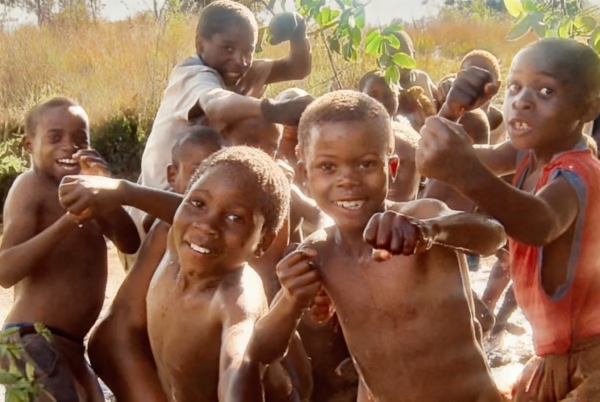 Competing on the size of testicles leads to fighting
Do not feel proud because of irrelevant differences.
Seeing who had the largest body parts among the children caused division among them.
The children went into the bush and undressed, wanting to see who had the biggest testicles and was therefore to be declared the oldest among them. However, there were those who had small testicles in size but were older in age than those with large ones. And, for sure, none of them could predict who would have healthy children in the future.
Proverb 20
Limbula isaka ilyo talilalimbuka
Ukubangila ukucita ifintu caliwama pantu acatwala imishu panshi, tacakese kulimbuka.
Nga mwabona umuntu ifyo akocita tafiwemepo, calinga mwamukanya penka pakutampa. Inshita ya mainsa ulo tubomba mu mabala esu, amasaka balimbula ilyo tucili tunini ne mishila. Ngamwalolela yakula, tekuti ese alimbukepo amwaisa kwesha ukulimbula.
Transplant a seedling before it can not be relocated anymore
Do things timely. This might mean: do things much earlier than you think.
During rainy season, we transplant seedlings, for example sorghum, when it is still tiny. We do not wait till it is strong.
When you see your friend doing things badly or behaving badly, it is better to advise him as soon as possible to stop that behaviour.
Proverb 21
Tabalimba bulema weutalakula
Ubulema bwali pusana pusana elyo tatwishiba ulo umo angalwala. Teti twishibe nolo umo angalema naye.
We muntu ulo ucili mwaice nokubaseka abalema, yangula ukaiseka we mwine ku ntanshi.
Do not speak ill of the handicapped, you who are still young
Diseases differ, and we do not know when one will fall ill. One does not know whether one will become handicapped too, or when.
As a young boy, you say many unkind things to the handicapped and laugh at them. Perhaps you are laughing at your future self.
A similar proverb was recorded for the Lamba region at the beginning of the last century, see Doke (1927, proverb 1476):
Ubulema tabalimba ∵ Maiming one doesn’t mention.
Do not make fun of another’s deformity.
Proverb 22
Amenshi balinga no bunga
Ilyo ukocita icintu, bona ukwebati ifintu ukofwaya ukubomfya, fililingene.
Kati mukofwaya ukunaya inshima, icakubalilapo ulo mutanga bika amenshi mu mpoto, boneni ifyo ubunga buli, epakwisa kubika amenshi mu mpoto.
Nangu kati fyakushita, mwifushapo iyo, nishinga mukwete? Epa kwishiba nefyakuya mukushita.
First mealie meal, then water
When preparing to do something, ensure you have enough of what you need.
When you want to cook food, the first thing to do before putting water in the pot, is to check how much mealie meal you have. This will help you determine the amount of water needed.
When you go out to buy things, check how much money you have and then budget accordingly.
Proverb 23
Mwebo muli cimbwi, tamulya nabanenu
Ukuitemwa nako kubi.
We waikala mu mushi ngawali itemwa, ubushiku fikakushupa tawaka kwate kwakulola. Kanshi calinga ilingi ako wakwatako wapelako nabanobe pantu nabo mailo bakakwibukisha.
You are a hyena; you do not eat with your companions
Loving oneself without considering others is harmful.
When you live in a village and think only of yourself, the day when you face problems, you will have nowhere to turn. Therefore, it is better to share whatever you have, as others will remember and reciprocate your kindness.
A similar proverb was recorded for the Lamba region at the beginning of the last century, see Doke (1927, proverb 804), with a different explanation:
Mwebo muli cimbwi tamulya nababyenu ∵ You are a hyena, you do not eat with your companions.
Said to a man who is stingy over his food, and does not invite his friends to eat with him. The hyena eats ravenously, and even fights with its mates over the food. In Lamba folklore the hyena is depicted as a very foolish beast, being the dupe of the little hare; he also appears as greedy and filthy.
Proverb 24
Ubukulu mano
Tekulosha mukukwata myaka iyinji, cili pa mano. Amano ilingi line alola mumyaka iyingi.
Nakuno bo namano alasangwa namu bakwete myaka inono. Icifuma ku mutima mukuwamina bantu abali mumbali yobe efikubwenesha ukuba na mano. Aya mano kuti afuma kumuntu uwa caice tekutipo ati kano abe umukulu.
Kutontomesha pa fintu fingafwilisha abo twaikala nabo. Cila umo pali ifwe umo umo alikwata amaka akulanga amano umo abo twaikala nabo banga kwatila filambu.
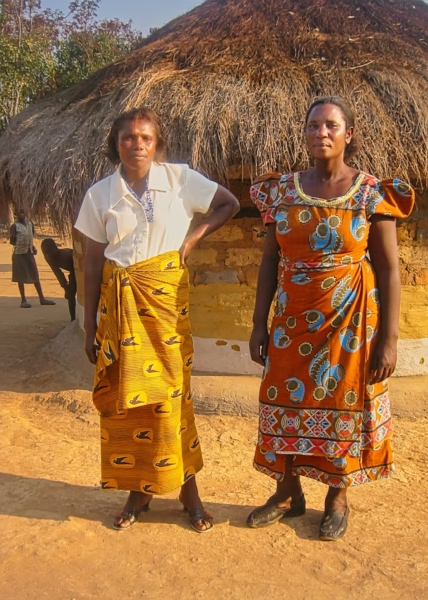
To be recognised as a fully grown-up, one must demonstrate wisdom
Of old, wisdom has been associated with the elderly, but it can also be found in the young.
What makes a person wise is what comes from their heart for the benefit of those around them. Such wisdom may come from a young person, not necessarily from an elder.
We need to focus on what helps our community. Each of us possesses the capacity to exhibit wisdom that benefits the community
Proverb 25
Utukoshi tuli tubili tatupusa
Taulingile ukubomba incito ikankala weka.
Pakuti ikose noku pwililika, ulingile ukwafwako bambi epakuti nabo bakwafwe. Nci cintu tacicitika ceka. Cifwaya wabikako akalango namaka.
Ukuba weka, tawakasangemo ubuyo ubo ufwaya. Ukafilwa.
Two falcons together do not miss
Don’t work alone on important projects.
To be effective, you must help others, and others must help you. Of course, this does not just happen; it requires attention and effort.
By yourself, you will not achieve the results you desire. You will fail.
A similar proverb was recorded for the Lamba region at the beginning of the last century, see Doke (1927, proverb 1423):
Utukoshi utuli tubili, tatupusa ∵ The little eagles that are two together do not miss.
Two hunters together are more successful than one. If the prey escapes the one, the other is sure to secure it..
Proverb 26
Mwikala apatalala mwine apatalalika
Ukuisunga we mwine ukutalokulaka naba nobe, umutende mwine aleta apo ekele pakati kobe nabena mupalamano.
Mu mushi umo mwaikala walinga ukuisunga we mwine no lupwa nensansa. Mukuba mfi, abaena mupalamano bakafilwa apa kwingila pa nganda yenu pantu mwalikala ku matwi tondolo, abena mupalamano mwaliba pela umucinshi.
Creating a quarrel-free environment starts with you
If you refrain from petty discussions and arguments, peace will prevail in your home and in your relationships with your neighbours.
When living with neighbours, take care that you and your family are cheerful. If you do this, your neighbours, especially those who are ill-intentioned, will find it difficult to unsettle your home because you are living peacefully and you are showing them respect.
Proverb 27
Akacila ka mbushi kasengula apo kekele
Ukubombela pancende imo apo waikala nokukwishiba.
Ukucita ifintu ifiweme pa ncende waikala kuleta insansa. Ecilenga nabena mupalamano, ukupela umucinshi pantu imilimo ubomba ilaboneka.
Tekuti usosepo ati nebo nalibomba fyakuti nafyakuti kumbi, nabantu tekuti bakusumine ifyo ukolabila.
The goat’s little tail sweeps where it stays at that moment
Do things where you live and where you are known.
Doing good things in your local area brings happiness. Your neighbours will give you the respect you deserve because they witness your actions.
You cannot claim, “I did great things in that far-away place”, and expect respect, as they cannot verify these deeds.
Proverb 28
Winshinda nshilanya
Lindila mpwishe ifyo ndecita elintu walanjipusha panuma.
Icintu conse calikwata intampilo ne nshilisho, kanshi calinga kwaba akashita kakumfwa fyonse elyo panuma twaipusha.
Umuntu nga akolondololapo fimo, calilinga ukumupela akashita pakuti apwishe, elyo pa numa, mwamwipusha pafintu mutomfwile bwino. Te kumukala pakati.
Do not clean my anus before I defecate
Do not interrupt me before I finish what I am saying or doing.
Everything has a beginning and an ending, so, time should be taken to listen to everything and then ask your questions at last.
When somebody is explaining what has happened, it is better to give them the chance to finish off. Following that, you are now free to ask any questions you still have. Do not do this during the explanation.
Proverb 29
Umuswema ukukula kutina nshila
Akatino kala pususha ku fibi.
Insoka ya muswema pakuti ikule yalinga ukutina ukupita pakati ka nshila pantu kuti baipaya.
Nangu niwe we muntu, ngolafwaya ukukula bwino walinga ukutina ifikali pantu kuti wafwa ucili mwaice ukwabula ukufika ku bukote.
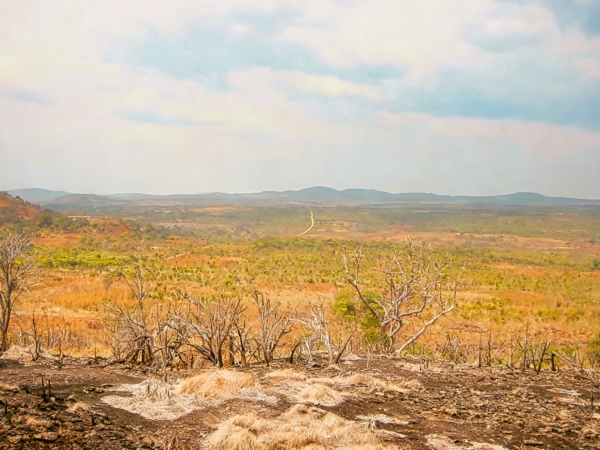
For a snake to grow, it must shun the road
Apprehension is a necessary part of living.
To grow well, a snake must not lie in the middle of the road, as it could easily be killed there.
This also applies to human beings. You must fear bad things, lest you die in your youth without reaching old age.
Also: Insoka ukulungama ifupa kutina nshila ∵ For a snake not to brake its bones, it must shun the road.
Proverb 30
Sungo mukoshi ubulungu tabwafya
Pa fintu fibili, sungishapo cimo icacila icinankwe.
Ku fipande fya mubili wa muntu, umukoshi ngawalyonaike takuli uko wingasanga uwakubwekeshapo, nomba ubulungu kuti waya fwaya kumbi.
Take care of your neck; the beads are no problem
When there are two things to take care of, the important one comes first.
Looking at the human body parts, you cannot replace a neck once it is broken, while beads can be fetched elsewhere.
Proverb 31
Akati uli nako eko bakuswilako mbwa
Ukubomfya icili mupepi nangu ico ukwete.
Nembwa ine kuti wabomfya akati ukwete apo pene, ukucila ukuya mukufwaya kambi pantu kuti wasanga imbwa yaya.
Imilimo tubomba tulinganya namaka tukwete. Tekutipo njeshe ukwimya icipe ico mbwene ati cilemene ukucila amaka anji. Namu bwikashi bwesu, tulya ifyakulya ukulingana nendalama tukwete.
The little stick at hand suffices to strike the dog
You should live and work within your limits.
When striking a dog, we are compelled to use the little stick at hand instead of going out to look for a bigger one, because it is likely that when we return, we shall find the dog gone!
Looking at various types of work around us, we choose according to our strength. You cannot and will not try lifting a load that is clearly too heavy for your strength. And in our way of living, we eat the kind of food that our money can buy.
The same proverb was recorded for the Lamba region at the beginning of the last century, see Doke (1927, proverb 24):
Akati uli nako eko wakuswishako imbwa ∵ The little stick you have, it is with it that you will smite the dog.
One mustn’t throw away one’s little stick, and look for a larger when wanting to beat one’s dog. Also respecting food: don’t throw sway the little relish you have and look for more: first eat that little.
Proverb 32
Teka mutima fili pamulilo
Ukuteka umutima lyonse caliwama, ukucila ukutwala mu kasaku.
We muntu ngawalumbilila umwanakashi wakupa, calinga watekanya pakupela abafyashi ba mwakashi ukupekanya fyonse ififwaikwa. Pambi kuti we waebati balikana, awe fyonse fintu fyaba nakashita. Ifyakutwala mulubilo, emfilya fitakokolapo.
Be patient, food is still on the fire
Patience is always virtue; do not rush things.
When proposing marriage to a girl, you should take your time. Her parents will need to prepare everything required. You might think things are not progressing well, but in reality, they simply need care and time
Proverb 33
Tondolo muweme
Ukwikala tondolo ukwabula icongo kwaliwama sana, pantu takuletelela.
Umuntu uwatemwa utwakulabila labila ilingi line asangwa mu milandu ukutaikalila, lyonse kulondolola. Awa umfwapo akelyashi, we ninshi kuya mukusosa nakuli bambi, nangu taushininkishe! Niwe bakwisa kwebati ulim wabufi.
It is good to remain quiet
You will always be free if you respect yourself and do not get involved in unknown discussions.
If you are fond of gossiping, you will eventually get involved in trouble and you will not be free. If you start broadcasting issues without any proof, you’ll be called a liar or a troublemaker!
Proverb 34
Mayo mpapa, naine nkakupapa
Ungafweko nduno – nandi nkakwafwako kuntanshi.
Ilyo tufyalwa, tatubako elyo tatwishibapo nefikocitika mpaka twakula twaba namano epakutampa ukwishiba tumo tumo. Kanshi ulo twaishiba ifyali kunuma, tufwile nafwe twalipila pamafya abafyashi batwafwile. Ilyo umufyashi akula, fwe balinga nomba ukumu tentemba nifwe, mukumu fwaila icakulya, ukumufwika nokumusunga bwino.
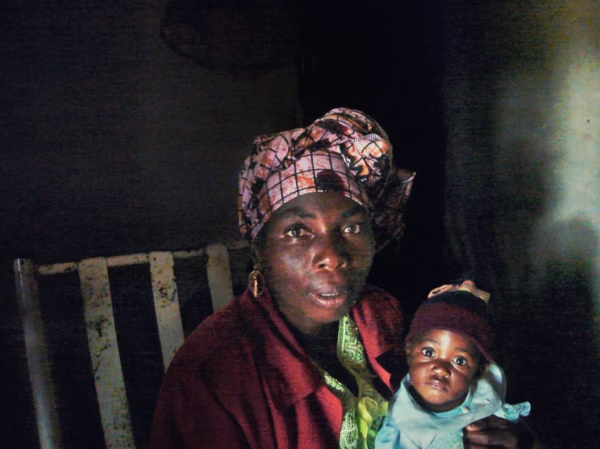
Mother, carry me on your back, and I shall carry you on mine
You help me now – I shall help you later.
When we are born, we are not yet fully present. We don’t know what is going on until we reach a stage where we start knowing and understanding things. Then, at a given moment, we realise what our parents did for us earlier on. We then feel compelled to ‘repay’ them for what they went through. Therefore, when our parents grow old, we will take care of them by providing food and clothing.
A similar proverb was recorded for the Lamba region at the beginning of the last century, see Doke (1927, proverb 658):
Mama mpape, nane mailo nkakupape ∵ Mother carry me, and I tomorrow shall carry you.
(1) The child needs his mother’s care, when he is young; when he grows up, and the mother grows feeble, it will be his turn to take care of her. (2) Said generally, when asking for help. Help me now, and tomorrow I’ll repay you.
Proverb 35
Akobe kaweme, balalya nekabishi
Waliba nensambu ukucita pafintu fyobe ukofwaya.
Twaliba ne nsambu ukubomba ifyo tukofwaya cikulu imilimo yesu taipulungenye bambi.
Ilyo tuya mu mpanga mukutola ifinsabwansabwa, kwati masuku, tutola ayapya nomba we mwine ngawafwaya kuti watola nayabishi, tapapo uwinga kwipusha ico watolela alya.
Your little bit of food is good; you may eat it raw as well
You have the right to decide what to do with your own possessions.
We have this right, provided it does not disturb other people.
When we go out into the bush to pick fruits, like masuku fruits, we only pick ripe ones. However, if you pick a raw one, no one should question why you did that.
The same proverb was recorded for the Lamba region at the beginning of the last century, see Doke (1927, proverb 81):
Akobe kaweme balalya nekabishi ∵ Your little bit (of food) is good, one eats it raw as well.
You can do as you like with your own; noon will question your picking your own fruit, even if it be unripe.
Proverb 36
Cikola mumbo likafya mushi
Langeni ati muli pakuicingilila.
Mbo abakola umumbo balangati umushi uli ‘uumi’ kubapita nshila. Balangati muli ubumi nokuba abaipekanya.
The ones that cough deliberately show there is life in the village
Show that you are on your guard.
People who deliberately cough show that the village is ‘alive’ to passing outsiders. They demonstrate liveliness and alertness.
Proverb 37
Naposa mu menshi
Nalusa bwaka. Tapapo isubilo lyakuti mungacipoka.
Kuti wayafwa umuntu ku cakufwala pantu takwete, nomba waisa sanga ukuti cilia cintu aile cikabusha no bwalwa ukucila ukuti alokufwala.
I have thrown it into the water
I have wasted it all. There is no chance that I can get it back.
You can help a person with some clothing because he had none, but then you find that the same clothing was bartered for beer instead of that person wearing it.
The same proverb was recorded for the Lamba region at the beginning of the last century, see Doke (1927, proverb 846):
Naposa mu menda ∵ I have thrown it into the water.
I have made a bad bargain, and there is no chance of retrieving it. In the Lenje region: Ndasowa mu manshi. Kaonde: Nataya mu mema.
Proverb 38
Umweni tabamulolesha pa mpumi, bamulolesha pa mala
Bombeleni pa fintu ifikulu.
Umulwendo wenu mubakeni bwino, tekumulolesha pa mpumi iyo, boneni pa mala.
Ico mulingile ukwisha ulo umulwendo wenu afika pa mushi wenu, cakwebati kale emine kwabo elyo apa ali nensala. Munailepo akashima elyo pa numa mwise mubandike ukwipusha ifyo endele.
Do not look at your visitor’s forehead; look at the belly
Concentrate on what is important.
To treat your visitor well, don’t just look at the forehead; think of the belly.
When your visitor arrives at your home, you should realise that he left his home some time ago and he is surely hungry. Cook him food first, and then have a nice time to chat about their mission.
A similar proverb was recorded for the Lamba region at the beginning of the last century, see Doke (1927, proverb 1386):
Umubyobe tabamuceba pa mpumi, balamuceba pa kapafu ∵ Your friend, one doesn’t stare at his forehead, one stares at his stomach.
When your friend arrives, see after his material welfare (the state of his stomach), and don’t just look at his face.
Proverb 39
Sankata noko acilipo
Wipontela mbo walimbamo.
Ulo banoko angula Bambi bakusunga bafwa, ukomfwa kubati walilekeleshiwa nokukusha weka palobe kubati takwabapo abalolesha Pali iwe. Ekuti wimupontela.
Rejoice while your mother is still alive
Do not offend the ones you depend on.
When your mother or another guardian passes on, you will feel abandoned and left on your own, as if nobody cares about you. So, don’t offend her.
Proverb 40
Uuleta pansaka tonaula
Ngo onse uuleta ilyashi pa nsaka, afwaya kuti bamwafwe nabakulu Bambi.
Nga lyashi ilikosele pakuti lyangukeko calinga watwala ku nsaka ku cintubwingi abakulu bakwafweko umwa kuli twalila.
Cingaba angula lyashi lya malwele, ku ceshuko kukangaba umo uwishibe umuti.
Taking issues to the village resting shelter is not a waste of time
Anyone who brings an issue to the village resting place needs help from others.
If an issue is too complicated to be easily resolved, one should take it to the elders, who may help in solving it.
If the issue concerns illness, one may fortunately know the cure.
Proverb 41
Ukupeshe lungu, kwendamo
Tekutipo mulabile pa cintu, kano mwali cipitamo mwe mwebene.
Ukwishiba bwino ifyo ilungu lyakula kano waendamo lyonse.
Ukuba kambone wa cine mu mulandu kano waishiba intampilo yelyashi pantu eko wali.
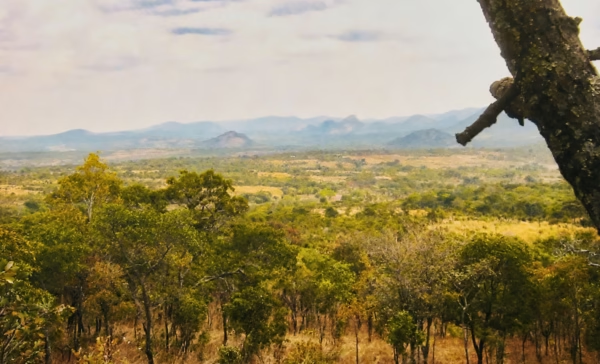
To explore a plain, you need to walk through it
You cannot speak about something unless you have experienced it yourself.
When you want to know how big the plain is, you need to walk around it.
When you claim to be a witness in a case, you should know it from the start.
Proverb 42
Imfumu ukwenda nebantu, cifuto ikwete
Intungulushi nga yalikwata ukumfwana bwino na bantu baiko, bakaikonka kwabula ubwafya.
Imisango iweme wakwata eikaleta abengi ukukukonka nge fibusa.
Leaders will be followed if they are well-mannered towards all
If a leader has a good relationship with his people, they will follow him more easily.
People will follow you as friends because of your good behaviour.
A similar proverb was recorded for the Lamba region at the beginning of the last century, see Doke (1927, proverb 401):
Imfumu ukwenda/ iyenda ne bantu icifuto ke kwete ∵ The chief who travels with people has a good conversation.
People will adhere to a chief of kindly word and conversation.
Proverb 43
Ukusakauka
Ube lyonse uwaiteyanya.
Ulo icintu cakwishila ukutaba uwakucelwa celwa.
Nge cilangililo, ngawa pokela abalwendo, walinga kubomba kasaku kasaku ukutaposa inshita. Na balwendo bobe bakwishibati ifintu fili mukwenda.
Kuti wabomfya nji nsoselo muku londolola akasaku.
Make sure you’re ready at all times
Always be ready. When something comes your way, don’t dawdle.
For instance, when you receive visitors, you need to act swiftly and not waste time. Your visitors should be able to tell you’re on the move.
You can also use this proverb to draw attention to the care that is required in certain circumstances.
Proverb 44
Ngulube bakonka iya lya mumbu
Bona ukuti ulikwete ifishimka ulo utalacita nelyo kamo.
Tekwesha kupela cilubo kumuntu uuli onse, ungesa kuba mu bwafya.
You must only follow the bush pig that ate the yam
Make sure you have enough evidence before you act.
If you just blame someone, you’ll get into trouble.
See also Proverb 218.
Two similar proverbs were recorded for the Lamba region at the beginning of the last century, see Doke (1927, proverbs 456 & 457):
Ingulube ba la londa iya lya ∵ One follows the river-hog that has eaten.
The pig that has eaten your maize is the one to pursue with vengeance: don’t swerve onto any other spoor. […] Cf. Lala: Ingulube to ba londa iya cilinganya makasa, ba la londa iya lyo’mumbu: One does not follow the river-hog that has made the footprints cross, one follows him that has eaten the marsh-roots.
Ingulube ba la londe ya nya, ta ba londe ya cilinganyo lukasa ∵ One follows the River-hog that has excreted, one does not follow him that has made the footprints cross.
The pig that has done the damage in the gardens, and left its traces there, is the one to be pursued; and one should not leave its spoor, to follow that of another pig which may have crossed its tracks. Follow up the guilty person, and do not punish the innocent just for the sake of punishing somebody.